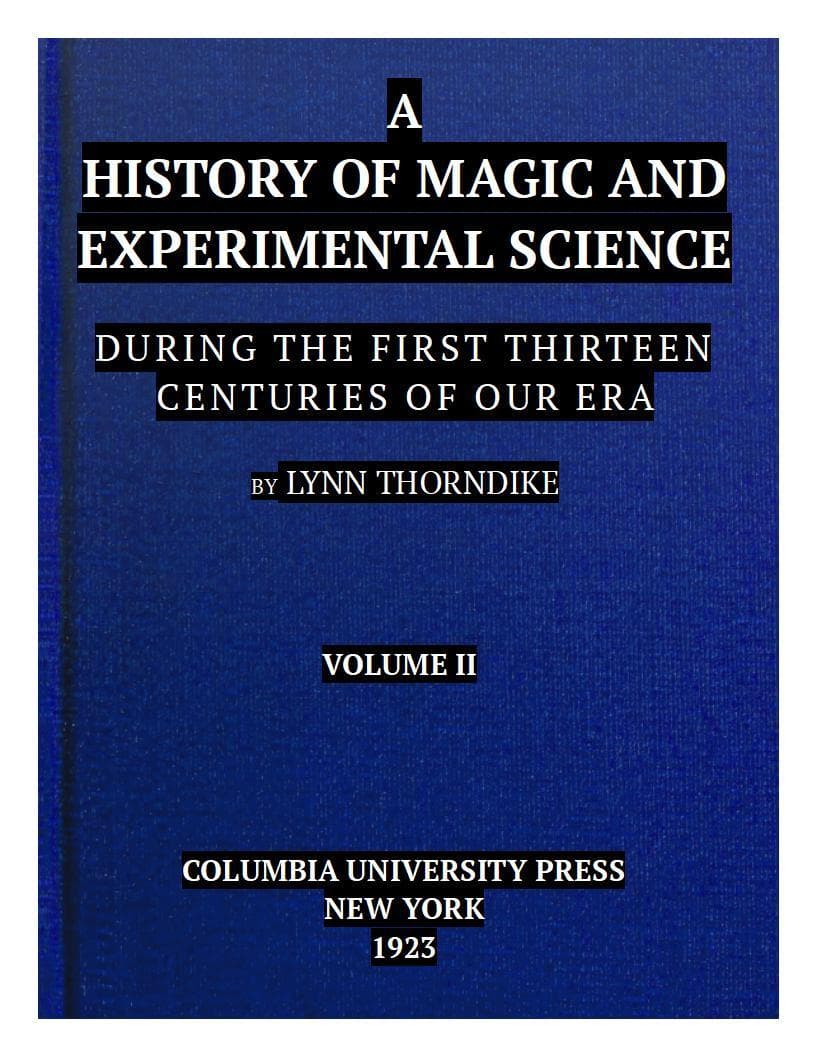
A History of Magic and Experimental Science, Volume 1 (of 2)during the First Thirteen Centuries of Our Era
1929

A History of Magic and Experimental Science, Volume 1 (of 2)during the First Thirteen Centuries of Our Era
1929
A historical account written in the early 20th century. The book explores the evolution and interrelationship of magic and experimental science during the first thirteen centuries of our era, particularly focusing on their influence on Christian thought. It aims to illuminate the development of these fields, highlighting their complex ties to cultural and religious practices. The opening of the text sets the foundation for a comprehensive exploration of magic and experimental science, articulating the author's intent to define magic broadly, encompassing occult arts and superstitions. Thorndike emphasizes the significance of understanding magic within the context of historical thought and elaborates on its origins, notably in ancient cultures such as Egypt and Babylon. He suggests that exploring both magic and science together provides a richer understanding of their historical contexts and impact. The introductory chapter lays out the book's scope and methodology, outlining the key themes that will be examined in subsequent chapters.
Editions
X-Ray
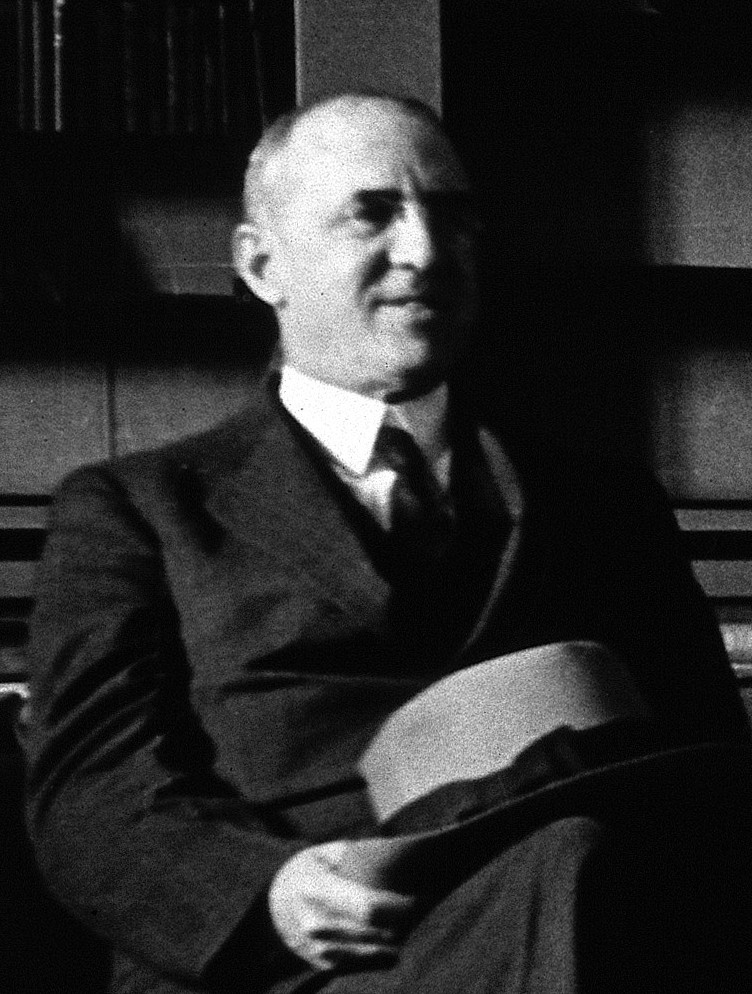
The author and historian investigating the relationship between magic and experimental science during the first thirteen centuries of the Christian era. He serves as the scholarly narrator examining ancient and medieval sources.
Roman author of the Natural History, a vast encyclopedia of ancient knowledge. Thorndike presents him as embodying the confusion between magic and science in the ancient world.
Greek physician and philosopher whose works dominated medieval medicine. Thorndike portrays him as combining rigorous experimental method with belief in occult virtues.
Alexandrian mathematician, astronomer, and geographer who gave scientific authority to astrology through his Tetrabiblos. Thorndike shows how he legitimized astrological practice.
About A History of Magic and Experimental Science, Volume 1 (of 2)during the First Thirteen Centuries of Our Era
Chapter Summaries
- 1
- Thorndike establishes his thesis that magic and experimental science developed together, defining magic broadly and tracing its presence in ancient civilizations from Egypt and Babylon to Greece and Rome. He argues against the notion that Greek culture was free from magical thinking.
- 2
- A detailed analysis of Pliny's encyclopedic work, showing how it combines genuine scientific observation with extensive magical lore. Thorndike examines Pliny's experimental tendencies, his account of the Magi, and the magical elements throughout his natural science.
- 3
- Thorndike examines Seneca's Natural Questions and Ptolemy's Tetrabiblos to show how respected intellectuals legitimized divination and astrology. Both authors combined genuine scientific work with belief in celestial influences and natural divination.
Key Themes
- Science and Magic Intertwined
- Thorndike demonstrates how ancient and medieval thinkers could not clearly separate scientific observation from magical belief. Even rigorous experimenters like Galen accepted occult virtues and astrological influences.
- Authority vs. Experience
- The work explores the tension between relying on ancient authorities and trusting personal experience and observation. Galen exemplifies this struggle by both revering past masters and insisting on experimental verification.
- The Corruption of Knowledge
- Thorndike shows how genuine scientific insights became corrupted by magical thinking, superstition, and the desire for marvelous results, leading to elaborate but ineffective medical and natural philosophical systems.
Characters
- Lynn Thorndike(protagonist)
- The author and historian investigating the relationship between magic and experimental science during the first thirteen centuries of the Christian era. He serves as the scholarly narrator examining ancient and medieval sources.
- Pliny the Elder(major)
- Roman author of the Natural History, a vast encyclopedia of ancient knowledge. Thorndike presents him as embodying the confusion between magic and science in the ancient world.
- Galen(major)
- Greek physician and philosopher whose works dominated medieval medicine. Thorndike portrays him as combining rigorous experimental method with belief in occult virtues.
- Ptolemy(major)
- Alexandrian mathematician, astronomer, and geographer who gave scientific authority to astrology through his Tetrabiblos. Thorndike shows how he legitimized astrological practice.
- Seneca(major)
- Roman philosopher and author of Natural Questions who combined natural philosophy with belief in divination. Thorndike uses him to show the prevalence of supernatural beliefs among intellectuals.
- The Magi(major)
- Persian wise men whose magical practices and beliefs Pliny extensively documents. They represent the systematic study of occult properties in nature.
Link to this book
Add a free, dofollow link to Lex on your blog, forum, syllabus, or reading list.

<a href="https://lex-books.com/book/a-history-of-magic-and-experimental-science-volume-1-of-2-during-the-first-thirt-8ede0234-4732-485f-949f-396222c57cdc"><img src="https://lex-books.com/badges/read-on-lex.svg" alt="Read A History of Magic and Experimental Science, Volume 1 (of 2)during the First Thirteen Centuries of Our Era by Lynn Thorndike free on Lex" width="160" height="40"></a>[](https://lex-books.com/book/a-history-of-magic-and-experimental-science-volume-1-of-2-during-the-first-thirt-8ede0234-4732-485f-949f-396222c57cdc)[url=https://lex-books.com/book/a-history-of-magic-and-experimental-science-volume-1-of-2-during-the-first-thirt-8ede0234-4732-485f-949f-396222c57cdc][img]https://lex-books.com/badges/read-on-lex.svg[/img][/url]Read A History of Magic and Experimental Science, Volume 1 (of 2)during the First Thirteen Centuries of Our Era by Lynn Thorndike free on Lex: https://lex-books.com/book/a-history-of-magic-and-experimental-science-volume-1-of-2-during-the-first-thirt-8ede0234-4732-485f-949f-396222c57cdcCite this book
Reading this edition for a paper or guide? Copy a citation.
Thorndike, Lynn. A History of Magic and Experimental Science, Volume 1 (of 2)during the First Thirteen Centuries of Our Era. Lex, lex-books.com/book/a-history-of-magic-and-experimental-science-volume-1-of-2-during-the-first-thirt-8ede0234-4732-485f-949f-396222c57cdc.Thorndike, L. (1929). A History of Magic and Experimental Science, Volume 1 (of 2)during the First Thirteen Centuries of Our Era. Lex. https://lex-books.com/book/a-history-of-magic-and-experimental-science-volume-1-of-2-during-the-first-thirt-8ede0234-4732-485f-949f-396222c57cdcThorndike, Lynn. A History of Magic and Experimental Science, Volume 1 (of 2)during the First Thirteen Centuries of Our Era. Lex. https://lex-books.com/book/a-history-of-magic-and-experimental-science-volume-1-of-2-during-the-first-thirt-8ede0234-4732-485f-949f-396222c57cdc.