A Fehér Páva: Kisvárosi Történet
1911
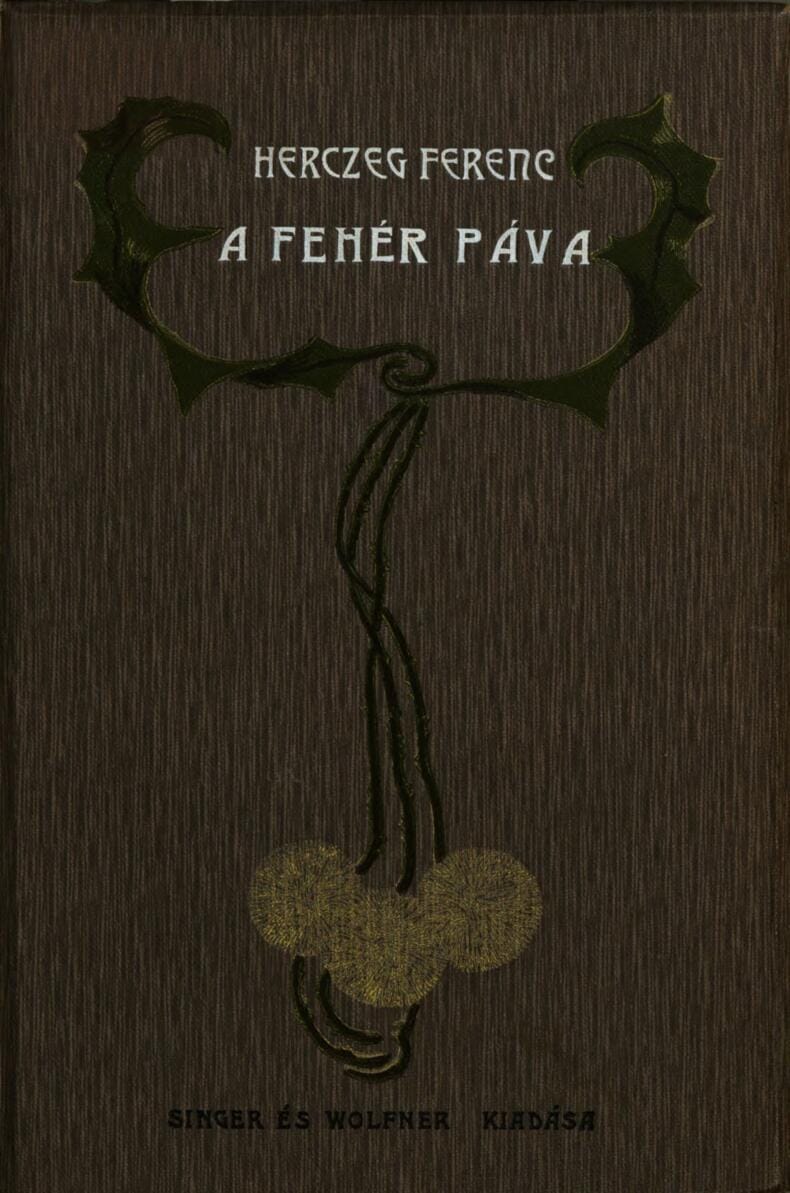
In the small Hungarian town of Varjas, 1909, the railway has not yet arrived, and the world feels small. Mariska, the beautiful and ambitious niece of the elderly town representative Ábel Péter, walks the main street with restless energy, her mother's grave freshly tended. She is a white peacock among sparrows, too vivid for a place where nothing ever changes. When the railway finally comes, bringing whispers of Budapest and modernity, the townsplits into factions arguing over progress. Mariska finds herself at the center of an uncertain romance, her future hanging on questions of duty and desire. Then she runs. The second half of the novel follows her transformation in the capital, where she becomes something her small town never could have imagined: an advocate for women's freedom, a voice among those fighting to improve women's lot. Herczeg captures the last gasp of provincial Hungary with sharp observation and dreamlike sequences that blur realism with longing. This is a story about what it costs to leave, and what it means to become yourself.
Editions
Link to this book
Add a free, dofollow link to Lex on your blog, forum, syllabus, or reading list.

<a href="https://lex-books.com/book/a-feh-r-p-va-kisv-rosi-t-rt-net-04c96b50-b59d-4872-a70b-035c824b2dda"><img src="https://lex-books.com/badges/read-on-lex.svg" alt="Read A Fehér Páva: Kisvárosi Történet by Ferenc Herczeg free on Lex" width="160" height="40"></a>[](https://lex-books.com/book/a-feh-r-p-va-kisv-rosi-t-rt-net-04c96b50-b59d-4872-a70b-035c824b2dda)[url=https://lex-books.com/book/a-feh-r-p-va-kisv-rosi-t-rt-net-04c96b50-b59d-4872-a70b-035c824b2dda][img]https://lex-books.com/badges/read-on-lex.svg[/img][/url]Read A Fehér Páva: Kisvárosi Történet by Ferenc Herczeg free on Lex: https://lex-books.com/book/a-feh-r-p-va-kisv-rosi-t-rt-net-04c96b50-b59d-4872-a70b-035c824b2ddaCite this book
Reading this edition for a paper or guide? Copy a citation.
Herczeg, Ferenc. A Fehér Páva: Kisvárosi Történet. Lex, lex-books.com/book/a-feh-r-p-va-kisv-rosi-t-rt-net-04c96b50-b59d-4872-a70b-035c824b2dda.Herczeg, F. (1911). A Fehér Páva: Kisvárosi Történet. Lex. https://lex-books.com/book/a-feh-r-p-va-kisv-rosi-t-rt-net-04c96b50-b59d-4872-a70b-035c824b2ddaHerczeg, Ferenc. A Fehér Páva: Kisvárosi Történet. Lex. https://lex-books.com/book/a-feh-r-p-va-kisv-rosi-t-rt-net-04c96b50-b59d-4872-a70b-035c824b2dda.