A Fable for Critics
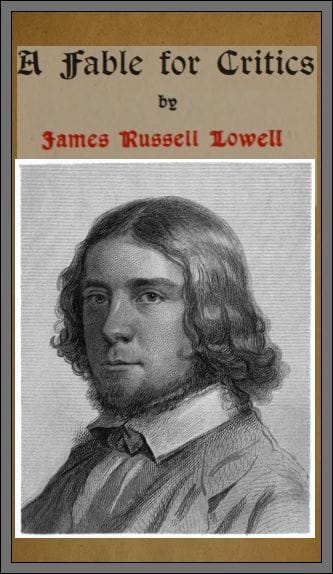
In 1848, James Russell Lowell wrote a viciously funny book: a long satirical poem in which Apollo, god of poetry, and a mortal critic settle under a laurel tree and systematically dismantle the egos of American letters. The targets are the titans of the era, Ralph Waldo Emerson, Edgar Allan Poe, Margaret Fuller, and more, each dissected with sharp wit, occasional grudging praise, and a poet's instinct for the kill. Lowell claimed he wrote it "purely for my own amusement," in a style he himself described as "neither good verse nor bad prose," and the result is something strange and delightful: a work that feels less like literature and more like overhearing a brilliant friend roast your entire literary scene at a party. Published anonymously at first, it made Lowell famous (or infamous) overnight. The satire is deeply of its moment, rooted in the rivalries and philosophies of mid-19th-century America, but its target never changes: the sacred monster of the authorial ego. For anyone who has ever read a literary review and thought, "someone should roast these people," Lowell got there first.
Editions

Link to this book
Add a free, dofollow link to Lex on your blog, forum, syllabus, or reading list.

<a href="https://lex-books.com/book/a-fable-for-critics-357db196-50a7-4fb8-be2c-4a9d404fb2b1"><img src="https://lex-books.com/badges/read-on-lex.svg" alt="Read A Fable for Critics by James Russell Lowell free on Lex" width="160" height="40"></a>[](https://lex-books.com/book/a-fable-for-critics-357db196-50a7-4fb8-be2c-4a9d404fb2b1)[url=https://lex-books.com/book/a-fable-for-critics-357db196-50a7-4fb8-be2c-4a9d404fb2b1][img]https://lex-books.com/badges/read-on-lex.svg[/img][/url]Read A Fable for Critics by James Russell Lowell free on Lex: https://lex-books.com/book/a-fable-for-critics-357db196-50a7-4fb8-be2c-4a9d404fb2b1Cite this book
Reading this edition for a paper or guide? Copy a citation.
Lowell, James Russell. A Fable for Critics. Lex, lex-books.com/book/a-fable-for-critics-357db196-50a7-4fb8-be2c-4a9d404fb2b1.Lowell, J. R. (n.d.). A Fable for Critics. Lex. https://lex-books.com/book/a-fable-for-critics-357db196-50a7-4fb8-be2c-4a9d404fb2b1Lowell, James Russell. A Fable for Critics. Lex. https://lex-books.com/book/a-fable-for-critics-357db196-50a7-4fb8-be2c-4a9d404fb2b1.

![Birds and Nature, Vol. 12 No. 1 [June 1902]illustrated by Color Photography](/_next/image?url=https%3A%2F%2Fd3b2n8gj62qnwr.cloudfront.net%2FCOVERS%2Fgutenberg_covers75k%2Febook-47881.png&w=3840&q=75)