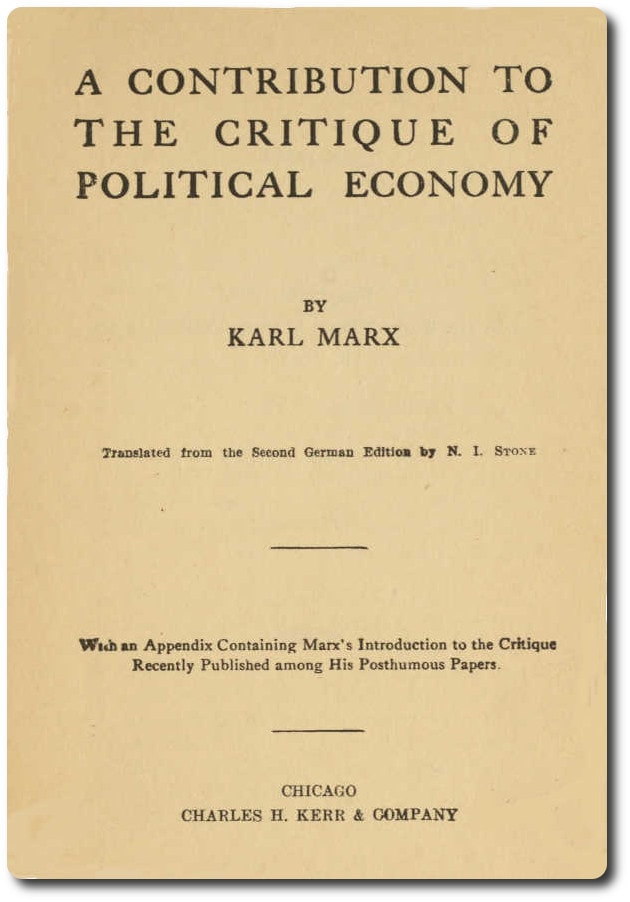
A Contribution to the Critique of Political Economy
1859
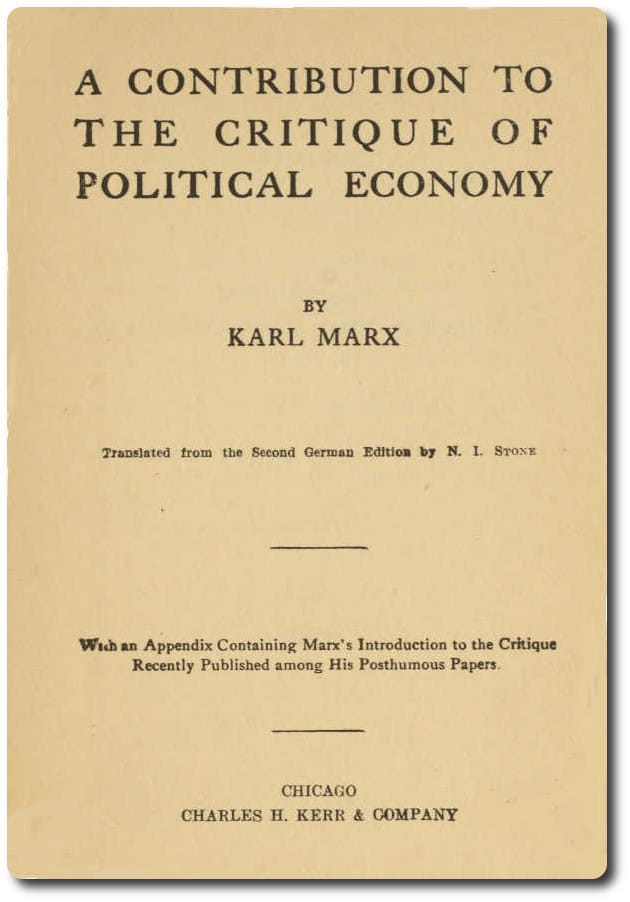
A Contribution to the Critique of Political Economy
1859
Translated by N. I. (Nahum Isaac) Stone
This is where Marx begins to see capitalism clearly for the first time. Written in 1859, it serves as the crucial bridge between his early philosophical writings and the devastating economic analysis of Capital. Here, Marx introduces his most potent insight: that commodities possess a dual nature, they satisfy human needs (use-value) while also carrying value in exchange (exchange-value), and this value derives from labor. But here is the fracture: the social relationships between people become disguised as relationships between things. This is commodity fetishism, and once you see it, you cannot unsee it. Marx dismantles the classical economists, particularly Smith and Ricardo, not to reject their analysis but to expose what their analysis concealed. The book culminates in his theory of money and the transformation of commodities into currency. What emerges is a coherent picture of how capitalism produces not only wealth but also alienation, exploitation, and its own contradictions. For anyone who wants to understand the system that shapes modern life, from your paycheck to the global financial crisis, this is where the analysis begins. It is dense, demanding, and absolutely essential.
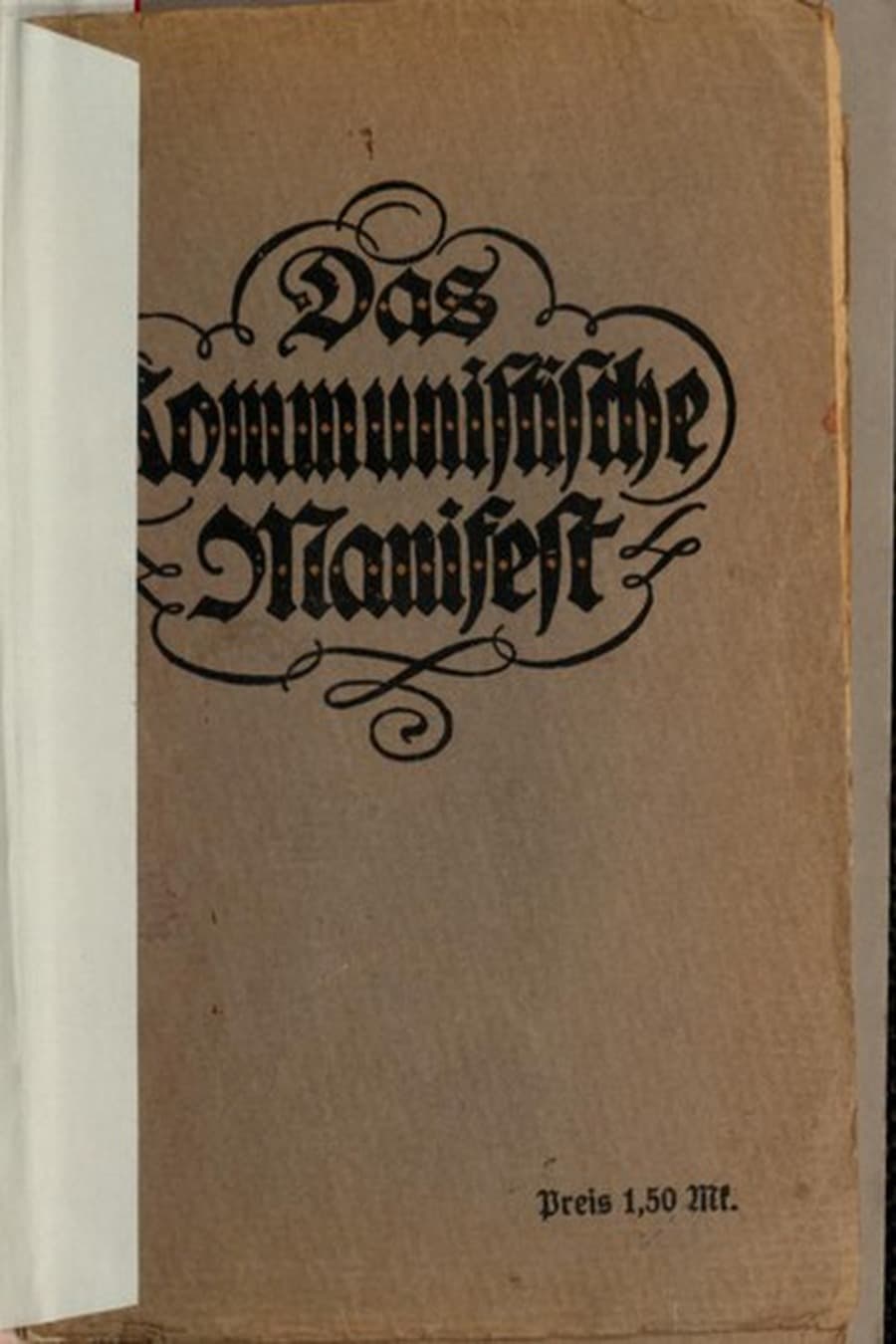
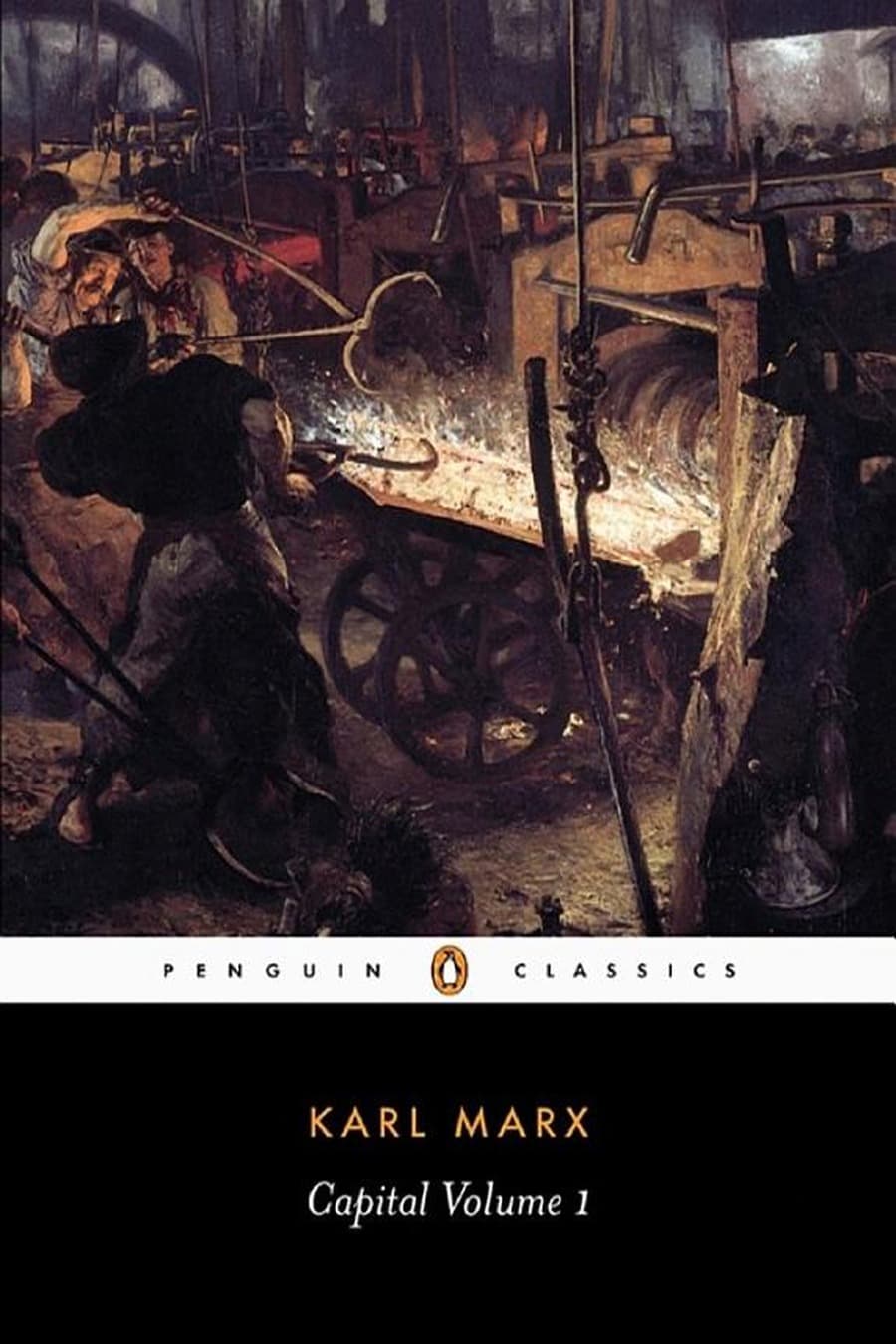
Editions
X-Ray
“It is not the consciousness of men that determines their being, but, on the contrary, their social being that determines their consciousness.””
— Karl Marx
“In the social production of their existence, men inevitably enter into definite relations, which are independent of their will, namely relations of production appropriate to a given stage in the development of their material forces of production. The totality of these relations of production constitutes the economic structure of society, the real foundation, on which arises a legal and political superstructure and to which correspond definite forms of social consciousness. The mode of production of material life conditions the general process of social, political and intellectual life. It is not the consciousness of men that determines their existence, but their social existence that determines their consciousness. At a certain stage of development, the material productive forces of society come into conflict with the existing relations of production or – this merely expresses the same thing in legal terms – with the property relations within the framework of which they have operated hitherto. From forms of development of the productive forces these relations turn into their fetters. Then begins an era of social revolution. The changes in the economic foundation lead sooner or later to the transformation of the whole immense superstructure.””
— Karl Marx
“Varlıklarının toplumsal üretiminde, insanlar, belirli ilişkiler kurarlar; bu üretim ilişkileri, onların maddi üretici güçlerinin belirli bir gelişme derecesine tekabül eder. Bu üretim ilişkilerinin tümü, toplumun iktisadi yapısının, belirli toplumsal bilinç şekillerine tekabül eden bir hukuksal ve siyasal üstyapının, üzerinde yükseldiği gerçek temeli oluşturur. Maddi yaşamın üretim tarzı, genel olarak toplumsal, siyasal ve entelektüel yaşam sürecini koşullandırır. İnsanların varlığını belirleyen şey, bilinçleri değildir; tam tersine, onların bilincini belirleyen, toplumsal varlıklarıdır. Gelişmelerinin belirli bir aşamasında toplumun maddi üretici güçleri, o zamana kadar içinde hareket ettikleri mevcut üretim ilişkilerine, ya da bunların hukuksal ifadesinden başka bir şey olmayan mülkiyet ilişkilerine ters düşerler. Üretici güçlerin gelişmesinin biçimleri olan bu ilişkiler, onların engelleri haline gelirler. O zaman bir toplumsal devrim çağı başlar. İktisadi temeldeki değişme, kocaman üstyapıyı, büyük ya da az bir hızla altüst eder.””
— Karl Marx
“Es ist nicht das Bewusstsein der Menschen, das ihr Sein, sondern umgekehrt ihr gesellschaftliches Sein, das ihr Bewusstsein bestimmt.””
— Karl Marx
“Mankind thus inevitably sets itself only such tasks as it is able to solve, since closer examination will always show that the problem itself arises only when the material conditions for its solution are already present or at least in the course of formation.””
— Karl Marx
“В общественном производстве своей жизни люди вступают в определенные, необходимые, от их воли не зависящие отношения – производственные отношения, которые соответствуют определенной ступени развития их материальных производительных сил. Совокупность этих производственных отношений составляет экономическую структуру общества, реальный базис, на котором возвышается юридическая и политическая надстройка и которому соответствуют определенные формы общественного сознания. Способ производства материальной жизни обусловливает социальный, политический и духовный процессы жизни вообще. Не сознание людей определяет их бытие, а, наоборот, их общественное бытие определяет их сознание. На известной ступени своего развития материальные производительные силы общества приходят в противоречие с существующими производственными отношениями, или – что является только юридическим выражением последних – с отношениями собственности, внутри которых они до сих пор развивались. Из форм развития производительных сил эти отношения превращаются в их оковы. Тогда наступает эпоха социальной революции. С изменением экономической основы более или менее быстро происходит переворот во всей громадной надстройке. При рассмотрении таких переворотов необходимо всегда отличать материальный, с естественно-научной точностью констатируемый переворот в экономических условиях производства от юридических, политических, религиозных, художественных или философских, короче – от идеологических форм, в которых люди осознают этот конфликт и борются за его разрешение. Как об отдельном человеке нельзя судить на основании того, что сам он о себе думает, точно так же нельзя судить о подобной эпохе переворота по ее сознанию.””
— Karl Marx
“The mode of production of material life conditions the social, political and intellectual life process in general.””
— Karl Marx
Link to this book
Add a free, dofollow link to Lex on your blog, forum, syllabus, or reading list.

<a href="https://lex-books.com/book/a-contribution-to-the-critique-of-political-economy-2ed84a94-2d65-4003-a890-fd92d61508d4"><img src="https://lex-books.com/badges/read-on-lex.svg" alt="Read A Contribution to the Critique of Political Economy by Karl Marx free on Lex" width="160" height="40"></a>[](https://lex-books.com/book/a-contribution-to-the-critique-of-political-economy-2ed84a94-2d65-4003-a890-fd92d61508d4)[url=https://lex-books.com/book/a-contribution-to-the-critique-of-political-economy-2ed84a94-2d65-4003-a890-fd92d61508d4][img]https://lex-books.com/badges/read-on-lex.svg[/img][/url]Read A Contribution to the Critique of Political Economy by Karl Marx free on Lex: https://lex-books.com/book/a-contribution-to-the-critique-of-political-economy-2ed84a94-2d65-4003-a890-fd92d61508d4Cite this book
Reading this edition for a paper or guide? Copy a citation.
Marx, Karl. A Contribution to the Critique of Political Economy. Lex, lex-books.com/book/a-contribution-to-the-critique-of-political-economy-2ed84a94-2d65-4003-a890-fd92d61508d4.Marx, K. (1859). A Contribution to the Critique of Political Economy. Lex. https://lex-books.com/book/a-contribution-to-the-critique-of-political-economy-2ed84a94-2d65-4003-a890-fd92d61508d4Marx, Karl. A Contribution to the Critique of Political Economy. Lex. https://lex-books.com/book/a-contribution-to-the-critique-of-political-economy-2ed84a94-2d65-4003-a890-fd92d61508d4.