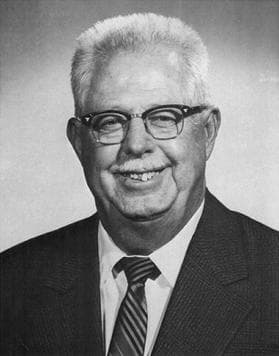
Stephen David Durrant
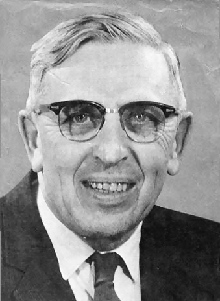
Stephen David Durrant was a prominent American mammalogist, celebrated for his extensive research on the pocket gophers of the genus Thomomys and other rodents native to the Great Basin. Born in Salt Lake City, Utah, he dedicated over four decades to academia as a professor of zoology at the University of Utah. Durrant's early life included a mission for the Church of Jesus Christ of Latter-day Saints in Switzerland, after which he pursued higher education at the University of Utah, earning a degree in French before shifting his focus to zoology. He completed his master's degree in 1931 and later earned his Ph.D. in 1950 from the University of Kansas, after conducting research at various institutions while balancing family responsibilities. Durrant's contributions to mammalogy were significant, as he described 37 new subspecies of small mammals, including gophers, mice, and beavers. His most notable work, "Mammals of Utah: Taxonomy and Distribution," published in 1952, provided a comprehensive taxonomic overview of 247 species and subspecies found in Utah. In this work, he explored the origins of mammalian diversity in the region, attributing it to the geographic and hydrological history shaped by prehistoric Lake Bonneville, which facilitated reproductive isolation and speciation. Durrant's legacy as the foremost mammalogist in Utah endures, influencing future generations of zoologists and ecologists until his passing in 1975 from lung cancer.
Books from the author





Link to this page
Add a free, dofollow link to Lex on your blog, forum, syllabus, or reading list.

<a href="https://lex-books.com/author/stephen-david-durrant"><img src="https://lex-books.com/badges/read-on-lex.svg" alt="Stephen David Durrant on Lex" width="160" height="40"></a>[](https://lex-books.com/author/stephen-david-durrant)[url=https://lex-books.com/author/stephen-david-durrant][img]https://lex-books.com/badges/read-on-lex.svg[/img][/url]Stephen David Durrant on Lex: https://lex-books.com/author/stephen-david-durrant