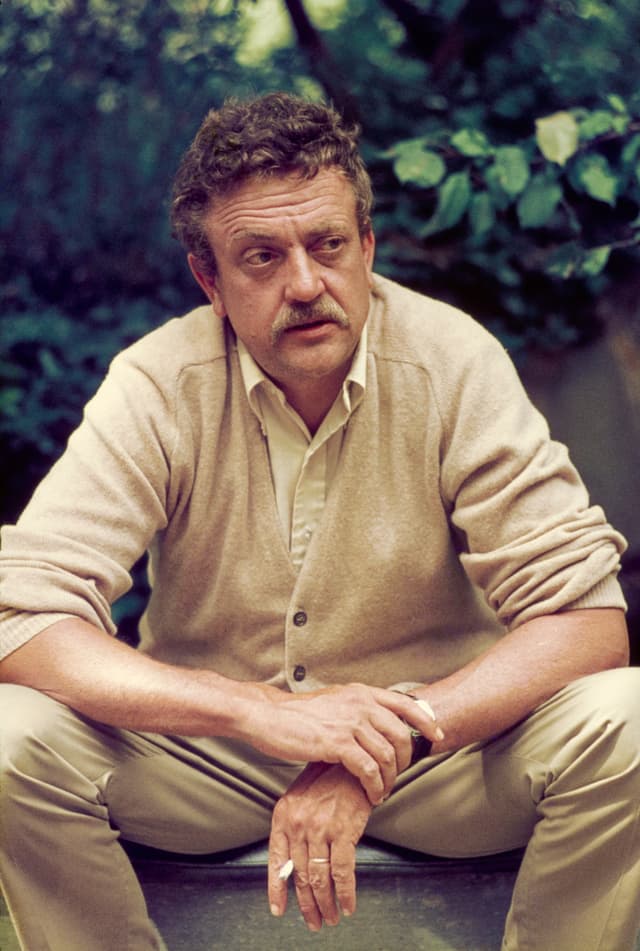
Kurt Vonnegut
Kurt Vonnegut was an influential American author celebrated for his unique blend of satire, dark humor, and science fiction. Born and raised in Indianapolis, he enlisted in the U.S. Army during World War II, where he experienced the horrors of war firsthand, including being captured by German forces and surviving the devastating bombing of Dresden. These experiences profoundly shaped his worldview and later informed his writing. After the war, he pursued a career in journalism while attending the University of Chicago, ultimately publishing his first novel, Player Piano, in 1952. Although it received critical acclaim, it did not achieve commercial success, a pattern that would change with his subsequent works. Vonnegut's literary significance grew with novels such as The Sirens of Titan (1959) and Cat's Cradle (1963), both of which showcased his distinctive narrative style and philosophical insights, earning nominations for the Hugo Award. His 1969 work, Slaughterhouse-Five, became a defining anti-war novel, blending elements of science fiction with autobiographical elements, and is often regarded as one of the greatest American novels of the 20th century. Over his prolific career, Vonnegut published fourteen novels, numerous short stories, and essays, leaving a lasting legacy as a master of satire and a voice of social critique, influencing generations of writers and readers alike.
Famous Quotes
View all 20 quotes“We are what we pretend to be, so we must be careful about what we pretend to be.””
“Those who believe in telekinetics, raise my hand.””
“I want to stand as close to the edge as I can without going over. Out on the edge you see all kinds of things you can't see from the center.””
Books from the author





Link to this page
Add a free, dofollow link to Lex on your blog, forum, syllabus, or reading list.

<a href="https://lex-books.com/author/kurt-vonnegut"><img src="https://lex-books.com/badges/read-on-lex.svg" alt="Kurt Vonnegut on Lex" width="160" height="40"></a>[](https://lex-books.com/author/kurt-vonnegut)[url=https://lex-books.com/author/kurt-vonnegut][img]https://lex-books.com/badges/read-on-lex.svg[/img][/url]Kurt Vonnegut on Lex: https://lex-books.com/author/kurt-vonnegut