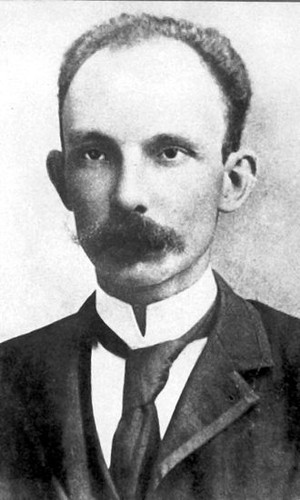
José Martí
José Martí was a Cuban writer, poet, and revolutionary who played a pivotal role in the fight for Cuban independence from Spanish rule. Born in Havana, he displayed literary talent from a young age, publishing his first poem at the age of 16. Martí's writings encompassed a range of genres, including essays, poetry, and journalism, and he is best known for his influential work 'Versos Sencillos,' which reflects his deep love for his homeland and his commitment to social justice. His literary style combined lyrical beauty with a passionate call for freedom and equality, making him a key figure in Latin American literature. Beyond his literary contributions, Martí was a fervent advocate for Cuban independence and a key organizer of the Cuban Revolutionary Party. He envisioned a Cuba free from colonial oppression and sought to unite various factions in the struggle for independence. His life was tragically cut short in 1895 during a battle against Spanish forces, but his legacy endures. Martí's writings continue to inspire generations of writers and activists, and he is celebrated as a national hero in Cuba, symbolizing the fight for liberty and justice in the face of tyranny.
Famous Quotes
View all 20 quotes“We light the oven so that everyone may bake bread in it.””
“Cultivo una rosa blanca,En julio como en enero,Para el amigo sinceroQue me da su mano franca.Y para el cruel que me arrancaEl corazon con que vivo,Cardo ni oruga cultivoCultivo una rosa blanca.I have a white rose to tendIn July as in January;I give it to the true friendWho offers his frank hand to me.And to the cruel one whose blowsBreak the heart by which I live,Thistle nor thorn do I give:For him, too, I have a white rose.””
“Amor cuerdo, no es amor. (Sane love, is not love)””
Books from the author



Link to this page
Add a free, dofollow link to Lex on your blog, forum, syllabus, or reading list.

<a href="https://lex-books.com/author/josé-martí"><img src="https://lex-books.com/badges/read-on-lex.svg" alt="José Martí on Lex" width="160" height="40"></a>[](https://lex-books.com/author/josé-martí)[url=https://lex-books.com/author/josé-martí][img]https://lex-books.com/badges/read-on-lex.svg[/img][/url]José Martí on Lex: https://lex-books.com/author/josé-martí