Jean Forge
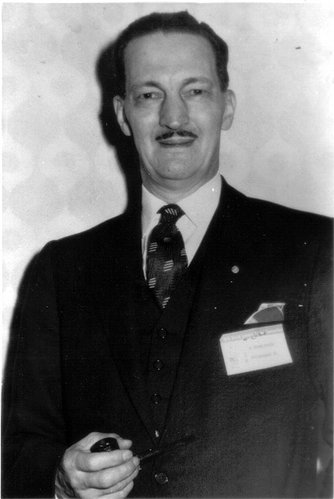
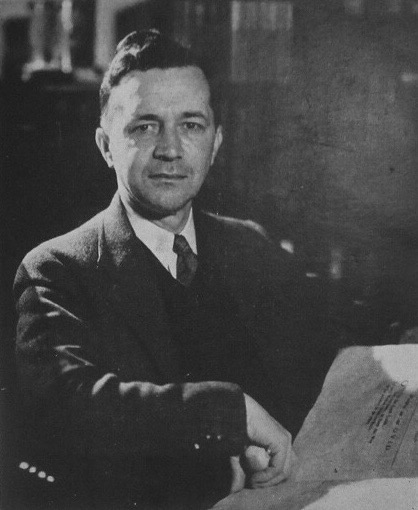
Jean Forge, the pen name of Jan Fethke, was a German-Polish author and film director known for his contributions to literature and cinema. Born in 1903, he became a notable advocate for the constructed language Esperanto, which reflected his belief in international communication and understanding. Forge's literary works often explored themes of identity and cultural exchange, drawing from his own multicultural background. His writings not only entertained but also aimed to promote the ideals of unity and peace through language. As an author, Forge produced several significant works that showcased his unique voice and perspective. His narratives often intertwined personal experiences with broader societal issues, making him a distinctive figure in the literary landscape of his time. Through his dedication to Esperanto, he sought to bridge gaps between different cultures, making his contributions to literature and language particularly relevant. Forge's legacy endures as a testament to the power of words in fostering global connections and understanding.
Famous Quotes
View all 5 quotes“With the first link, the chain is forged. The first speech censured, the first thought forbidden, the first freedom denied, chains us all irrevocably.-- Star Trek: The Next Generation””
“It is fairly natural and perhaps even necessary that a new community is taken up with its own originality and tends to idealize itself. If it didn't believe itself to be unique, perhaps it would never have been founded at all. It's like love, which always starts by idealization of the other: a baby is always the most gorgeous in the world to its parents, and a bride is always the most beautiful to her husband. With time, both parents and married couples become more realistic; perhaps too they become more committed, more faithful and more loving.It is understandable that a new community should be turned in on itself, strongly conscious of its qualities and originality, and giving thanks for these. At the start of a marriage, a couple has to take time to forge its unity, this isn't egoism, but a necessary stage and growth. With time, the community must stand back a little to discover the beauty and particular gifts of others, as well as its own limitations. Once it has found its own identity and discovered how the Holy Spirit is guiding it, it must be very attentive to the manifestations of the Spirit in others. It should not believe that it is the only community to have the privilege of being inspired by the Holy Spirit; it should listen to what the Spirit is saying to others. This will enable it to rediscover its own gifts and mission and encourage it to be more faithful to them. This in turn will enable it to discover its place in the Church and in humanity as a whole. If it is not attentive, the community risks missing a decisive turning point in its own growth.””
“A few years ago, we engaged a team of experts to determine the “secret sauce” that propelled those rare leaders, organizations, and movements to success. They discovered five principles that are consistently present when transformational breakthroughs take place. To spark this sort of change, you must: 1. Make a Big Bet. So many people and organizations are naturally cautious. They look at what seemed to work in the past and try to do more of it, leading to only incremental advances. Every truly history-making transformation has occurred when people have decided to go for revolutionary change. 2. Be bold, take risks. Have the guts to try new, unproven things and the rigor to continue experimenting. Risk taking is not a blind leap off a cliff but a lengthy process of trial and error. And it doesn’t end with the launch of a product or the start of a movement. You need to be willing to risk the next big idea, even if it means upsetting your own status quo. 3. Make failure matter. Great achievers view failure as a necessary part of advancing toward success. No one seeks it out, but if you’re trying new things, the outcome is by definition uncertain. When failure happens, great innovators make the setback matter, applying the lessons learned and sharing them with others. 4. Reach beyond your bubble. Our society is in thrall to the myth of the lone genius. But innovation happens at intersections. Often the most original solutions come from engaging with people with diverse experiences to forge new and unexpected partnerships. 5. Let urgency conquer fear. Don’t overthink and overanalyze. It’s natural to want to study a problem from all angles, but getting caught up in questions like “What if we’re wrong?” and “What if there is a better way?” can leave you paralyzed with fear. Allow the compelling need to act to outweigh all doubts and setbacks. These five principles can be summarized in two words: Be Fearless.””
Books from the author





Link to this page
Add a free, dofollow link to Lex on your blog, forum, syllabus, or reading list.

<a href="https://lex-books.com/author/jean-forge"><img src="https://lex-books.com/badges/read-on-lex.svg" alt="Jean Forge on Lex" width="160" height="40"></a>[](https://lex-books.com/author/jean-forge)[url=https://lex-books.com/author/jean-forge][img]https://lex-books.com/badges/read-on-lex.svg[/img][/url]Jean Forge on Lex: https://lex-books.com/author/jean-forge