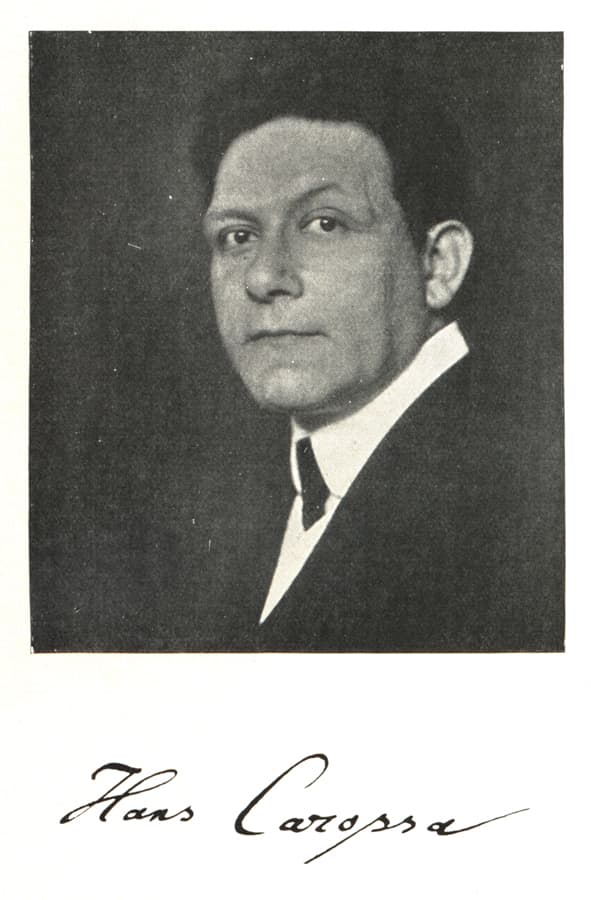
Hans Carossa
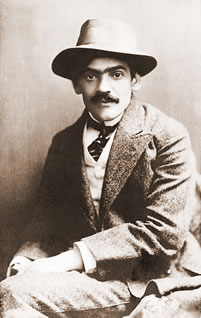
Hans Carossa was a German novelist and poet, whose literary career was deeply intertwined with his experiences as a medical doctor. Born in Bad Tölz, Bavaria, he pursued medicine and served as a field surgeon during World War I, an experience that profoundly influenced his writing. Carossa is best known for his autobiographical novels, which reflect his inner life and the tumultuous times he lived through, particularly during the rise of the Nazi regime. His notable works include 'Der Arzt und die Seele' and 'Die Chiffren', which explore themes of identity, memory, and the human condition. During the Nazi era, Carossa chose a path of inner emigration, distancing himself from the regime while continuing to write. His literary significance is marked by his ability to articulate the struggles of the individual against oppressive societal forces. He received several accolades for his contributions to literature, including the Gottfried Keller Prize in 1931 and the Goethe Prize in 1938. Carossa's legacy endures through his poignant explorations of the human psyche and his commitment to artistic integrity in challenging times.
Famous Quotes
View all 1 quotes“Les Roumains gravement blessés sont couchés dehors dans la neige entre les pins. Nous avons placé près d'eux un de leurs sous-officiers de santé, un jeune juif. Il leur a allumé un feu qui brûle tristement et grésille sous les flocons de neige. (p. 107)”
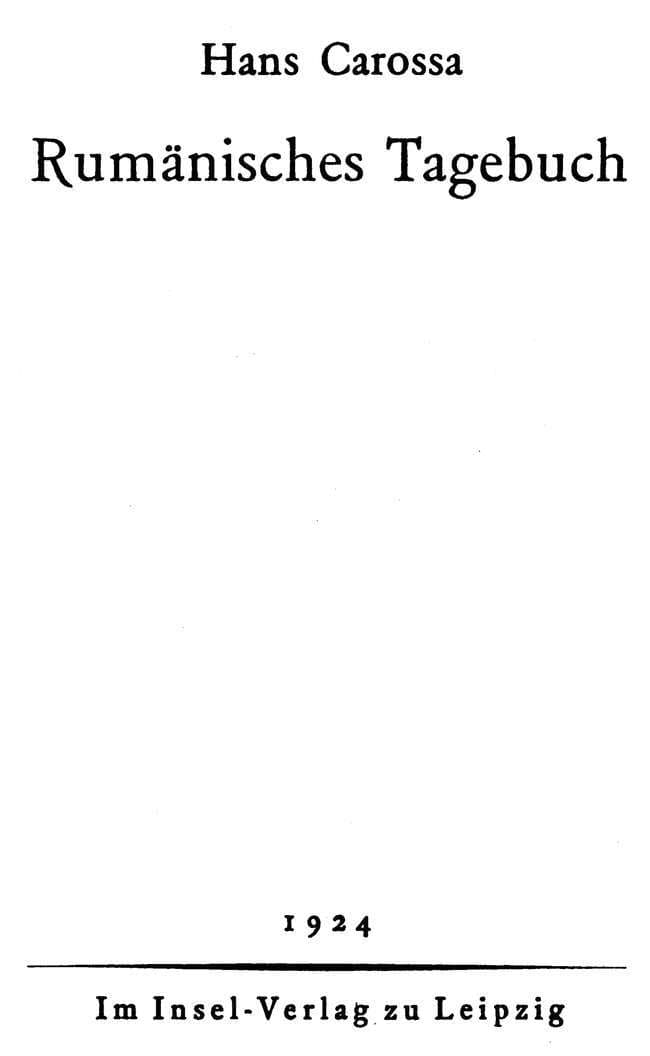
Books from the author






Link to this page
Add a free, dofollow link to Lex on your blog, forum, syllabus, or reading list.

<a href="https://lex-books.com/author/hans-carossa"><img src="https://lex-books.com/badges/read-on-lex.svg" alt="Hans Carossa on Lex" width="160" height="40"></a>[](https://lex-books.com/author/hans-carossa)[url=https://lex-books.com/author/hans-carossa][img]https://lex-books.com/badges/read-on-lex.svg[/img][/url]Hans Carossa on Lex: https://lex-books.com/author/hans-carossa