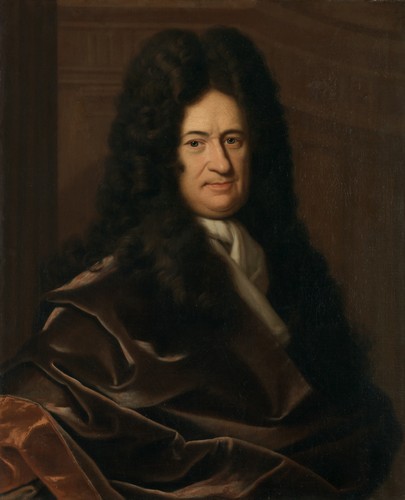
Gottfried Wilhelm Leibniz
Gottfried Wilhelm Leibniz was a German polymath and philosopher who made significant contributions to various fields, including mathematics, logic, and metaphysics. Born in Leipzig, he was a child prodigy who studied law and philosophy, eventually becoming a prominent figure in the intellectual circles of Europe. Leibniz is perhaps best known for developing calculus independently of Isaac Newton, introducing the notation that is still in use today. His work in mathematics laid the groundwork for future advancements in the field, and his philosophical writings explored the nature of reality, knowledge, and the relationship between mind and matter. In addition to his mathematical achievements, Leibniz's philosophical ideas were groundbreaking. He proposed the concept of monads, simple substances that make up the fabric of reality, and argued for a pre-established harmony between these monads, which influenced later philosophical thought. His belief in rationalism and the importance of reason in understanding the world positioned him as a key figure in the Enlightenment. Leibniz's legacy endures through his contributions to both mathematics and philosophy, as he is remembered as a thinker who bridged the gap between the two disciplines, shaping the course of modern thought.
Famous Quotes
View all 18 quotes“This is the best of all possible worlds.””
“He who hasn't tasted bitter things hasn't earned sweet things.””
“Nihil est sine ratione.[There is nothing without a reason.]””
Books from the author


Link to this page
Add a free, dofollow link to Lex on your blog, forum, syllabus, or reading list.

<a href="https://lex-books.com/author/gottfried-wilhelm-leibniz"><img src="https://lex-books.com/badges/read-on-lex.svg" alt="Gottfried Wilhelm Leibniz on Lex" width="160" height="40"></a>[](https://lex-books.com/author/gottfried-wilhelm-leibniz)[url=https://lex-books.com/author/gottfried-wilhelm-leibniz][img]https://lex-books.com/badges/read-on-lex.svg[/img][/url]Gottfried Wilhelm Leibniz on Lex: https://lex-books.com/author/gottfried-wilhelm-leibniz