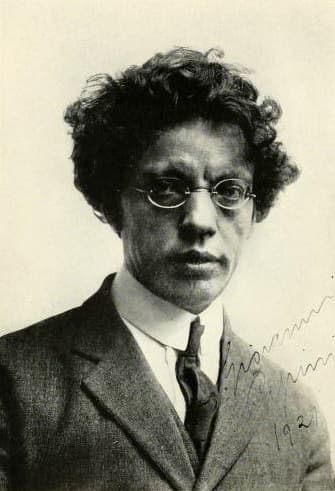
Giovanni Papini
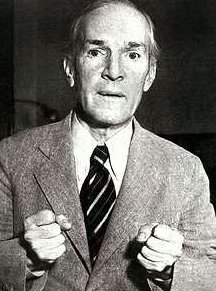
Giovanni Papini was an influential Italian journalist, essayist, novelist, and philosopher, known for his dynamic engagement with early twentieth-century literary movements. A prominent figure in Italian pragmatism, he was a fervent advocate for avant-garde ideas, contributing to journals such as Leonardo and Lacerba. His writing, characterized by an oratory style and a penchant for polemics, reflected his tumultuous philosophical journey, which included shifts from atheism to Catholicism and from individualism to conservatism, ultimately aligning with fascist ideologies while rejecting Nazism. Papini's works, including 'Il crepuscolo dei filosofi' and the autobiographical 'Un uomo finito,' showcased his unique perspective on life and art, positioning him as a significant voice in the cultural landscape of his time. His literary contributions were marked by a desire to provoke thought and challenge the status quo, making him a controversial yet pivotal figure in the evolution of modern Italian literature. Papini's legacy lies not only in his writings but also in his role as a cultural provocateur who sought to redefine the relationship between literature and action, leaving an indelible mark on the intellectual currents of his era.
Famous Quotes
View all 3 quotes“I am a free man—and I need my freedom. I need to be alone. I need to ponder my shame and my despair in seclusion; I need the sunshine and the paving stones of the streets without companions, without conversation, face to face with myself, with only the music of my heart for company. What do you want of me? When I have something to say, I put it in print. When I have something to give, I give it. Your prying curiosity turns my stomach! Your compliments humiliate me! Your tea poisons me! I owe nothing to any one. I would be responsible to God alone—if He existed!”
“Sunt suspendat între cer şi pământ, prea greoi ca să mă înalţ spre stele şi prea eteric ca să scormonesc în noroi.”
“Life to be bearable must be lived intensely. Through it a continuous stream of emotion passes. Though that emotion is ever changing as flowing water changes, it at least bears us along on a current that gives the illusion of continuity and permanence. But analyze life, tear its trappings off, lay it bare with thought, with logic, with philosophy, and its emptiness is revealed as a bottomless pit; its nothingness frankly confesses to nothingness, and Despair comes to perch in the soul.”
Books from the author


Link to this page
Add a free, dofollow link to Lex on your blog, forum, syllabus, or reading list.

<a href="https://lex-books.com/author/giovanni-papini"><img src="https://lex-books.com/badges/read-on-lex.svg" alt="Giovanni Papini on Lex" width="160" height="40"></a>[](https://lex-books.com/author/giovanni-papini)[url=https://lex-books.com/author/giovanni-papini][img]https://lex-books.com/badges/read-on-lex.svg[/img][/url]Giovanni Papini on Lex: https://lex-books.com/author/giovanni-papini