Arthur John Hopkins
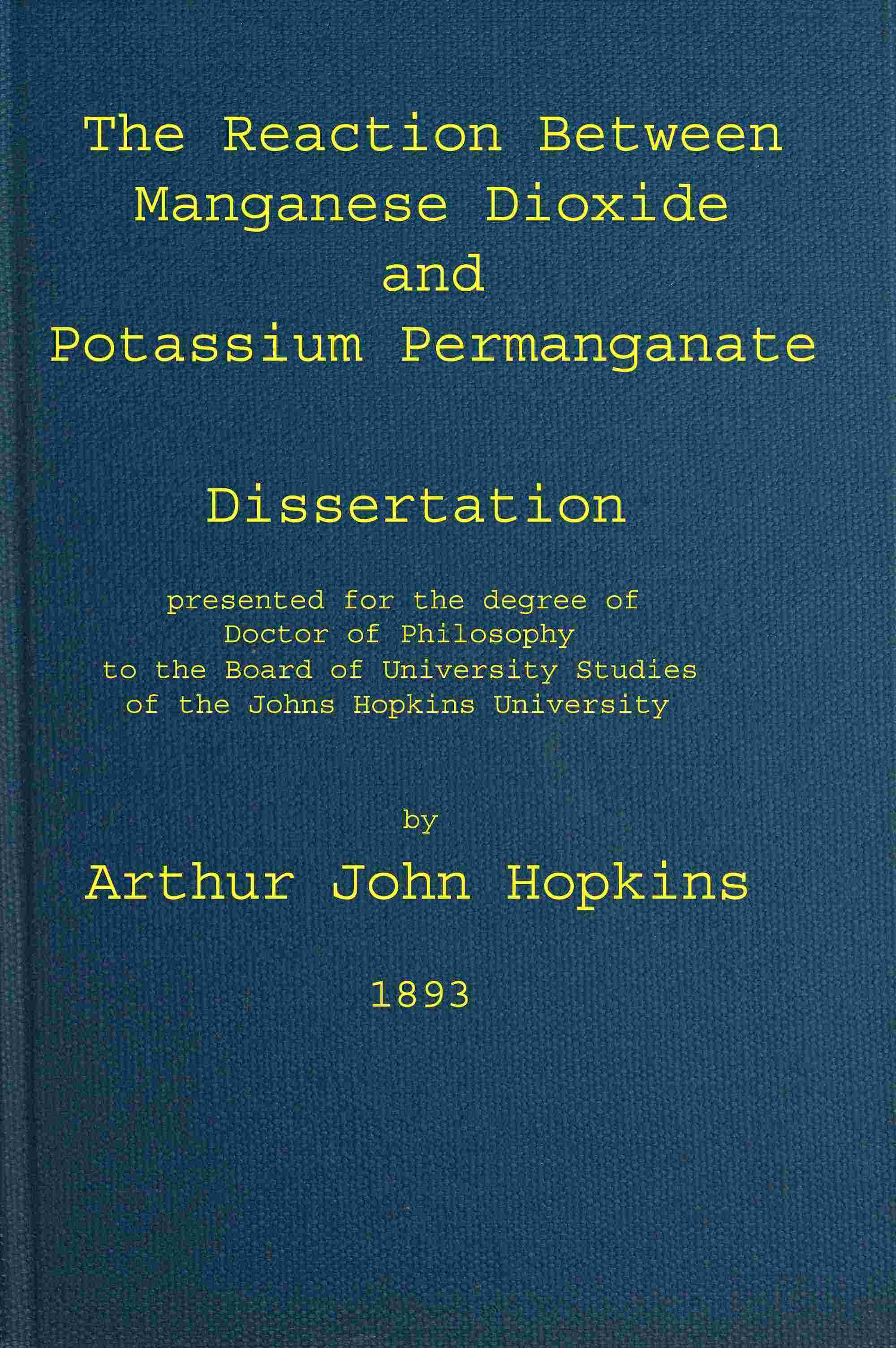
Arthur John Hopkins was a prominent British chemist known for his significant contributions to the field of chemistry during the late 19th and early 20th centuries. He is particularly recognized for his work on the reactions of manganese compounds, which played a crucial role in advancing the understanding of chemical processes. His notable publication, "The Reaction Between Manganese Dioxide and Potassium Permanganate," showcases his expertise in inorganic chemistry and reflects the scientific rigor of his research. Hopkins's investigations into the properties and behaviors of these compounds not only contributed to academic knowledge but also had practical implications in various industrial applications. Throughout his career, Hopkins was dedicated to the pursuit of scientific inquiry, often collaborating with other chemists to explore the complexities of chemical reactions. His work is characterized by a meticulous approach to experimentation and a commitment to elucidating the mechanisms underlying chemical interactions. Although not as widely known as some of his contemporaries, Hopkins's contributions to chemistry remain an important part of the discipline's history, particularly in the study of manganese and its compounds. His legacy endures through the foundational knowledge he provided, which continues to inform modern chemical research.
Books from the author





Link to this page
Add a free, dofollow link to Lex on your blog, forum, syllabus, or reading list.

<a href="https://lex-books.com/author/arthur-john-hopkins"><img src="https://lex-books.com/badges/read-on-lex.svg" alt="Arthur John Hopkins on Lex" width="160" height="40"></a>[](https://lex-books.com/author/arthur-john-hopkins)[url=https://lex-books.com/author/arthur-john-hopkins][img]https://lex-books.com/badges/read-on-lex.svg[/img][/url]Arthur John Hopkins on Lex: https://lex-books.com/author/arthur-john-hopkins