“A ship is safe in harbor, but that's not what ships are for.””
Quotes by William G. T. Shedd
“error in a believer has more influence within the church than error in an unbeliever has.””
Dogmatic Theology
“if there be no love of righteousness, there is no anger at sin, and, conversely, if there be no anger at sin, there is no love of righteousness.””
Dogmatic Theology
“Because God has originated the power’s and capacities of a creature from nothing, he is entitled to all the agency of these faculties without paying for it; as the artificer of a watch is entitled to all the motion of the watch, without coming under obligation to the watch. Even this comparison is inadequate; for the maker of the watch did not create the materials out of which it is made. But God creates the very substance itself out of which man’s faculties of mind and body are made.””
Dogmatic Theology
“Whenever a man deliberately ventures upon an action which he knows that religion prohibits, he tacitly reiects religion. There may not pass in this thoughts every step which we have described nor may he come consciously to the conclusion: but he acts upon the conclusion, he practically adopts it. And the doing so will alienate his mind from religion as surely, almost, as if he had formally argued himself into an opinion of its untruth. The effect of sin is necessarily and highly and in all cases adverse to the production and existence of religious faith.””
Dogmatic Theology
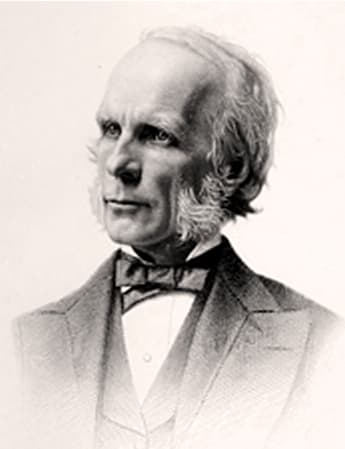 William G. T. Shedd
William G. T. Shedd was a prominent American theologian and author known for his influential works on Christian doctrine and ethics. Born in 1820, he was educated at the University of New York and lat...