“We are under a deception similar to that which misleads the traveler in the Arabian desert. Beneath the caravan all is dry and bare; but far in advance, and far in the rear, is the semblance of refreshing waters... A similar illusion seems to haunt nations through every stage of the long progress from poverty and barbarism to the highest degrees of opulence and civilization. But if we resolutely chase the mirage backward, we shall find it recede before us into the regions of fabulous antiquity. It is now the fashion to place the golden age of England in times when noblemen were destitute of comforts the want of which would be intolerable to a modern footman, when farmers and shopkeepers breakfasted on loaves the very sight of which would raise a riot in a modern workhouse, when to have a clean shirt once a week was a privilege reserved for the higher class of gentry, when men died faster in the purest country air than they now die in the most pestilential lanes of our towns, and when men died faster in the lanes of our towns than they now die on the coast of Guiana....We too shall in our turn be outstripped, and in our turn be envied. It may well be, in the twentieth century, that the peasant of Dorsetshire may think himself miserably paid with twenty shillings a week; that the carpenter at Greenwich may receive ten shillings a day; that laboring men may be as little used to dine without meat as they are now to eat rye bread; that sanitary police and medical discoveries may have added several more years to the average length of human life; that numerous comforts and luxuries which are now unknown, or confined to a few, may be within the reach of every diligent and thrifty workingman. And yet it may then be the mode to assert that the increase of wealth and the progress of science have benefited the few at the expense of the many, and to talk of the reign of Queen Victoria as the time when England was truly merry England, when all classes were bound together by brotherly sympathy, when the rich did not grind the faces of the poor, and when the poor did not envy the splendor of the rich.”
Quotes by Thomas Babington Macaulay
“Then out spake brave Horatius,The Captain of the gate:‘To every man upon this earthDeath cometh soon or late.And how can man die betterThan facing fearful odds,For the ashes of his fathers,And the temples of his Gods,‘And for the tender motherWho dandled him to rest,And for the wife who nursesHis baby at her breast,And for the holy maidensWho feed the eternal flame,To save them from false SextusThat wrought the deed of shame?‘Hew down the bridge, Sir Consul,With all the speed ye may;I, with two more to help me,Will hold the foe in play.In yon strait path a thousandMay well be stopped by three.Now who will stand on either hand,And keep the bridge with me?Then out spake Spurius Lartius;A Ramnian proud was he:‘Lo, I will stand at thy right hand,And keep the bridge with thee.’And out spake strong Herminius;Of Titian blood was he:‘I will abide on thy left side,And keep the bridge with thee.’‘Horatius,’ quoth the Consul,‘As thou sayest, so let it be.’And straight against that great arrayForth went the dauntless Three.For Romans in Rome’s quarrelSpared neither land nor gold,Nor son nor wife, nor limb nor life,In the brave days of old.Then none was for a party;Then all were for the state;Then the great man helped the poor,And the poor man loved the great:Then lands were fairly portioned;Then spoils were fairly sold:The Romans were like brothersIn the brave days of old.Now Roman is to RomanMore hateful than a foe,And the Tribunes beard the high,And the Fathers grind the low.As we wax hot in faction,In battle we wax cold:Wherefore men fight not as they foughtIn the brave days of old.”
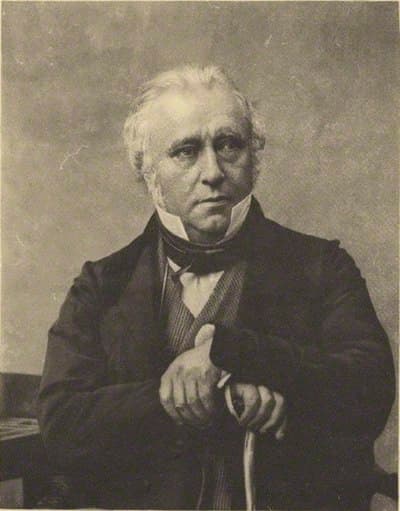 Thomas Babington Macaulay
Thomas Babington Macaulay was a prominent British historian, poet, and Whig politician whose influence extended into both literature and politics. He is best remembered for his work, 'The History of E...