“There’s always a return to the ruins, only to the womb there is no return. [191]””
Mhudi
“There’s always a return to the ruins, only to the womb there is no return. [191]””
“One party went to far away Zimbabwe and returned with pack-oxen loaded with ivory, rhinoceros hides, lion skins and hog tusks. They reported finding a people whose women dug the mountain sides for nuggets and brittle stones, which they brought home to boil and produce a beautiful metal from which to mould bangles and ornaments of rare beauty. That was the Matebele’s first experience of gold smelting. [182]””
“That exactly is how my father and mother met and became man and wife. There were no home ceremonials, such as the seeking and obtaining of parental consent, because there were no parent; no conferences by uncles and grand-uncles, or exhortations by grandmothers and aunts; no male relatives to arrange the marriage knot, nor female relations to herald the family union, and no uncles of the bride to divide the bogadi (dowry) cattle as, of course, there were no cattle. It was a simple matter of taking each other for good and or ill with the blessing of the ‘God of Rain’. The forest was their home, the rustling trees their relations, the sky their guardian and the birds, who sealed the marriage contract with the songs, the only guests. Here they stablished their home and names it Re-Nosi (We-are-alone). [41]””
“So long as there are two men left on earth there will be war. [169]””
“I shall return to Kunana, walk around the old place and venerate the ground where lived and worked my mother-in-law whom I never saw. I shall go down to the field of carnage, bestride the old battlefield, and say: Here fell the noble Rolong woman who gave birth to my faithful Mhudi. Somewhere here lies the remains of the woman who mothered my wife and nourished every fibre of her beautiful form. Then I will call to her spirit and say: Come down from the heights and approve the feeble cares I am trying to bestow on the noble treasure thou hast bequeathed to me. My mother, O cradle of my wife! That after all my pains and nursing, thou shouldst have been hounded out of this life without receiving a pin from the worthless fellow who wived thy noble offspring! [159 – 160]””
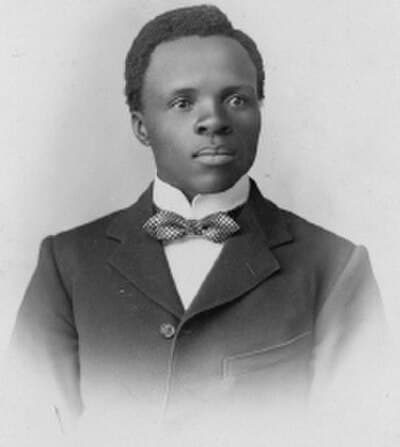 Sol. T. Plaatje
Sol T. Plaatje was a South African writer, journalist, and political activist, recognized as one of the first black South Africans to gain international prominence through his literary work. Born in t...
“The foolish dam suckles her young while lying down; but the wise dam suckles hers standing up and looking out for approaching hunters. [104]””
“Chief Moroka was not as great an orator as most of the Native chiefs but he excelled in philosophy. In that respect his witty expressions and dry humour were equal to those of Moshueshue, the Basuto King. He spoke in a staccato voice, with short sentences and a stop after each, as though composing the next sentence. His speeches abounded in allegories and proverbial sayings, some traditional and others spontaneous. His own maxims had about them the spice of originality which always provided his auditors with much food for thought. [104]””
“The viewpoint of the ruler is not always the viewpoint of the ruled. [70]””
“Never be led by a female lest thou fall over a precipice. [57]””
“Let the enemy try conclusions with me and the vultures shall gorge themselves with his flesh and the ants shall fatten on his blood. [137]””
“I am going to leave this place while the leaving is good. [139]””
“The forests shook with the awful thunder of the guns, which stirred a wild agitation among the denizens of the day. Terrified game of every description scattered in all directions and fled for dear life; oxen bellowed in surprise and wild hounds yelped, wolves and jackals ran as though possessed by a legion of devils. Wild birds rushed out of their nests and protested loudly against the unholy disturbance of the peace of their haunts. [145]””
“That will not do, for your people will not tolerate me. If they get enraged by nothing more than a drink of water out of their water-pail, they are not likely to allow me a place near their Captain. [159]””
“In future, anyone spoiling for human blood may go and join the Matebele and there slake his thirst for blood. They are the only nation I know who delight in bloody accidents. [98]””
“A man was not made to live alone. Had it not been for Mhudi, I don’t think you would have known me at all. She made me what I am. I feel certain that your manhood will never be recognized as long as you remain wifeless. [160]””
“Man, Ra-Thaga, I always told you that you had a brown skin over a white heart, but you wouldn’t believe me. [161]””
“Urge him, even as I would urge all men of my acquaintance, to gather more sense and cease warring against their kind. [170]””
“During the few days she travelled with them, she had been charmed by Hannetjie’s disposition, which seemed to her a shining contrast to the general attitude of the other Boers. [188 – 189]””
“The Van Zyls, especially, and the others Boers at Khing, feeling outraged at De Villiers’s treatment of the Kaffir and his wife, regarded these acts of generosity as being grossly extravagant. Indeed, they began to doubt the sanity of the young man. [189]””
“Strange to relate, these simple folk were perfectly happy without money and without silver watches. Abject poverty was practically unknown; they had no orphanages because there were no nameless babies. [3]””