“I think one of the sweetest lessons taught by the Prophet, and yet one of the saddest, occurred close to the time of his death. He was required to leave his plan and vision of the Rocky Mountains and give himself up to face a court of supposed justice.These are his words: 'I am going like a lamb to the slaughter; but I am calm as a summer's morning; I have a conscience void of offense towards God, and towards all men' (D&C 135:4). That statement of the Prophet teaches us obedience to law and the importance of having a clear conscience toward God and toward our fellowmen. The Prophet Joseph Smith taught these principles--by example.There was to be one great final lesson before his mortal life ended. He was incarcerated in Carthage Jail with his brother Hyrum, with John Taylor, and with Willard Richards. The angry mob stormed the jail; they came up the stairway, blasphemous in their cursing, heavily armed, and began to fire at will. Hyrum was hit and died. John Taylor took several balls of fire within his bosom. The Prophet Joseph, with his pistol in hand, was attempting to defend his life and that of his brethren, and yet he could tell from the pounding on the door that this mob would storm that door and would kill John Taylor and Willard Richards in an attempt to kill him.And so his last great act here upon the earth was to leave the door and lead Willard Richards to safety, throw the gun on the floor, and go to the window, that they might see him, that the attention of this ruthless mob might be focused upon him rather than the others. Joseph Smith gave his life. Willard Richards was spared, and John Taylor recovered from his wounds.'Greater love hath no man than this, that a man lay down his life for his friends' (John 15:13). The Prophet Joseph Smith taught us love--by example.””
Quotes by John Thomas Smith
“The process of dehuminazing the locals was under way, and it had very little to do with veracity. The Puritan narratives would continue that process and bring the devil into the mix. At least John Smith didn't think Satan was involved.””
“Due to his unique position at the Met, John had access to the vaults that housed the museum’s entire photography collection, much of it never seen by the public. John’s specialty was Victorian photography, which he knew I was partial to as well. He invited Robert and me to come and see the work firsthand. There were flat files from floor to ceiling, metal shelves and drawers containing vintage prints of the early masters of photography: Fox Talbot, Alfred Stieglitz, Paul Strand, and Thomas Eakins. Being allowed to lift the tissues from these photographs, actually touch them and get a sense of the paper and the hand of the artist, made an enormous impact on Robert. He studied them intently”
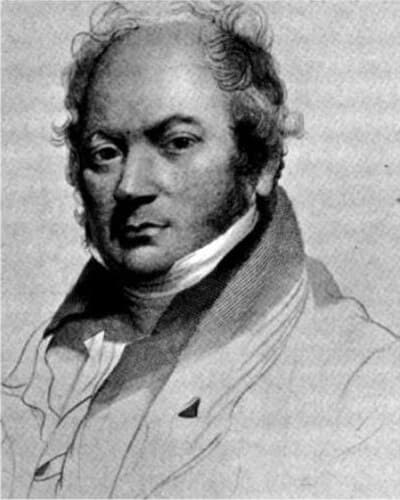 John Thomas Smith
 was an English artist and writer, best known for his contributions to the field of printmaking and his role in the early development of the art of lithography. He gained recognition ...