“In the economies of late capitalism leisure displaces labor, consumption displaces production, and commodities become the instruments of leisure, identity, and social relations.””
Television Culture (Studies in Communication Series)
“In the economies of late capitalism leisure displaces labor, consumption displaces production, and commodities become the instruments of leisure, identity, and social relations.””
“My design was not so much to contribute new facts as to shape the narrative in such a way as to emphasize relations of cause and effect that are often buried in the mass of details.””
“Gless's lexical shift from "sexiness" through "femininity" to a "real strong lady" is a discursive shift and therefore has sociopolitical dimension. "Sexiness" is from an explicitly patriarchal discourse, "femininity" is from a discourse that attempts to naturalize gender construction and difference in terms of the status quo and is therefore implicitly patriarchal, whereas "real strong lady" is from a discourse that consciously opposes and exposes both the explicit and implicit patriarchy of "sexiness" and "femininity".””
“The alienated audiences was one that was aware of the performance as an arbitrary construction of the real, of the difference between players and characters, and was therefore aware that the people and incidents on stage were there to perform social an ideological actions that could only be understood in terms of their relationship to the dominant ideology. Alienation produced a thinking, interrogative socially aware audience.””
“On the other hand, identification as a relationship of audience to performance disguised the arbitrarily constructed nature of the performance and encouraged the audience to experience the representation as though it were the real, and, in particular, to see characters as individually real people. This blurring of the distinction between the representation and the real disguised the fact that people and incidents were on stage to perform ideologically determined actions and made them appear as innocent, objective relections of reality. It made them appear prodcuts of nature, not of culture.Identification encouraged the audience to share the experiences and emotions of the characters and thus produced a feeling audience, not a thinking one, an accepting not an interrogative one, and one that understood incidents and actions through individual experience rather than through a sociopolitical framework.””
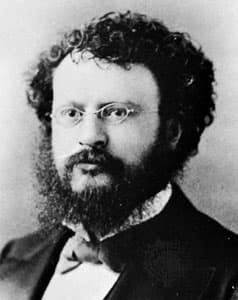 John Fiske
John Fiske was an American philosopher, historian, and writer, known for his influential works on American history and philosophy. Born in 1842, he was a prominent figure in the intellectual landscape...
“Identification then becomes a process of imaginative wish fulfillment which can be, and is, criticized from at least two points of view. The moralists criticize it on the grounds that it is mere escapism, and in encouraging people to imagine a better existence for themselves discourages them from working to achieve it in reality. At the other end of the spectrum, the ideologists argue that identification is the process whereby the values of the dominant ideology are naturalized into the desires, almost the instincts, of the individual, and are thus endlessly reproduced and perpetuated.””
“There is no pleasure in being "duped" by the text into a helpless viewer, but there is considerable pleasure in selectively viewing the text for points of identification and distance, in controlling one's relationship with the represented characters in the light of one's own social and psychological context.””
“Because men's idea of masculinity can rarely be realized at work they have developed a masculine style for their leisure and social activities that consists of excessive signs of masculinity in an exaggerated and compensatory display. The same gap between the ideological ideal and social experience also explains the sexism and aggressiveness of much adolescent male style, for, like lower-class men, young boys are also denied the social means to exercise the power that our ideology tells them is the prerequisite of their masculinity.””
“Chambers (1986) argues that contemporary metropolitan society produces a culture of the spectacle in which the realization of the "self" is not achieved in the depth of one's inner being, but on the surface, through style, through image, through "a series of theatrical gestures" (p.11).””
“it is impossible for a free people to govern a dependent people despotically without endangering its own freedom.””
“Anything out of control is always a potential threat, and always calls up moral, legal, and aesthetic powers to discipline it. The signs of the subordinate out of control terrify the forces of order (whether moral, legal, or aesthetic), for they constitute a constant reminder of both how fragile social control is and how it is resented; they demonstrate how escaping social control, even momentarily, produces a sense of freedom.””
“What are you, where did you come from, and whither are you bound?””
“Hans hu sto til tall, størst mulige, og til fisk og sild og varer og gjødsel og skog som kunne hogges til ved.””
“while we remain immersed in the study of personal incidents and details, as what such a statesman said or how many men were killed in such a battle, we may quite fail to understand what it was all about, and we shall be sure often to misjudge men's characters and estimate wrongly the importance of many events. For this reason we cannot clearly see the meaning of the history of our own times.””