“It was about that time [415 BCE] that the poet was proscribed for atheism, he having declared that the non-punishment of a certain act of iniquity proved that there were no gods. It has been surmised, with some reason, that the iniquity in question was the slaughter of the Melians by the Athenians in 416 BCE, and the Athenian resentment in that case was personal and political rather than religious. For some time after 415 the Athenian courts made strenuous efforts to punish every discoverable case of impiety; and parodies of the Eleusinian mysteries were alleged against Alcibiades and others. , who was further charged with divulging the Eleusinian and other mysteries, and with making firewood of an image of Herakles, telling the god thus to perform his thirteenth labour by cooking turnips, became thenceforth one of the proverbial atheists of the ancient world, and a reward of a silver talent was offered for killing him, and of two talents for his capture alive; despite which he seems to have escaped.””
Quotes by J. M. Robertson
“I’m going to recommend a simple framework for evaluating and changing your behavior based on a combination of cognitive-behavioral therapy and ancient Stoic practices. It consists of the following steps: 1. Evaluate the consequences of your habits or desires in order to select which ones to change. 2. Spot early warning signs so that you can nip problematic desires in the bud. 3. Gain cognitive distance by separating your impressions from external reality. 4. Do something else instead of engaging in the habit.””
“The Oracle pursued a logical course of confuting theism, and leaving 'a-theism' the negative result. It did not, in the absurd terms of common religious propaganda, 'deny the existence of God.' It affirmed that God was a term for an existence imagined by man in terms of his own personality and irreducible to any tenable definition. It did not even affirm that 'there are no Gods'; it insisted that the onus of proof as to any God lay with the theist, who could give none compatible with his definitions.””
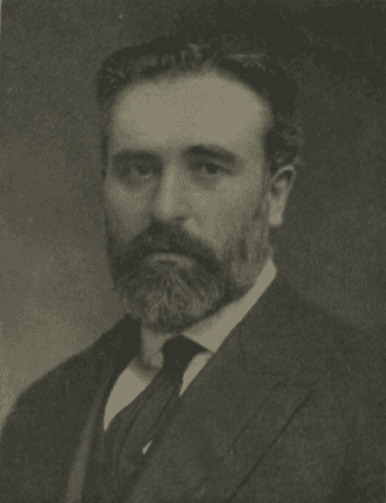 J. M. Robertson
J. M. Robertson was a Scottish literary critic, scholar, and author known for his extensive work on Shakespeare and the development of English literature. Born in 1856, Robertson's academic pursuits l...