“The ancient city, like all human society, had ranks, distinctions, and inequalities.””
The Ancient City: A Study of the Religion, Laws, and Institutions of Greece and Rome
“The ancient city, like all human society, had ranks, distinctions, and inequalities.””
“Naming (“christening,” “deeming”) is more than a performative moral act; it is linguistic and aesthetic as well. Identifying the emergence and establishment of anti-sacrificial moral practices will take on a form distinctive to a particular social order; the consolidation of the originary “belief” or gesture should therefore be represented in ways that make it inseparable from the entirety of that order. Naming commemorates earlier establishments of practices of deferral, and by enhancing the self-referentiality of the social order as a whole makes it impossible to think outside of that order. It should be kept in mind that all social orders do this”
“Il faut toute une vide d'analyse pour une heure de synthèse””
“Render us rich and flourishing,” says an Orphic hymn; “make us also wise and chaste.” Thus the hearth-fire is a sort of a moral being; it shines, and warms, and cooks the sacred food, but at the same time it thinks, and has a conscience; it knows men’s duties, and sees that they are fulfilled. One might call it human, for it has the double nature of man; physically, it blazes up, it moves, it lives, it procures abundance, it prepares the repast, it nourishes the body; morally, it has sentiments and affections, it gives man purity, it enjoins the beautiful and the good, it nourishes the soul. One might say that it supports human life in the double series of its manifestations. It is at the same time the source of wealth, of health, of virtue. It is truly the god of human nature. Later, when this worship had been assigned to a second place by Brahma or by Zeus, there still remained in the hearth-fire whatever of divine was most accessible to man. It became his mediator with the gods of physical nature; it undertook to carry to heaven the prayer and the offering of man, and to bring the divine favors back to him. Still later, when they made the great Vesta of this myth of the sacred fire, Vesta was the virgin goddess. She represented in the world neither fecundity nor power; she was order, but not rigorous, abstract, mathematical order, the imperious and unchangeable law, ἀνάγκη [“necessity”], which was early perceived in physical nature. She was moral order. They imagined her as a sort of universal soul, which regulated the different movements of worlds, as the human soul keeps order in the human system. Thus are we permitted to look into the way of thinking of primitive generations. The principle of this worship is outside of physical nature, and is found in this little mysterious world, this microcosm”
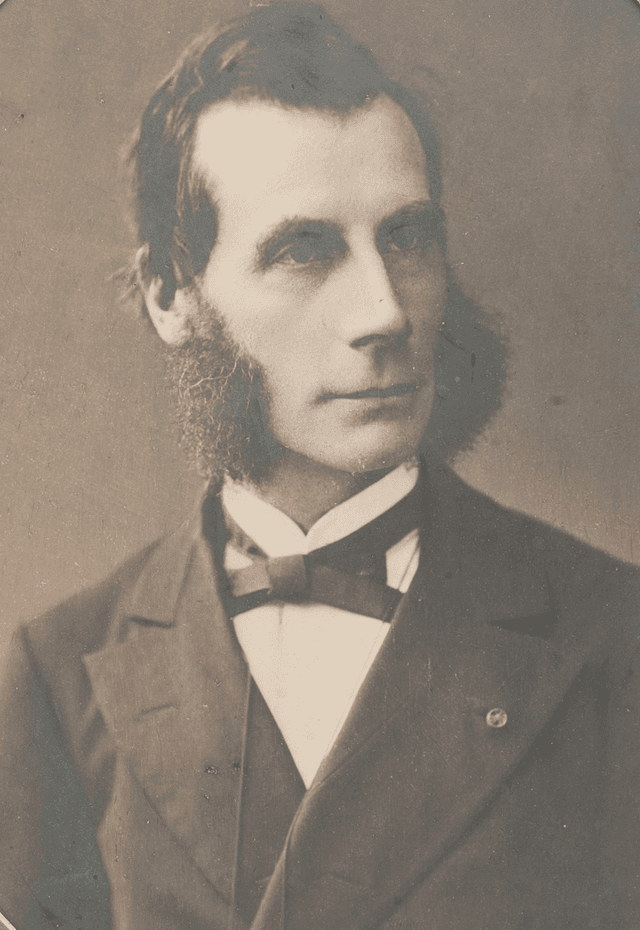 Fustel de Coulanges
Fustel de Coulanges was a prominent French historian and scholar known for his innovative approach to the study of ancient Greek and Roman societies. Born in 1830, he became a key figure in the field ...
“Cette chose-là, c'est une croyance. Il n'est rien de plus puissant sur l'âme. Une croyance est l'oeuvre de notre esprit, mais nous ne sommes pas libres de la modifier à notre gré. Elle est notre création, mais nous ne le savons pas. Elle est humaine, et nous la croyons dieu. Elle est l'effet de notre puissance et elle est plus forte que nous. Elle est en nous; elle ne nous quitte pas; elle nous parle à tout moment. Si elle nous dit d'obéir, nous obéissons; si elle nous trace des devoirs, nous nous soumettons. L'homme peut bien dompter la nature, mais il est assujetti à sa pensée.””
“This worship of the sacred fire did not belong exclusively to the populations of Greece and Italy. We find it in the East. The Laws of Manu as they have come to us show us the religion of Brahma completely established, and even verging towards its decline; but they have preserved vestiges and remains of a religion still more ancient”
“These usages are attested in the most formal manner. “I pour upon the earth of the tomb,” says Iphigenia in Euripides, “milk, honey, and wine; for it is with these that we rejoice the dead.”10 Among the Greeks there was in front of every tomb a place destined for the immolation of the victim and the cooking of its flesh.11 The Roman tomb also had its culina, a species of kitchen, of a particular kind, and entirely for the use of the dead.12 Plutarch relates that after the battle of Platæa, the slain having been buried upon the field of battle, the Platæans engaged to offer them the funeral repast every year. Consequently, on each anniversary they went in grand procession, conducted by their first magistrates to the mound under which the dead lay. They offered the departed milk, wine, oil, and perfumes, and sacrificed a victim. When the provisions had been placed upon the tomb, the Platæans pronounced a formula by which they called the dead to come and partake of this repast. This ceremony was still performed in the time of Plutarch, who was enabled to witness the six hundredth anniversary of it.13 A little later, Lucian, ridiculing these opinions and usages, shows how deeply rooted they were in the common mind. “The dead,” says he, “are nourished by the provisions which we place upon their tomb, and drink the wine which we pour out there; so that one of the dead to whom nothing is offered is condemned to perpetual hunger.”14 These are very old forms of belief, and are quite groundless and ridiculous, and yet they exercised empire over man during a great number of generations. They governed men’s minds; we shall soon see that they governed societies even, and that the greater part of the domestic and social institutions of the ancients was derived from this source.””
“Philosophy worked with the desacralized concepts produced by the elimination of the old order: concepts of reason, dialogue, justice and conscience reworked the terms associated with the practices of deliberation and accountability required by secularized democratic government.””
“The patricians spoke in the name of “sacred custom,” and the plebeians replied in the name of “the law of nature” (254).””
“Le véritable patriotisme n'est pas l'amour du sol, c'est l'amour du passé, c'est le respect pour les générations qui nous ont précédés.””
“This power [i.e., to bring diverse groups “under the rules of a community”] was a belief. Nothing has more power over the soul. A belief is the work of our mind, but we are not on that account free to modify it at will. It is our own creation, but we do not know it. It is human, and we believe it a god. It is the effect of our power, and is stronger than we are. It is in us; it does not quit us: it speaks to us at every moment. If it tells us to obey, we obey; if it traces duties for us, we submit. Man may, indeed, subdue nature, but he is subdued by his own thoughts. (106)””
“The second half of The Ancient City concerns the centuries-long series of revolutions that overturned the ancient religious order. Coulanges introduces the discussion as follows: The causes of its destruction may be reduced to two. One was the change which took place in the course of time in ideas, resulting from the natural development of the human mind, and which, in effacing ancient beliefs, at the same time caused the social edifice to crumble which these beliefs had built, and could alone sustain. The other was a class of men who found themselves placed outside this city organization, and who suffered from it. These men had an interest in destroying it, and made war upon it continually. (186-187)””
“Coulanges says that little is known about the change from primogeniture to equal property division among the brothers, assuming it took place gradually, but it is clear that the first fissure in the structure of the family empowered the highest of the lower classes, those brothers who would otherwise be excluded from inheritance. (In Rome, it seems the elevation of the younger brothers may have been through an alliance with the fathers).””
“Thus the ancient city was transformed by degrees. In the beginning it was an association of some hundred chiefs of families. Later the number of citizens increased, because the younger branches obtained a position of equality. Later still, the freed clients, the plebs, all that multitude which during centuries had remained outside the political and religious association, sometimes even outside the sacred enclosure of the city, broke down the barriers which were opposed to them, and penetrated into the city, where they immediately became the masters. (230)””
“The magistrate no longer exercised his authority for the benefit of peace and law, but for the interests and greed of a party. A command no longer had a legitimate title or a sacred character; there was no longer anything voluntary in obedience; always forced, it was always wanting for an opportunity to take its revenge. The city was now, as Plato said, only an assemblage of men, where one party was master and the other enslaved. The government was called aristocratic when the rich were in power, democratic when the poor ruled. In reality, true democracy no longer existed. (281)””
“It was granted to those who had three children, or who served in certain divisions of the army. Sometimes to construct a merchant vessel of a certain tonnage, or to carry grain to Rome, was sufficient to obtain it.””
“By being a citizen of Rome, a man gained honor, wealth, and security. The Latins, therefore, became eager to obtain this title, and used all sorts of means to acquire it.””
“Beyond these there is a miserable crowd, indigent, without political rights, of no weight in the city, envious, full of hatred, and condemned by their condition to desire a revolution.””