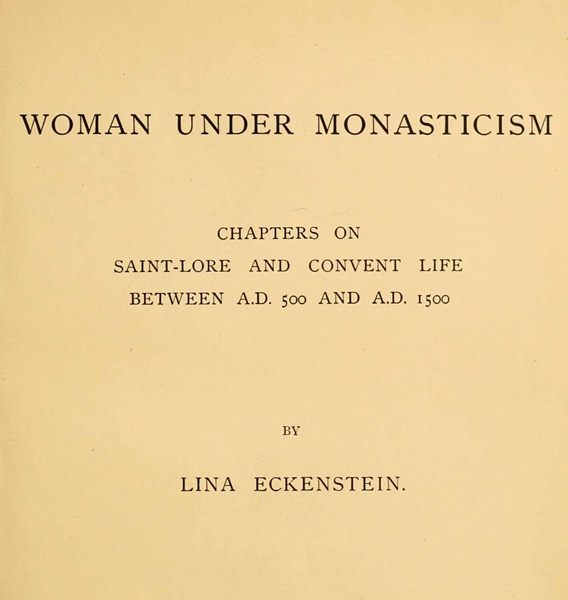
Woman Under Monasticismchapters on Saint-Lore and Convent Life Between A.d. 500 and A.d. 1500
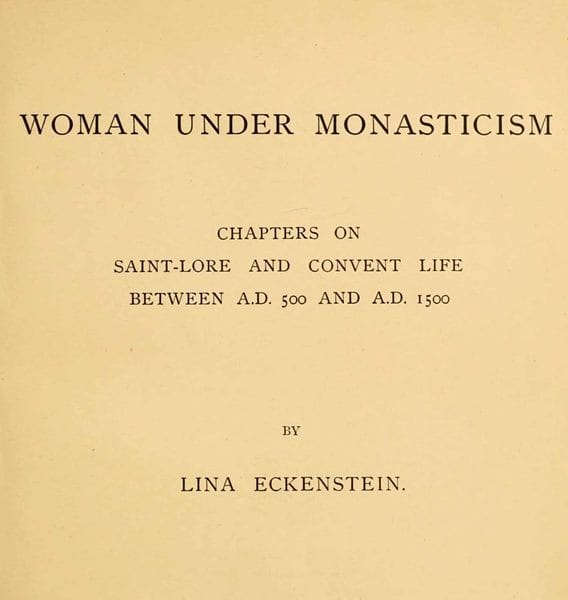
Woman Under Monasticismchapters on Saint-Lore and Convent Life Between A.d. 500 and A.d. 1500
A historical account written in the late 19th century. The book explores the significance of women’s roles within the monastic tradition in Western Europe from approximately A.D. 500 to A.D. 1500. Eckenstein aims to illuminate the often-overlooked contributions of women-saints and nuns, discussing their influence on religious, intellectual, and economic life during the Middle Ages. The opening of the text sets the stage for an in-depth inquiry into the relationship between women and monasticism. Eckenstein highlights the transition from pre-Christian sociocultural structures to Christian norms, emphasizing how monastic life became a space where women could attain autonomy and influence, contrary to their diminishing status in broader society. She raises pertinent questions about the historical importance of women in monastic settings, suggesting that their roles have been undervalued or mischaracterized in contemporary discourse, particularly in the context of the socio-religious changes brought about by the Reformation. This introduction effectively outlines her intention to reassess the impact women had on the development of Christian monastic practices and their broader societal implications.
Editions
X-Ray
The author and scholar who wrote this comprehensive study of women in monasticism from 500-1500 AD. She presents herself as a careful researcher examining the role of women in Christian religious life.
Frankish queen who left her husband King Clothacar to found the nunnery at Poitiers. A powerful figure who maintained political influence while living as a nun.
Anglo-Saxon abbess who founded and ruled Whitby monastery. Known for her wisdom, learning, and influence on both religious and political matters.
Queen of Northumbria who left her husband King Ecgfrith to found Ely monastery. Venerated as a virgin saint despite being twice married.
About Woman Under Monasticismchapters on Saint-Lore and Convent Life Between A.d. 500 and A.d. 1500
Chapter Summaries
- Preface
- Eckenstein explains her motivation for studying women in monasticism, arguing that convents provided women with opportunities for independence and intellectual development that paralleled modern women's rights movements. She outlines her methodology and scope, focusing on English and German women between 500-1500 AD.
- 1
- Examines the transition from paganism to Christianity among Germanic peoples, exploring how pre-Christian traditions of powerful women and goddesses influenced the development of Christian saint veneration. Distinguishes between historical saints and 'pseudo-saints' who preserve pagan traditions.
- 2
- Chronicles the establishment of the first Frankish convents, focusing on St Radegund's foundation at Poitiers and the dramatic revolt of nuns there. Shows how barbarian women used monasticism to escape unwanted marriages and gain independence.
Key Themes
- Women's Agency and Independence
- The book demonstrates how monasticism provided women with unprecedented opportunities for self-determination, allowing them to reject marriage, rule institutions, and exercise political influence in ways otherwise impossible in medieval society.
- Education and Intellectual Life
- Convents served as centers of learning where women could pursue scholarship, writing, and the arts. Figures like Hrotsvith and the nuns of Barking represent the heights of medieval women's intellectual achievement.
- Political Power and Influence
- Abbesses wielded significant temporal power, controlling vast estates, commanding military forces, and influencing royal policy. The Saxon abbesses particularly exemplify this political dimension of monastic life.
Characters
- Lina Eckenstein(protagonist)
- The author and scholar who wrote this comprehensive study of women in monasticism from 500-1500 AD. She presents herself as a careful researcher examining the role of women in Christian religious life.
- St Radegund(major)
- Frankish queen who left her husband King Clothacar to found the nunnery at Poitiers. A powerful figure who maintained political influence while living as a nun.
- Hild of Whitby(major)
- Anglo-Saxon abbess who founded and ruled Whitby monastery. Known for her wisdom, learning, and influence on both religious and political matters.
- Aethelthrith (St Etheldreda)(major)
- Queen of Northumbria who left her husband King Ecgfrith to found Ely monastery. Venerated as a virgin saint despite being twice married.
- Boniface (Wynfred)(major)
- Anglo-Saxon missionary known as the Apostle of Germany. Maintained extensive correspondence with English nuns and invited women to join his mission work.
- Lioba (Leobgith)(major)
- Anglo-Saxon nun who went to Germany at Boniface's request to establish convents. Highly educated and influential in spreading monasticism in Germany.
Link to this book
Add a free, dofollow link to Lex on your blog, forum, syllabus, or reading list.

<a href="https://lex-books.com/book/woman-under-monasticismchapters-on-saint-lore-and-convent-life-between-a-d-500-a-5d86423f-359c-4a28-89b7-bfcb5a253935"><img src="https://lex-books.com/badges/read-on-lex.svg" alt="Read Woman Under Monasticismchapters on Saint-Lore and Convent Life Between A.d. 500 and A.d. 1500 by Lina Eckenstein free on Lex" width="160" height="40"></a>[](https://lex-books.com/book/woman-under-monasticismchapters-on-saint-lore-and-convent-life-between-a-d-500-a-5d86423f-359c-4a28-89b7-bfcb5a253935)[url=https://lex-books.com/book/woman-under-monasticismchapters-on-saint-lore-and-convent-life-between-a-d-500-a-5d86423f-359c-4a28-89b7-bfcb5a253935][img]https://lex-books.com/badges/read-on-lex.svg[/img][/url]Read Woman Under Monasticismchapters on Saint-Lore and Convent Life Between A.d. 500 and A.d. 1500 by Lina Eckenstein free on Lex: https://lex-books.com/book/woman-under-monasticismchapters-on-saint-lore-and-convent-life-between-a-d-500-a-5d86423f-359c-4a28-89b7-bfcb5a253935Cite this book
Reading this edition for a paper or guide? Copy a citation.
Eckenstein, Lina. Woman Under Monasticismchapters on Saint-Lore and Convent Life Between A.d. 500 and A.d. 1500. Lex, lex-books.com/book/woman-under-monasticismchapters-on-saint-lore-and-convent-life-between-a-d-500-a-5d86423f-359c-4a28-89b7-bfcb5a253935.Eckenstein, L. (n.d.). Woman Under Monasticismchapters on Saint-Lore and Convent Life Between A.d. 500 and A.d. 1500. Lex. https://lex-books.com/book/woman-under-monasticismchapters-on-saint-lore-and-convent-life-between-a-d-500-a-5d86423f-359c-4a28-89b7-bfcb5a253935Eckenstein, Lina. Woman Under Monasticismchapters on Saint-Lore and Convent Life Between A.d. 500 and A.d. 1500. Lex. https://lex-books.com/book/woman-under-monasticismchapters-on-saint-lore-and-convent-life-between-a-d-500-a-5d86423f-359c-4a28-89b7-bfcb5a253935.