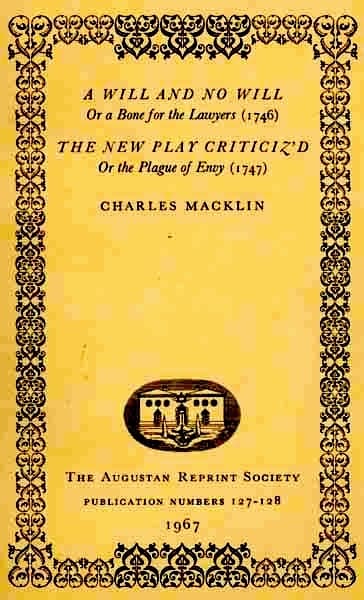
Will and No Will or a Bone for the Lawyers
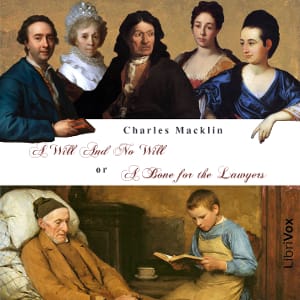
A farcical 18th-century afterpiece that bites the hand that feeds it. Charles Macklin's 1746 comedy, based on Regnard's French classic, takes aim at the very audience watching it: the prologue features actors idling in the pit, chatting with spectators while waiting for the preceding play to end, gleefully mocking the theatrical conventions they're about to perform. The play itself concerns a disputed inheritance a literal bone thrown to hungry lawyers whose greedy scheming spirals into the chaotic, scene-hopping fashion typical of Italian commedia dell'arte. Macklin borrows freely from French and Italian traditions, stringing together comic set pieces with little concern for logical consistency, trusting instead that each moment of absurdity earns its keep. The result is a cheeky, self-aware entertainment that knows exactly what it is: a lightweight amuse-bouche designed to send audiences home laughing. For readers interested in the bones of theatrical history, this is a curious relic from an era when plays poked fun at their own ridiculousness.
Editions

Read by
Group Narration
2 readers
TriciaG, MaryAnn, Beth Thomas (1974-2020), ToddHW +8 more
Link to this book
Add a free, dofollow link to Lex on your blog, forum, syllabus, or reading list.

<a href="https://lex-books.com/book/will-and-no-will-or-a-bone-for-the-lawyers-1fba411d-7076-4c7c-8d55-8c566976b457"><img src="https://lex-books.com/badges/read-on-lex.svg" alt="Read Will and No Will or a Bone for the Lawyers by Charles Macklin free on Lex" width="160" height="40"></a>[](https://lex-books.com/book/will-and-no-will-or-a-bone-for-the-lawyers-1fba411d-7076-4c7c-8d55-8c566976b457)[url=https://lex-books.com/book/will-and-no-will-or-a-bone-for-the-lawyers-1fba411d-7076-4c7c-8d55-8c566976b457][img]https://lex-books.com/badges/read-on-lex.svg[/img][/url]Read Will and No Will or a Bone for the Lawyers by Charles Macklin free on Lex: https://lex-books.com/book/will-and-no-will-or-a-bone-for-the-lawyers-1fba411d-7076-4c7c-8d55-8c566976b457Cite this book
Reading this edition for a paper or guide? Copy a citation.
Macklin, Charles. Will and No Will or a Bone for the Lawyers. Lex, lex-books.com/book/will-and-no-will-or-a-bone-for-the-lawyers-1fba411d-7076-4c7c-8d55-8c566976b457.Macklin, C. (n.d.). Will and No Will or a Bone for the Lawyers. Lex. https://lex-books.com/book/will-and-no-will-or-a-bone-for-the-lawyers-1fba411d-7076-4c7c-8d55-8c566976b457Macklin, Charles. Will and No Will or a Bone for the Lawyers. Lex. https://lex-books.com/book/will-and-no-will-or-a-bone-for-the-lawyers-1fba411d-7076-4c7c-8d55-8c566976b457.