Treatise on Light
Treatise on Light (1690) is one of the most ambitious works of the scientific revolution, and it remains astonishingly readable three centuries later. Huygens proposes something radical: that light is not a stream of particles, as Descartes insisted, but a wave rippling through an invisible ether. This single insight would eventually overthrow Newton's corpuscular theory and reshape physics forever. The book moves with elegant certainty through geometry and experiment, demonstrating that light has a finite speed, explaining reflection and refraction with mathematical precision, and conquering the strange double refraction of Iceland spar that had confounded every previous thinker. What elevates Huygens beyond mere accurate observation is his extraordinary method - the 'Huygens principle' for understanding wave propagation appears here in full, a framework still taught in physics classrooms. This is a foundational text for anyone who wants to trace the moment humanity began to understand what light actually is.
Editions

Link to this book
Add a free, dofollow link to Lex on your blog, forum, syllabus, or reading list.

<a href="https://lex-books.com/book/treatise-on-light-4f60f96f-6ecc-4af1-808f-96ab0b6d1373"><img src="https://lex-books.com/badges/read-on-lex.svg" alt="Read Treatise on Light by Christiaan Huygens free on Lex" width="160" height="40"></a>[](https://lex-books.com/book/treatise-on-light-4f60f96f-6ecc-4af1-808f-96ab0b6d1373)[url=https://lex-books.com/book/treatise-on-light-4f60f96f-6ecc-4af1-808f-96ab0b6d1373][img]https://lex-books.com/badges/read-on-lex.svg[/img][/url]Read Treatise on Light by Christiaan Huygens free on Lex: https://lex-books.com/book/treatise-on-light-4f60f96f-6ecc-4af1-808f-96ab0b6d1373Cite this book
Reading this edition for a paper or guide? Copy a citation.
Huygens, Christiaan. Treatise on Light. Lex, lex-books.com/book/treatise-on-light-4f60f96f-6ecc-4af1-808f-96ab0b6d1373.Huygens, C. (n.d.). Treatise on Light. Lex. https://lex-books.com/book/treatise-on-light-4f60f96f-6ecc-4af1-808f-96ab0b6d1373Huygens, Christiaan. Treatise on Light. Lex. https://lex-books.com/book/treatise-on-light-4f60f96f-6ecc-4af1-808f-96ab0b6d1373.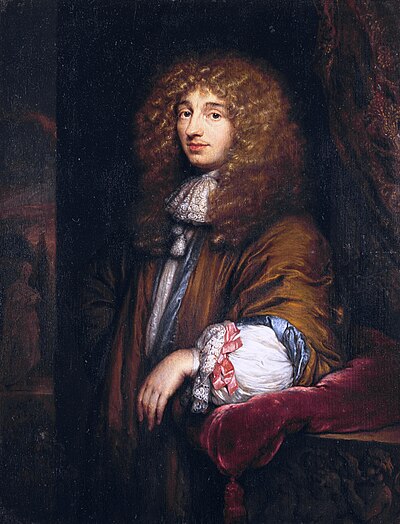

![Birds and Nature, Vol. 12 No. 1 [June 1902]illustrated by Color Photography](/_next/image?url=https%3A%2F%2Fd3b2n8gj62qnwr.cloudfront.net%2FCOVERS%2Fgutenberg_covers75k%2Febook-47881.png&w=3840&q=75)