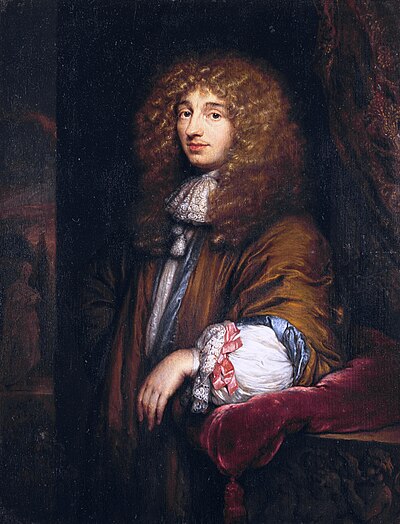
The Celestial Worlds Discover'd: Or, Conjectures Concerning the Inhabitants, Plants and Productions of the Worlds in the Planets
1698
The Celestial Worlds Discover'd: Or, Conjectures Concerning the Inhabitants, Plants and Productions of the Worlds in the Planets
1698
Translated by John Clarke
In 1698, the great Dutch astronomer Christiaan Huygens turned his telescope toward the heavens and asked a question that would take humanity centuries to answer: are we alone? Written with the elegant curiosity that made him discover Saturn's rings and invent the pendulum clock, this brief treatise represents one of the first serious scientific speculations about extraterrestrial life. Huygens builds his case methodically from Copernican principles: if Earth is merely one planet orbiting the Sun, why should it be unique? He imagines the landscapes of Mars and Venus, conjectures about their inhabitants, and muses on what plants might grow in alien soils. The result is neither pure fantasy nor dry astronomy, but something rarer: a great scientist allowing himself to wonder publicly, while acknowledging how little he truly knew. The work captures a pivotal moment when humanity first began to see Earth not as the center of creation, but as one world among countless others, all potentially rich with life.
Editions
X-Ray
“How vast those Orbs must be, and how inconsiderable this Earth, the Theatre upon which all our mighty Designs, all our Navigations, and all our Wars are transacted, is when compared to them. A very fit consideration, and matter of Reflection, for those Kings and Princes who sacrifice the Lives of so many People, only to flatter their Ambition in being Masters of some pitiful corner of this small Spot.””
— Christiaan Huygens
“We may mount from this dull Earth; and viewing it from on high, consider whether Nature has laid out all her cost and finery upon this small speck of Dirt. So, like Travellers into other distant countries, we shall be better able to judge of what’s done at home, know how to make a true estimate of, and set its own value upon every thing. We shall be less apt to admire what this World calls great, shall nobly despise those Trifles the generality of Men set their Affections on, when we know that there are a multitude of such Earths inhabited and adorn’d as well as our own.””
— Christiaan Huygens
Link to this book
Add a free, dofollow link to Lex on your blog, forum, syllabus, or reading list.

<a href="https://lex-books.com/book/the-celestial-worlds-discover-d-or-conjectures-concerning-the-inhabitants-plants-550c8cb7-56a0-4e6f-962b-3003973b4ca5"><img src="https://lex-books.com/badges/read-on-lex.svg" alt="Read The Celestial Worlds Discover'd: Or, Conjectures Concerning the Inhabitants, Plants and Productions of the Worlds in the Planets by Christiaan Huygens free on Lex" width="160" height="40"></a>[](https://lex-books.com/book/the-celestial-worlds-discover-d-or-conjectures-concerning-the-inhabitants-plants-550c8cb7-56a0-4e6f-962b-3003973b4ca5)[url=https://lex-books.com/book/the-celestial-worlds-discover-d-or-conjectures-concerning-the-inhabitants-plants-550c8cb7-56a0-4e6f-962b-3003973b4ca5][img]https://lex-books.com/badges/read-on-lex.svg[/img][/url]Read The Celestial Worlds Discover'd: Or, Conjectures Concerning the Inhabitants, Plants and Productions of the Worlds in the Planets by Christiaan Huygens free on Lex: https://lex-books.com/book/the-celestial-worlds-discover-d-or-conjectures-concerning-the-inhabitants-plants-550c8cb7-56a0-4e6f-962b-3003973b4ca5Cite this book
Reading this edition for a paper or guide? Copy a citation.
Huygens, Christiaan. The Celestial Worlds Discover'd: Or, Conjectures Concerning the Inhabitants, Plants and Productions of the Worlds in the Planets. Lex, lex-books.com/book/the-celestial-worlds-discover-d-or-conjectures-concerning-the-inhabitants-plants-550c8cb7-56a0-4e6f-962b-3003973b4ca5.Huygens, C. (1698). The Celestial Worlds Discover'd: Or, Conjectures Concerning the Inhabitants, Plants and Productions of the Worlds in the Planets. Lex. https://lex-books.com/book/the-celestial-worlds-discover-d-or-conjectures-concerning-the-inhabitants-plants-550c8cb7-56a0-4e6f-962b-3003973b4ca5Huygens, Christiaan. The Celestial Worlds Discover'd: Or, Conjectures Concerning the Inhabitants, Plants and Productions of the Worlds in the Planets. Lex. https://lex-books.com/book/the-celestial-worlds-discover-d-or-conjectures-concerning-the-inhabitants-plants-550c8cb7-56a0-4e6f-962b-3003973b4ca5.