Titian
1908
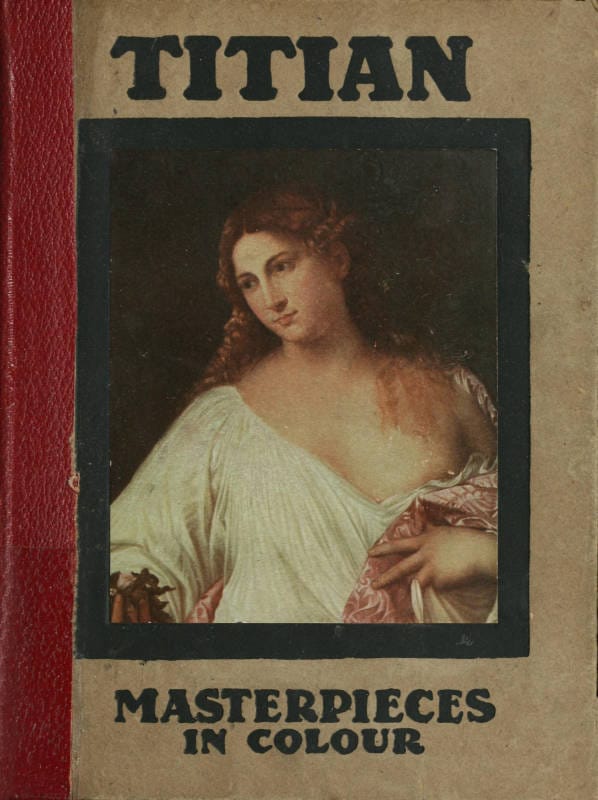
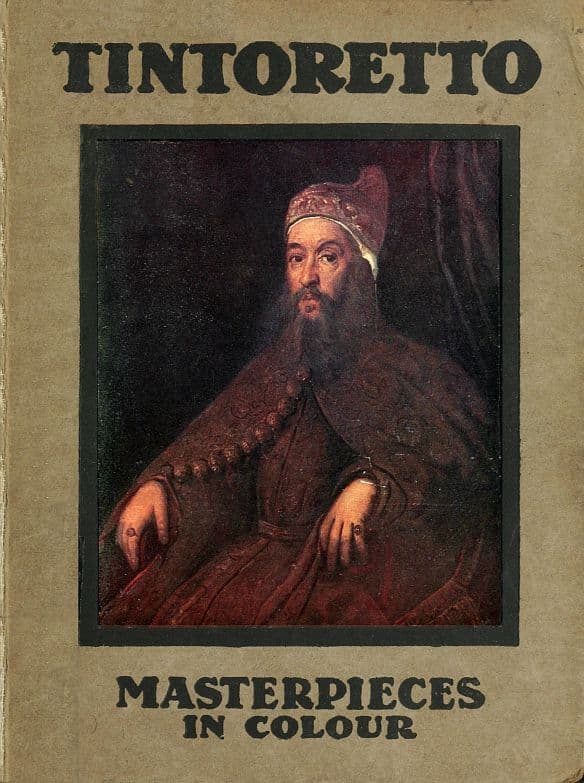
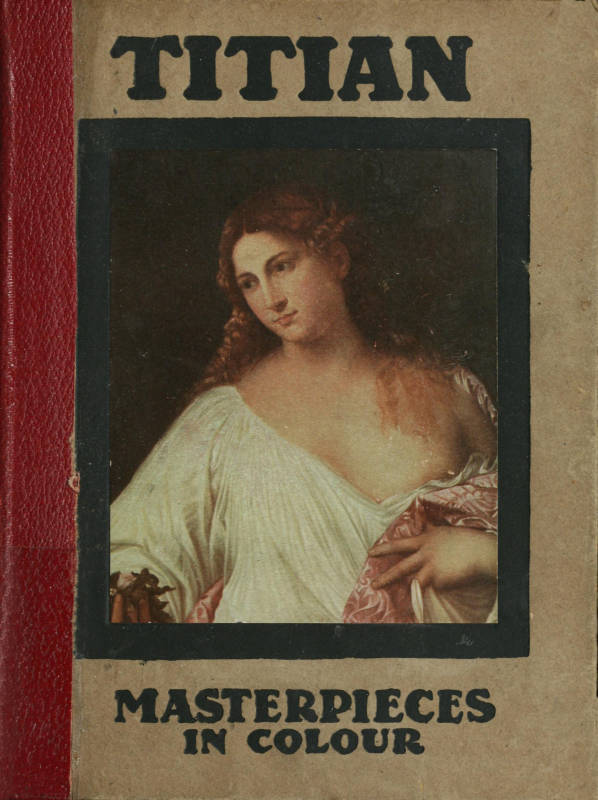
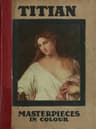
Titian dominated Venetian painting the way few artists have ever dominated a school. Born in the mountain village of Pieve di Cadore around 1490, he became the most sought-after painter in Europe, summoned to paint emperors and popes, courted by the Dukes of Mantua and Urbino, and eventually elevated to the inner circle of Charles V, Holy Roman Emperor. This 1908 volume, part of the "Masterpieces in Colour" series, traces that extraordinary ascent from promising youth to undisputed master. Bensusan examines Titian's revolutionary approach to color, how he learned to make flesh breathe, how shadow became as expressive as light. The book follows his career through the great commissions: the altarpieces that defined Venetian religiosity, the portraits that exposed the souls of rulers, the mythological scenes that titillated and terrified. We see Venice at its zenith, a republic where art was power and Titian was its most potent voice. The author writes with early twentieth-century elegance, situating Titian not just as an individual genius but as the product of a luminous, cutthroat artistic culture that shaped everything that followed. This remains essential reading for anyone who wants to understand how color became the language of modern painting, and why Titian still looks radical five centuries later.
Editions
Link to this book
Add a free, dofollow link to Lex on your blog, forum, syllabus, or reading list.

<a href="https://lex-books.com/book/titian-2c72071d-3c70-41d7-ac34-44e927a79a29"><img src="https://lex-books.com/badges/read-on-lex.svg" alt="Read Titian by S. L. Bensusan free on Lex" width="160" height="40"></a>[](https://lex-books.com/book/titian-2c72071d-3c70-41d7-ac34-44e927a79a29)[url=https://lex-books.com/book/titian-2c72071d-3c70-41d7-ac34-44e927a79a29][img]https://lex-books.com/badges/read-on-lex.svg[/img][/url]Read Titian by S. L. Bensusan free on Lex: https://lex-books.com/book/titian-2c72071d-3c70-41d7-ac34-44e927a79a29Cite this book
Reading this edition for a paper or guide? Copy a citation.
Bensusan, S. L.. Titian. Lex, lex-books.com/book/titian-2c72071d-3c70-41d7-ac34-44e927a79a29.Bensusan, S. L. (1908). Titian. Lex. https://lex-books.com/book/titian-2c72071d-3c70-41d7-ac34-44e927a79a29Bensusan, S. L.. Titian. Lex. https://lex-books.com/book/titian-2c72071d-3c70-41d7-ac34-44e927a79a29.