Murillo
1910
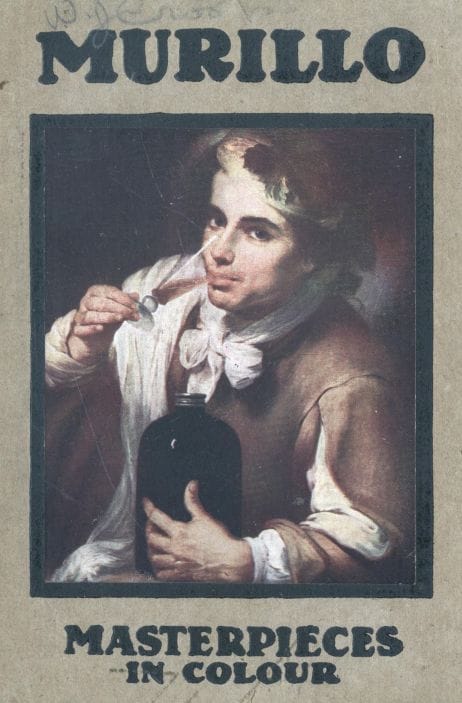
Bartolomé Esteban Murillo painted the divine into the faces of Seville's poorest. In this luminous 1910 biography, S. L. Bensusan traces the arc of a painter who rose from the mud streets of Triana to become Spain's most beloved artist, transforming religious art from altarpiece abstraction into something a peasant could recognize and weep before. The book follows Murillo's apprenticeship under Juan del Castillo, his early struggles, and his eventual coronation as the painter who gave Spain its visual soul. Bensusan writes with the passionate eye of someone who has stood before the beggar children of the Plaza de San Lorenzo and felt them stare back. He illuminates how Murillo synthesized Flemish color with Andalusian soul, how he made the Virgin Mary look like a Sevillian girl, how he wedded Catholic mysticism to earthy realism in a way no painter before him had managed. This is not dry art history; it is a meditation on how one man saw the sacred in the street.
Editions
Link to this book
Add a free, dofollow link to Lex on your blog, forum, syllabus, or reading list.

<a href="https://lex-books.com/book/murillo-37bb582d-95b4-4fb3-9fa4-662165844594"><img src="https://lex-books.com/badges/read-on-lex.svg" alt="Read Murillo by S. L. Bensusan free on Lex" width="160" height="40"></a>[](https://lex-books.com/book/murillo-37bb582d-95b4-4fb3-9fa4-662165844594)[url=https://lex-books.com/book/murillo-37bb582d-95b4-4fb3-9fa4-662165844594][img]https://lex-books.com/badges/read-on-lex.svg[/img][/url]Read Murillo by S. L. Bensusan free on Lex: https://lex-books.com/book/murillo-37bb582d-95b4-4fb3-9fa4-662165844594Cite this book
Reading this edition for a paper or guide? Copy a citation.
Bensusan, S. L.. Murillo. Lex, lex-books.com/book/murillo-37bb582d-95b4-4fb3-9fa4-662165844594.Bensusan, S. L. (1910). Murillo. Lex. https://lex-books.com/book/murillo-37bb582d-95b4-4fb3-9fa4-662165844594Bensusan, S. L.. Murillo. Lex. https://lex-books.com/book/murillo-37bb582d-95b4-4fb3-9fa4-662165844594.