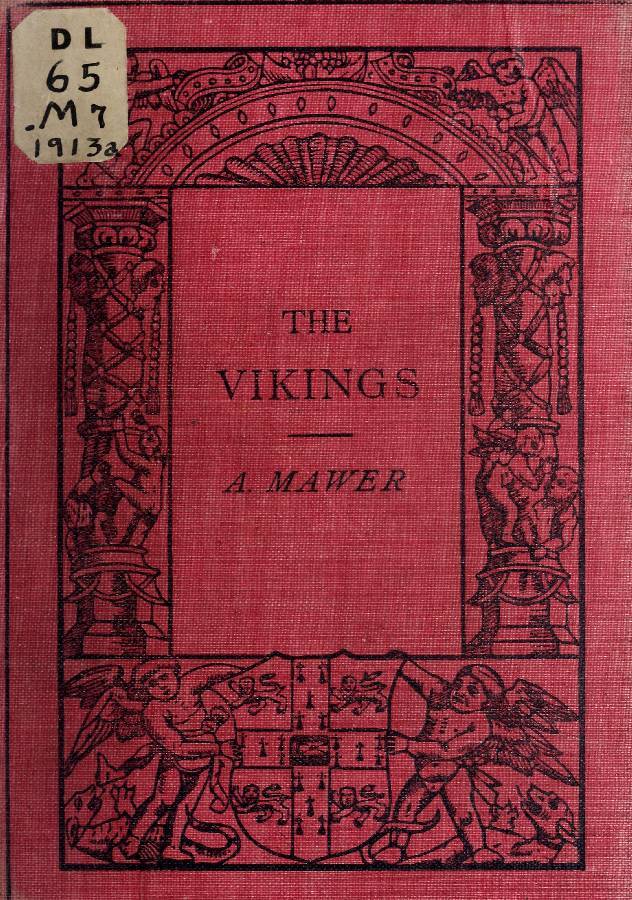
The Vikings
1913
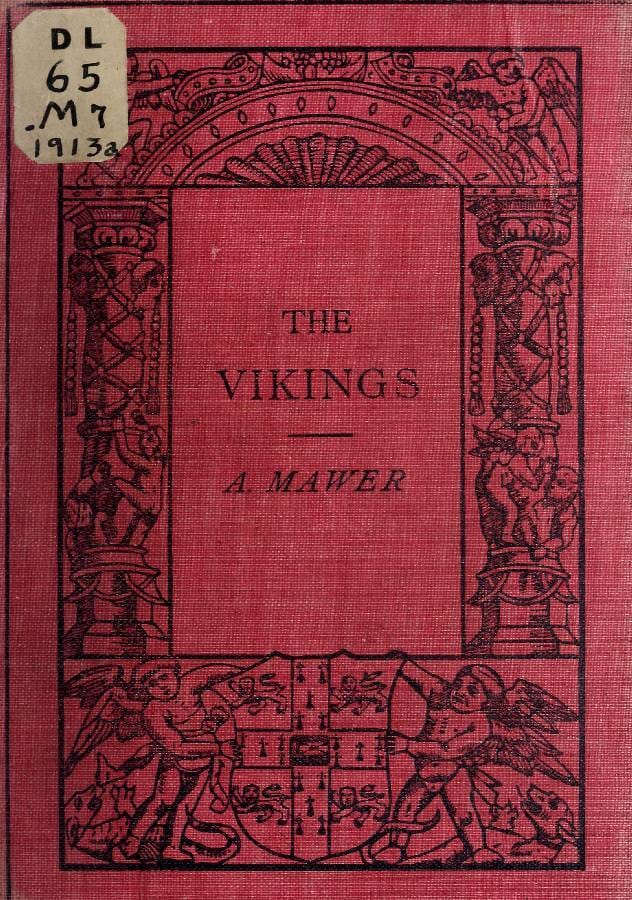
Published in 1913, this was one of the first serious English-language studies to move beyond the caricature of Vikings as mere plunderers. A. Mawer traces the great migration of Scandinavian peoples across the ninth and tenth centuries, examining not just their raids on England, Ireland, and the Frankish Empire, but the entire civilizational apparatus that made such movement possible: their ships, their trade networks, their political structures, and their startling adaptability. The book opens with a meticulous etymology of the word "Viking" itself, distinguishing its narrow technical meaning (raiders who left home) from the broader cultural moment it has come to signify. Mawer argues that the chroniclers of monasteries, writing in terror, gave us a skewed picture: plundering was real, but so was colonization, diplomacy, and cultural exchange. This remains a valuable synthesis for readers who want to understand the Viking age as something more complex than horned helmets and bloodlust.
Editions
X-Ray
A famous, yet shadowy, Viking leader of Norwegian birth with extensive interests in Denmark, whose sons led significant invasions.
King of Wessex who led a heroic struggle against the Danes, reorganizing his army and strengthening his kingdom.
A Danish Viking leader who fought against Alfred the Great and later settled in East Anglia, accepting Christian baptism.
A cruel Viking leader, son of Ragnarr Loðbrók, responsible for the capture of York and the death of St Edmund.
About The Vikings
Chapter Summaries
- Introduction
- This section defines 'Viking' in both its narrow (raiding warrior) and broader (Scandinavian civilization of the era) senses, noting the latter is used in the manual. It explains that early knowledge came from biased Latin chroniclers, but modern archaeology and Scandinavian literature (sagas, Eddaic, skaldic poems) have allowed for a revised, more just understanding of Viking civilization.
- 1
- This chapter outlines the period of the Viking age (mid-8th to early 11th century) and its geographical scope. It discusses traditional and political causes for the movement, such as population growth, internal dynastic struggles in Scandinavia, and external factors like the decline of Frisian naval power and Charlemagne's conquest of the Saxons. It also attempts to differentiate the roles of Danes, Norwegians, and Swedes in the movement.
- 2
- This chapter details early Viking raids on England, Scotland, and Ireland, noting Ireland's continuous attacks and the establishment of fortified bases like Dublin. It highlights Turges as a significant early leader in Ireland. It then shifts to renewed Danish attacks on England and the Frankish Empire, describing their increasing scale and the establishment of winter quarters, marking a transition from raiding to prolonged occupation.
Key Themes
- Expansion and Settlement
- The book extensively details the geographical spread of Viking activity, from initial raids to permanent settlements in England, Ireland, France (Normandy), the Baltic, and Russia. It explores the motivations behind this expansion, including population pressure and political instability in Scandinavia.
- Warfare and Strategy
- The text highlights the Vikings' military prowess, their adaptability in warfare (e.g., mounted forces, fortifications), and their clever strategies. It also contrasts their barbarism with their organizational skills, showcasing the dual nature of their military impact on Europe.
- Cultural Exchange and Influence
- Mawer emphasizes the significant, though varied, influence of Scandinavian culture on the British Isles and parts of the Frankish Empire, particularly in language, place-names, legal systems, and social organization. It also notes the influence of Celtic and Frankish art on Viking civilization.
Characters
- Ragnarr Loðbrók(supporting)
- A famous, yet shadowy, Viking leader of Norwegian birth with extensive interests in Denmark, whose sons led significant invasions.
- Alfred the Great(protagonist)
- King of Wessex who led a heroic struggle against the Danes, reorganizing his army and strengthening his kingdom.
- Guthrum(antagonist)
- A Danish Viking leader who fought against Alfred the Great and later settled in East Anglia, accepting Christian baptism.
- Ívarr the Boneless(antagonist)
- A cruel Viking leader, son of Ragnarr Loðbrók, responsible for the capture of York and the death of St Edmund.
- Hásteinn (Hastingus)(supporting)
- A long-active Viking leader, foster-father of Björn Ironside, who led invasions in France and England.
- Rollo(protagonist)
- The Viking leader to whom the province of Normandy was granted, on condition of defending the kingdom and accepting Christianity.
Link to this book
Add a free, dofollow link to Lex on your blog, forum, syllabus, or reading list.

<a href="https://lex-books.com/book/the-vikings-1b5e2ab5-606c-441b-9481-297a0310e3ab"><img src="https://lex-books.com/badges/read-on-lex.svg" alt="Read The Vikings by A. Mawer free on Lex" width="160" height="40"></a>[](https://lex-books.com/book/the-vikings-1b5e2ab5-606c-441b-9481-297a0310e3ab)[url=https://lex-books.com/book/the-vikings-1b5e2ab5-606c-441b-9481-297a0310e3ab][img]https://lex-books.com/badges/read-on-lex.svg[/img][/url]Read The Vikings by A. Mawer free on Lex: https://lex-books.com/book/the-vikings-1b5e2ab5-606c-441b-9481-297a0310e3abCite this book
Reading this edition for a paper or guide? Copy a citation.
Mawer, A.. The Vikings. Lex, lex-books.com/book/the-vikings-1b5e2ab5-606c-441b-9481-297a0310e3ab.Mawer, A. (1913). The Vikings. Lex. https://lex-books.com/book/the-vikings-1b5e2ab5-606c-441b-9481-297a0310e3abMawer, A.. The Vikings. Lex. https://lex-books.com/book/the-vikings-1b5e2ab5-606c-441b-9481-297a0310e3ab.