The Trossachs
1911
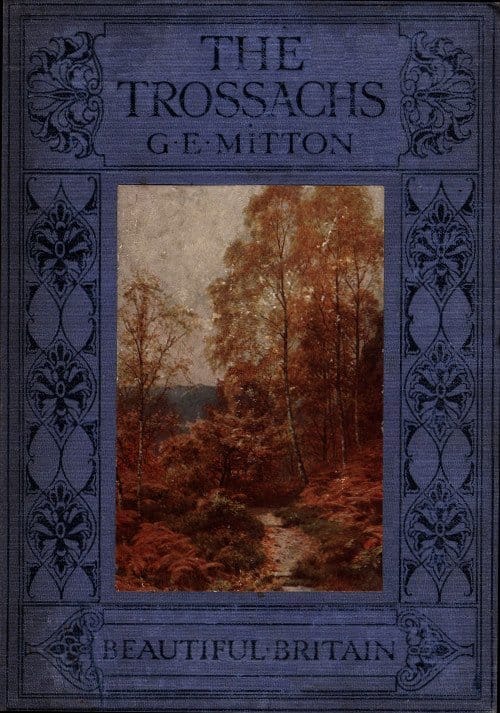
Here is a book that smells of horse leather and old paper, written when trains still stopped at small Highland stations and the Trossachs road wound through birch and pine by the light of oil lamps. G.E. Mitton guides the Edwardian traveler through the hollowed pass that Sir Walter Scott made famous, where the lochs lie still as dark glass beneath mountains named in legend. This is Rob Roy country, the outlaw's haunts and hideaways mapped across moors that still remember the flash of tartan and the clatter of claymores. Mitton writes for a traveler who expects both a comfortable inn and a ghost story, who wants the railway timetable and the tale of the MacGregor clansmen who bled for these hills. The prose swings between practical route-finding and rapturous description, between solid Victorian advice about boot leather and poetic passages about mist rising off Ben Venue. A century later, the book works its magic in reverse: not as a guide to getting there, but as a transport to a vanished way of moving through landscape, when every loch might hold a poem and every ruined tower a warning. For readers who long for slow travel, for Scotland before the motor car, for the Trossachs as Scott saw them.
Editions
Link to this book
Add a free, dofollow link to Lex on your blog, forum, syllabus, or reading list.

<a href="https://lex-books.com/book/the-trossachs-3d30672a-625a-418f-a83e-612e14194c7d"><img src="https://lex-books.com/badges/read-on-lex.svg" alt="Read The Trossachs by G. E. Mitton free on Lex" width="160" height="40"></a>[](https://lex-books.com/book/the-trossachs-3d30672a-625a-418f-a83e-612e14194c7d)[url=https://lex-books.com/book/the-trossachs-3d30672a-625a-418f-a83e-612e14194c7d][img]https://lex-books.com/badges/read-on-lex.svg[/img][/url]Read The Trossachs by G. E. Mitton free on Lex: https://lex-books.com/book/the-trossachs-3d30672a-625a-418f-a83e-612e14194c7dCite this book
Reading this edition for a paper or guide? Copy a citation.
Mitton, G. E.. The Trossachs. Lex, lex-books.com/book/the-trossachs-3d30672a-625a-418f-a83e-612e14194c7d.Mitton, G. E. (1911). The Trossachs. Lex. https://lex-books.com/book/the-trossachs-3d30672a-625a-418f-a83e-612e14194c7dMitton, G. E.. The Trossachs. Lex. https://lex-books.com/book/the-trossachs-3d30672a-625a-418f-a83e-612e14194c7d.