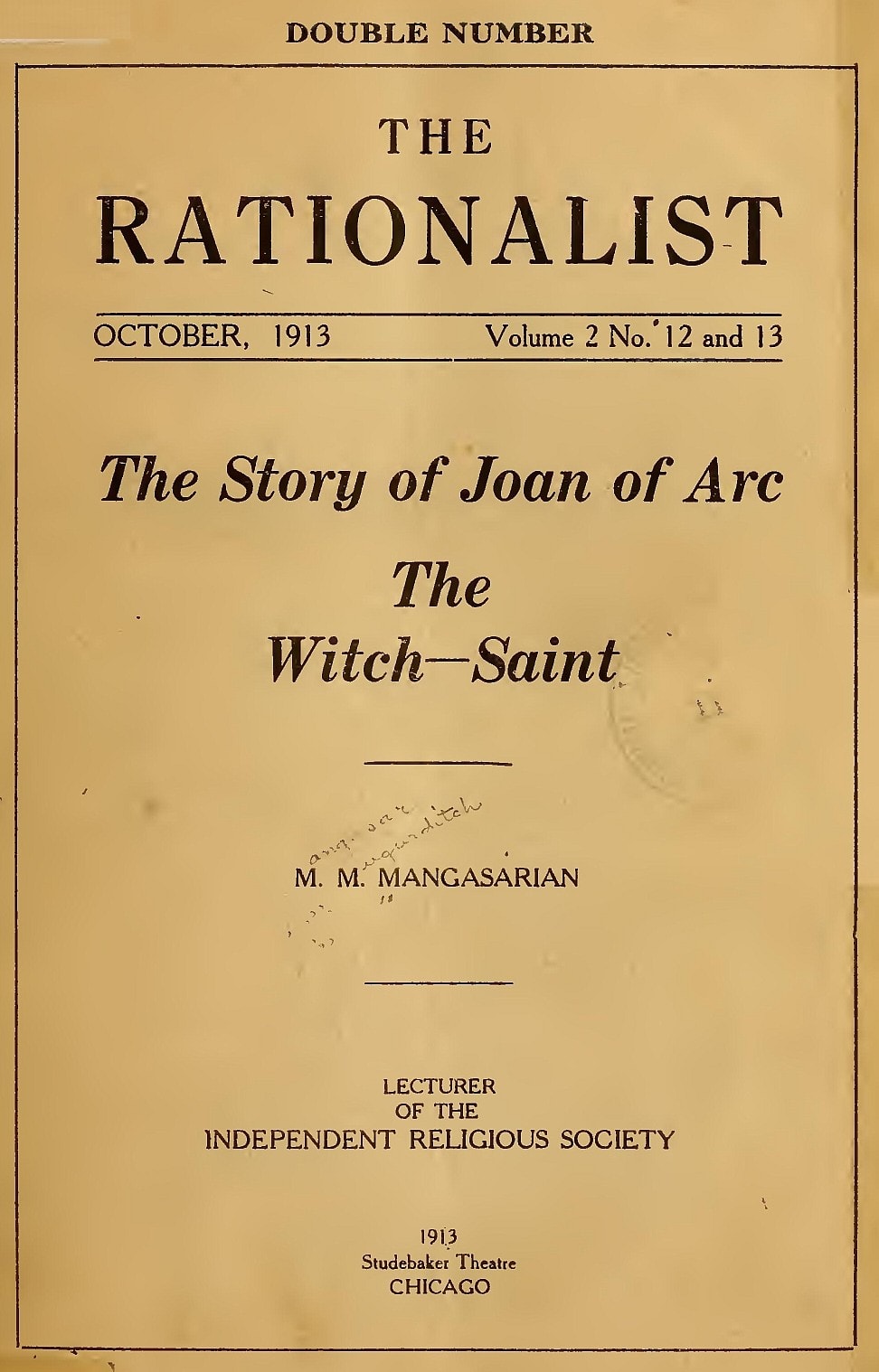
The Story of Joan of Arc the Witch-Saint
The Story of Joan of Arc the Witch-Saint
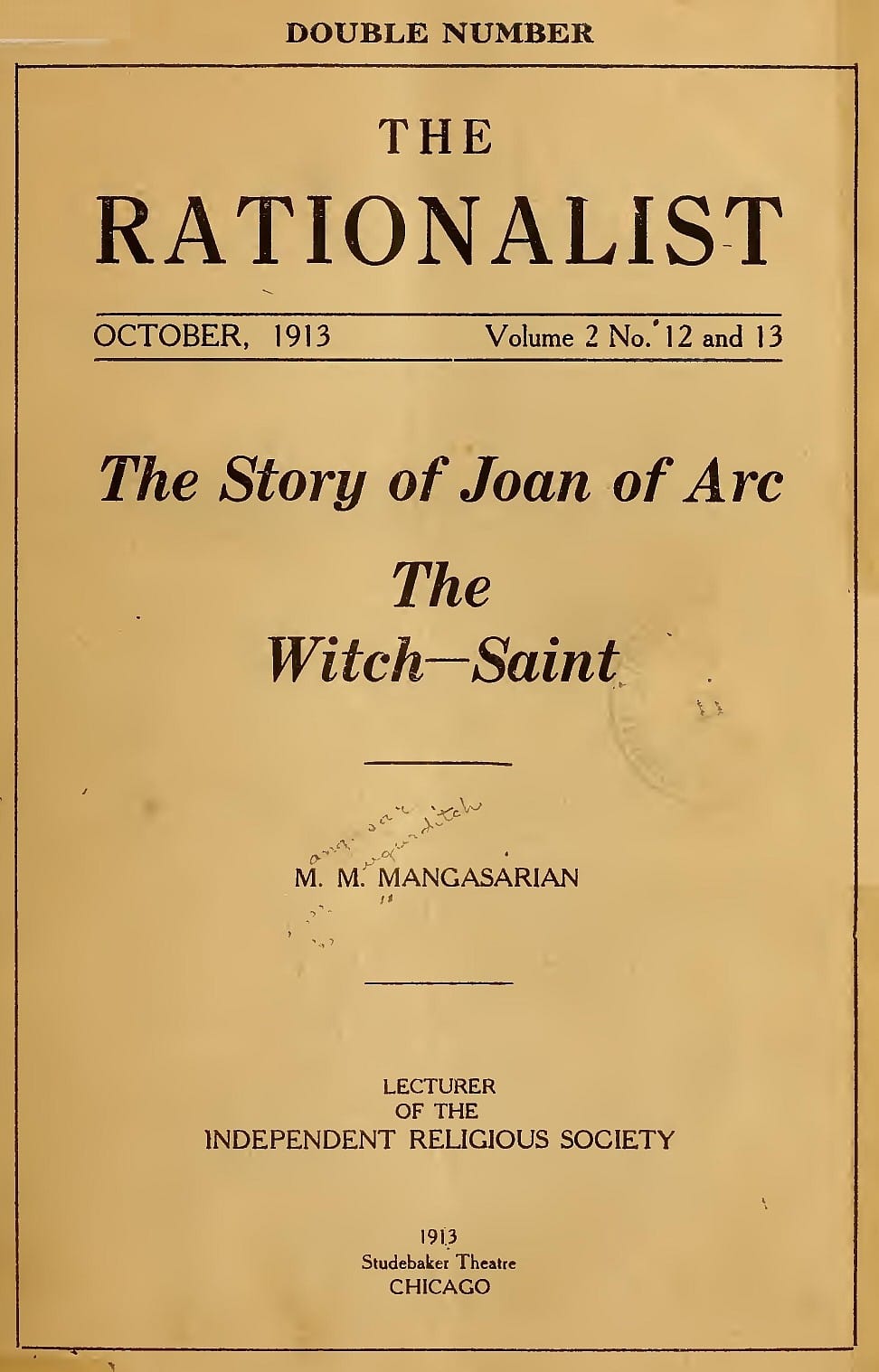
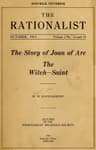
The Story of Joan of Arc the Witch-Saint, written by M. M. Mangasarian in the early 20th century, provides a historical account of Joan of Arc's life, focusing on her trial, execution, and eventual canonization. The book examines the complexities of her treatment by the Catholic Church, highlighting the socio-political motives behind her condemnation as a heretic. Mangasarian portrays Joan as a heroic figure who led the French army during the Hundred Years' War, emphasizing the contradictions in her legacy and the flawed nature of institutional authority in matters of faith and rationality.
Editions
X-Ray
A 17-19 year old peasant girl from Domremy who claimed divine visions and led French forces to victory against the English. She was later captured, tried for heresy, and burned at the stake in 1431, only to be canonized as a saint by the Catholic Church 500 years later.
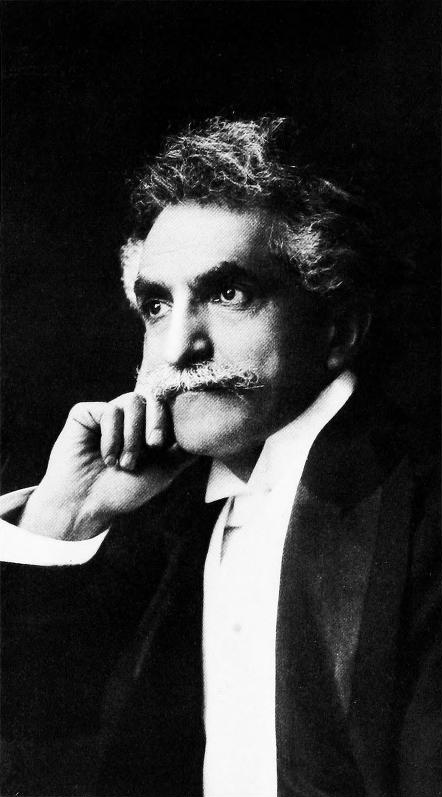
The author and lecturer presenting this rationalist analysis of Joan of Arc's story. He serves as both narrator and commentator, offering a critical perspective on the Catholic Church's treatment of Joan.
The French king whom Joan helped crown at Rheims Cathedral. He later ordered the Church to review Joan's case to legitimize his own reign, fearing that being crowned by a 'witch' would delegitimize his rule.
The ecclesiastical judge who presided over Joan's trial and was primarily responsible for her condemnation. He was later rewarded by the Church with the episcopal seat of Lisieux.
About The Story of Joan of Arc the Witch-Saint
Chapter Summaries
- Introduction
- Lists previous lectures in The Rationalist series and establishes the publication context. Introduces the controversial nature of this particular lecture on Joan of Arc.
- 1
- Mangasarian explains the criticism his lecture received from Roman Catholics and defends his right to examine Joan's story critically. He establishes his intention to speak plainly about the Church's contradictory treatment of Joan.
- 2
- The author describes visiting Joan's shrine in the Church of the Sacred Heart in Paris, noting the apparent lack of devotion to her compared to other saints. He lights a candle for her as a non-Catholic gesture of respect.
Key Themes
- Religious Hypocrisy and Infallibility
- Mangasarian exposes the contradiction of an 'infallible' Church that first condemned Joan as a heretic then canonized her as a saint. This demonstrates the fallibility of institutions claiming divine authority and the dangers of religious dogma.
- Individual Conscience vs. Authority
- Joan's insistence on following her own divine visions rather than submitting to Church authority represents the conflict between personal conviction and institutional control. Her refusal to let the Church judge her revelations was seen as heretical but ultimately vindicated.
- Political Expediency in Religion
- The Church's treatment of Joan shifted based on political circumstances - condemning her when the English controlled France, then vindicating her when the French regained power. This reveals how religious institutions serve political interests rather than absolute truth.
Characters
- Joan of Arc(protagonist)
- A 17-19 year old peasant girl from Domremy who claimed divine visions and led French forces to victory against the English. She was later captured, tried for heresy, and burned at the stake in 1431, only to be canonized as a saint by the Catholic Church 500 years later.
- M. M. Mangasarian(protagonist)
- The author and lecturer presenting this rationalist analysis of Joan of Arc's story. He serves as both narrator and commentator, offering a critical perspective on the Catholic Church's treatment of Joan.
- Charles VII(major)
- The French king whom Joan helped crown at Rheims Cathedral. He later ordered the Church to review Joan's case to legitimize his own reign, fearing that being crowned by a 'witch' would delegitimize his rule.
- Bishop of Beauvais(antagonist)
- The ecclesiastical judge who presided over Joan's trial and was primarily responsible for her condemnation. He was later rewarded by the Church with the episcopal seat of Lisieux.
- The Catholic Church(antagonist)
- The institutional antagonist that first condemned Joan as a heretic and witch, then later canonized her as a saint. Mangasarian presents it as an infallible institution that contradicted itself.
- Marcelin Berthelot(major)
- A distinguished French scientist and rationalist whom Mangasarian credits as instrumental in bringing about Joan's modern vindication. He represents the triumph of rational thought over religious dogma.
Link to this book
Add a free, dofollow link to Lex on your blog, forum, syllabus, or reading list.

<a href="https://lex-books.com/book/the-story-of-joan-of-arc-the-witch-saint-cfc410f3-9378-4542-88bf-61a19724717b"><img src="https://lex-books.com/badges/read-on-lex.svg" alt="Read The Story of Joan of Arc the Witch-Saint by M. M. Mangasarian free on Lex" width="160" height="40"></a>[](https://lex-books.com/book/the-story-of-joan-of-arc-the-witch-saint-cfc410f3-9378-4542-88bf-61a19724717b)[url=https://lex-books.com/book/the-story-of-joan-of-arc-the-witch-saint-cfc410f3-9378-4542-88bf-61a19724717b][img]https://lex-books.com/badges/read-on-lex.svg[/img][/url]Read The Story of Joan of Arc the Witch-Saint by M. M. Mangasarian free on Lex: https://lex-books.com/book/the-story-of-joan-of-arc-the-witch-saint-cfc410f3-9378-4542-88bf-61a19724717bCite this book
Reading this edition for a paper or guide? Copy a citation.
Mangasarian, M. M.. The Story of Joan of Arc the Witch-Saint. Lex, lex-books.com/book/the-story-of-joan-of-arc-the-witch-saint-cfc410f3-9378-4542-88bf-61a19724717b.Mangasarian, M. M. (n.d.). The Story of Joan of Arc the Witch-Saint. Lex. https://lex-books.com/book/the-story-of-joan-of-arc-the-witch-saint-cfc410f3-9378-4542-88bf-61a19724717bMangasarian, M. M.. The Story of Joan of Arc the Witch-Saint. Lex. https://lex-books.com/book/the-story-of-joan-of-arc-the-witch-saint-cfc410f3-9378-4542-88bf-61a19724717b.