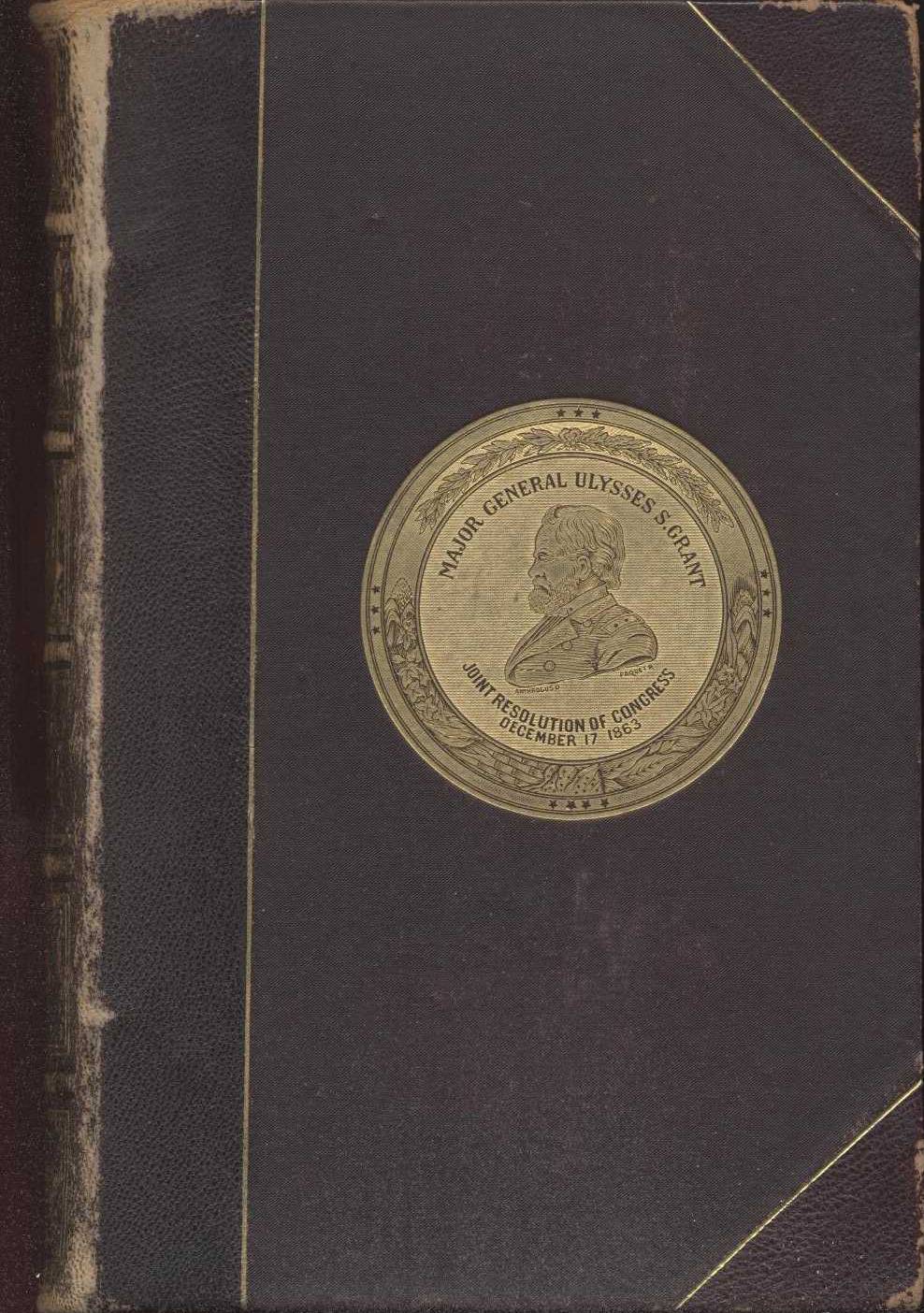
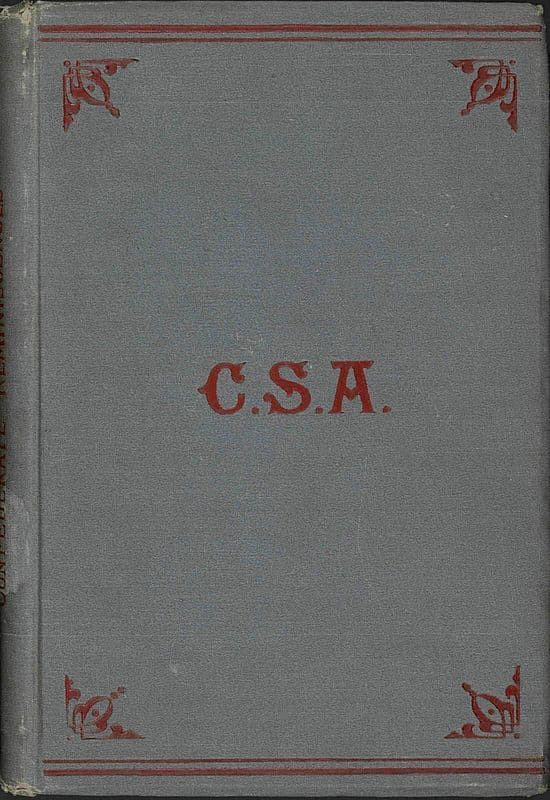
The Story of a Common Soldier of Army Life in the Civil War, 1861-1865
The Story of a Common Soldier of Army Life in the Civil War, 1861-1865
This is war as lived by a twenty-year-old farm boy from Illinois, not as generals conceived it. Leander Stillwell enlisted in the 61st Illinois Infantry in 1861, and his memoir captures what the Civil War actually felt like to the men in the ranks: the awful food, the endless drills, the terror that came not from ideology but from sleeping in the mud beside strangers who became brothers. Stillwell writes with unaffected clarity about his decision to enlist, the strange camaraderie of Camp Carrollton, and the slow crystallization of fear into something almost like purpose as the war ground on. This isn't strategy or politics. It's one man's attempt to make sense of four years that reshaped a nation, written decades later but still carrying the raw echo of a young soldier's voice. For anyone tired of sanitized history, here is the thing itself: the boredom, the dread, and the stubborn humanity of men who marched into history.
Editions
X-Ray
“I witnessed a pathetic incident, which is yet as fresh and vivid in my memory as if it had happened only yesterday. Soon after our arrival I procured a pass for a few hours, and took a stroll through the city. While thus engaged I met two hospital attendants carrying on a stretcher a wounded Union soldier. They halted as I approached, and rested the stretcher on the sidewalk. An old man was with them, apparently about sixty years old, of small stature and slight frame, and wearing the garb of a civilian. I stopped, and had a brief conversation with one of the stretcher-bearers. He told me that the soldier had been wounded in one of the recent assaults by the Union troops on the defenses of Vicksburg, and, with others of our wounded, had just arrived at Memphis on a hospital boat. That the old gentleman present was the father of the wounded boy, and having learned at his home in some northern State of his son being wounded, had started to Vicksburg to care for him; that the boat on which he was journeying had rounded in at the Memphis wharf next to the above mentioned hospital boat, and that he happened to see his son in the act of being carried ashore, and thereupon at once went to him, and was going with him to a hospital in the city. But the boy was dying, and that was the cause of the halt made by the stretcher-bearers. The soldier was quite young, seemingly not more than eighteen years old. He had an orange, which his father had given him, tightly gripped in his right hand, which was lying across his breast. But, poor boy! it was manifest that that orange would never be tasted by him, as the glaze of death was then gathering on his eyes, and he was in a semi-unconscious condition. And the poor old father was fluttering around the stretcher, in an aimless, distracted manner, wanting to do something to help his boy”
— Leander Stillwell
“the army in a time of war tended to develop patience, contentment with the surroundings, and equanimity of temper and mind in general. And, from the highest to the lowest, differing only in degree, it would bring out energy, prompt decision, intelligent action, and all the latent force of character a man possessed.””
— Leander Stillwell
“No cymbal clashed, no clarion rang, Still were the pipe and drum; Save heavy tread and armor's clang, The sullen march was dumb.””
— Leander Stillwell
“Pediculus vestimenti,””
— Leander Stillwell
“I put green hickory leaves in my cap, and kept them well saturated with water from my canteen. The leaves would retain the moisture and keep my head cool, and when they became stale and withered, would be thrown away, and fresh ones procured.””
— Leander Stillwell
“One quiet, star-lit summer night, while on picket between Bolivar and Toone's, I had the good fortune to witness the flight of the largest and most brilliant meteor I ever have seen. It was a little after midnight, and I was standing alone at my post, looking, listening, and thinking. Suddenly there came a loud, rushing, roaring sound, like a passenger train close by, going at full speed, and there in the west was a meteor! Its flight was from the southwest to the northeast, parallel with the horizon, and low down. Its head, or body, looked like a huge ball of fire, and it left behind a long, immense tail of brilliant white, that lighted up all the western heavens. While yet in full view, it exploded with a crash like a near-by clap of thunder, there was a wide, glittering shower of sparks,”
— Leander Stillwell
“Halt! Who comes there?" "Friend, with the countersign!" was the answer. "Dismount, friend, advance, and give the countersign!" cried the sentinel. Kuh-sock, went the fine, high-top boots of the rider in the mud, and leading his horse, he walked up, gave the talismanic word, to which the response was made, "Countersign's correct! Pass, friend.””
— Leander Stillwell
“The planter himself was of a type then common in the South. He was a large, coarse looking man, with an immense paunch, wore a broad-brimmed, home-made straw hat and butter nut jeans clothes. His trousers were of the old-fashioned, "broad-fall" pattern. His hair was long, he had a scraggy, sandy beard, and chewed "long green" tobacco continually and viciously. But he was shrewd enough to know that ugly talk on his part wouldn't mend matters, but only make them worse, so he stood around in silence while we took his corn, but he looked as malignant as a rattlesnake. His wife was directly his opposite in appearance and demeanor. She was tall, thin, and bony, with reddish hair and a sharp nose and chin. And goodness, but she had a temper! She stood in the door of the dwelling house, and just tongue-lashed us "Yankees," as she called us, to the full extent of her ability. The boys took it all good naturedly, and didn't jaw back. We couldn't afford to quarrel with a woman. A year later, the result of her abuse would have been the stripping of the farm of every hog and head of poultry on it,””
— Leander Stillwell
“I think that a man who has never spent some wakeful hours in the night, by himself, out in the woods, has simply missed one of the most interesting parts of life. The night is the time when most of the wild things are astir, and some of the tame ones, too. There was some kind of a very small frog in the swamps and marshes near Bolivar that gave forth about the most plaintive little cry that I ever heard.””
— Leander Stillwell
Link to this book
Add a free, dofollow link to Lex on your blog, forum, syllabus, or reading list.

<a href="https://lex-books.com/book/the-story-of-a-common-soldier-of-army-life-in-the-civil-war-1861-1865-d8208bd1-8fed-4d12-9f07-4592366540bc"><img src="https://lex-books.com/badges/read-on-lex.svg" alt="Read The Story of a Common Soldier of Army Life in the Civil War, 1861-1865 by Leander Stillwell free on Lex" width="160" height="40"></a>[](https://lex-books.com/book/the-story-of-a-common-soldier-of-army-life-in-the-civil-war-1861-1865-d8208bd1-8fed-4d12-9f07-4592366540bc)[url=https://lex-books.com/book/the-story-of-a-common-soldier-of-army-life-in-the-civil-war-1861-1865-d8208bd1-8fed-4d12-9f07-4592366540bc][img]https://lex-books.com/badges/read-on-lex.svg[/img][/url]Read The Story of a Common Soldier of Army Life in the Civil War, 1861-1865 by Leander Stillwell free on Lex: https://lex-books.com/book/the-story-of-a-common-soldier-of-army-life-in-the-civil-war-1861-1865-d8208bd1-8fed-4d12-9f07-4592366540bcCite this book
Reading this edition for a paper or guide? Copy a citation.
Stillwell, Leander. The Story of a Common Soldier of Army Life in the Civil War, 1861-1865. Lex, lex-books.com/book/the-story-of-a-common-soldier-of-army-life-in-the-civil-war-1861-1865-d8208bd1-8fed-4d12-9f07-4592366540bc.Stillwell, L. (n.d.). The Story of a Common Soldier of Army Life in the Civil War, 1861-1865. Lex. https://lex-books.com/book/the-story-of-a-common-soldier-of-army-life-in-the-civil-war-1861-1865-d8208bd1-8fed-4d12-9f07-4592366540bcStillwell, Leander. The Story of a Common Soldier of Army Life in the Civil War, 1861-1865. Lex. https://lex-books.com/book/the-story-of-a-common-soldier-of-army-life-in-the-civil-war-1861-1865-d8208bd1-8fed-4d12-9f07-4592366540bc.