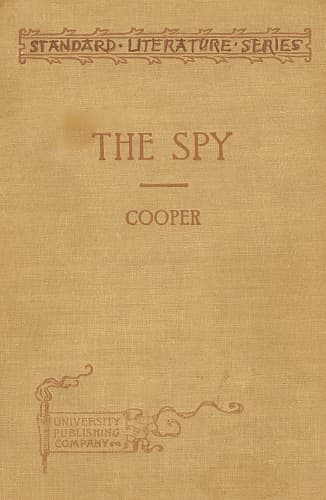
The Spy

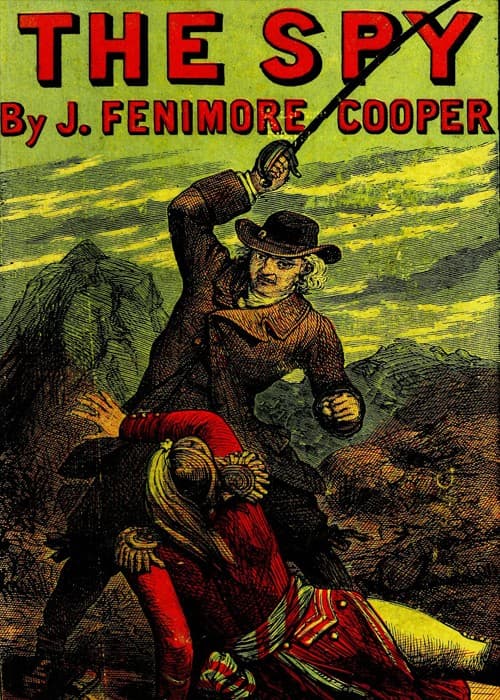
In the Revolutionary War's shadowed borderlands, where allegiance shifts like morning fog, Cooper weaves a tale of suspense and moral ambiguity that made him the first American novelist to captivate the world. Harvey Birch, a wandering peddler with eyes that give nothing away, moves through neutral Westchester County under a cloud of suspicion. The Wharton family, caught between two armies, harbor both American and British officers beneath their roof, each guest a potential traitor or ally. As Birch's true purpose remains deliberately obscured, the novel builds toward an ending that refuses easy answers about loyalty and betrayal. This is espionage before spycraft became formula, where honor and treachery wear the same face. "The Spy" launched Cooper's career and established the mysterious frontiersman as a defining American archetype. For readers who crave morally complex thrillers rooted in history's rawest chapter.
Editions

X-Ray
“The savor of preparation which had been noticed by Captain Lawton began to increase within the walls of the cottage; certain sweet-smelling odors, that arose from the subterranean territories of Cæsar, gave to the trooper the most pleasing assurances that his olfactory nerves, which on such occasions were as acute as his eyes on others, had faithfully performed their duty; and for the benefit of enjoying the passing sweets as they arose, the dragoon so placed himself at a window of the building, that not a vapor charged with the spices of the East could exhale on its passage to the clouds, without first giving its incense to his nose. Lawton, however, by no means indulged himself in this comfortable arrangement, without first making such preparations to do meet honor to the feast, as his scanty wardrobe would allow. The uniform of his corps was always a passport to the best tables, and this, though somewhat tarnished by faithful service and unceremonious usage, was properly brushed and decked out for the occasion. His head, which nature had ornamented with the blackness of a crow, now shone with the whiteness of snow; and his bony hand, that so well became the saber, peered from beneath a ruffle with something like maiden coyness. The improvements of the dragoon went no further, excepting that his boots shone with more than holiday splendor, and his spurs glittered in the rays of the sun, as became the pure ore of which they were composed.””
— James Fenimore Cooper
Link to this book
Add a free, dofollow link to Lex on your blog, forum, syllabus, or reading list.

<a href="https://lex-books.com/book/the-spy-5501e6e2-fa13-4eb4-baaf-def96ab94fdb"><img src="https://lex-books.com/badges/read-on-lex.svg" alt="Read The Spy by James Fenimore Cooper free on Lex" width="160" height="40"></a>[](https://lex-books.com/book/the-spy-5501e6e2-fa13-4eb4-baaf-def96ab94fdb)[url=https://lex-books.com/book/the-spy-5501e6e2-fa13-4eb4-baaf-def96ab94fdb][img]https://lex-books.com/badges/read-on-lex.svg[/img][/url]Read The Spy by James Fenimore Cooper free on Lex: https://lex-books.com/book/the-spy-5501e6e2-fa13-4eb4-baaf-def96ab94fdbCite this book
Reading this edition for a paper or guide? Copy a citation.
Cooper, James Fenimore. The Spy. Lex, lex-books.com/book/the-spy-5501e6e2-fa13-4eb4-baaf-def96ab94fdb.Cooper, J. F. (n.d.). The Spy. Lex. https://lex-books.com/book/the-spy-5501e6e2-fa13-4eb4-baaf-def96ab94fdbCooper, James Fenimore. The Spy. Lex. https://lex-books.com/book/the-spy-5501e6e2-fa13-4eb4-baaf-def96ab94fdb.