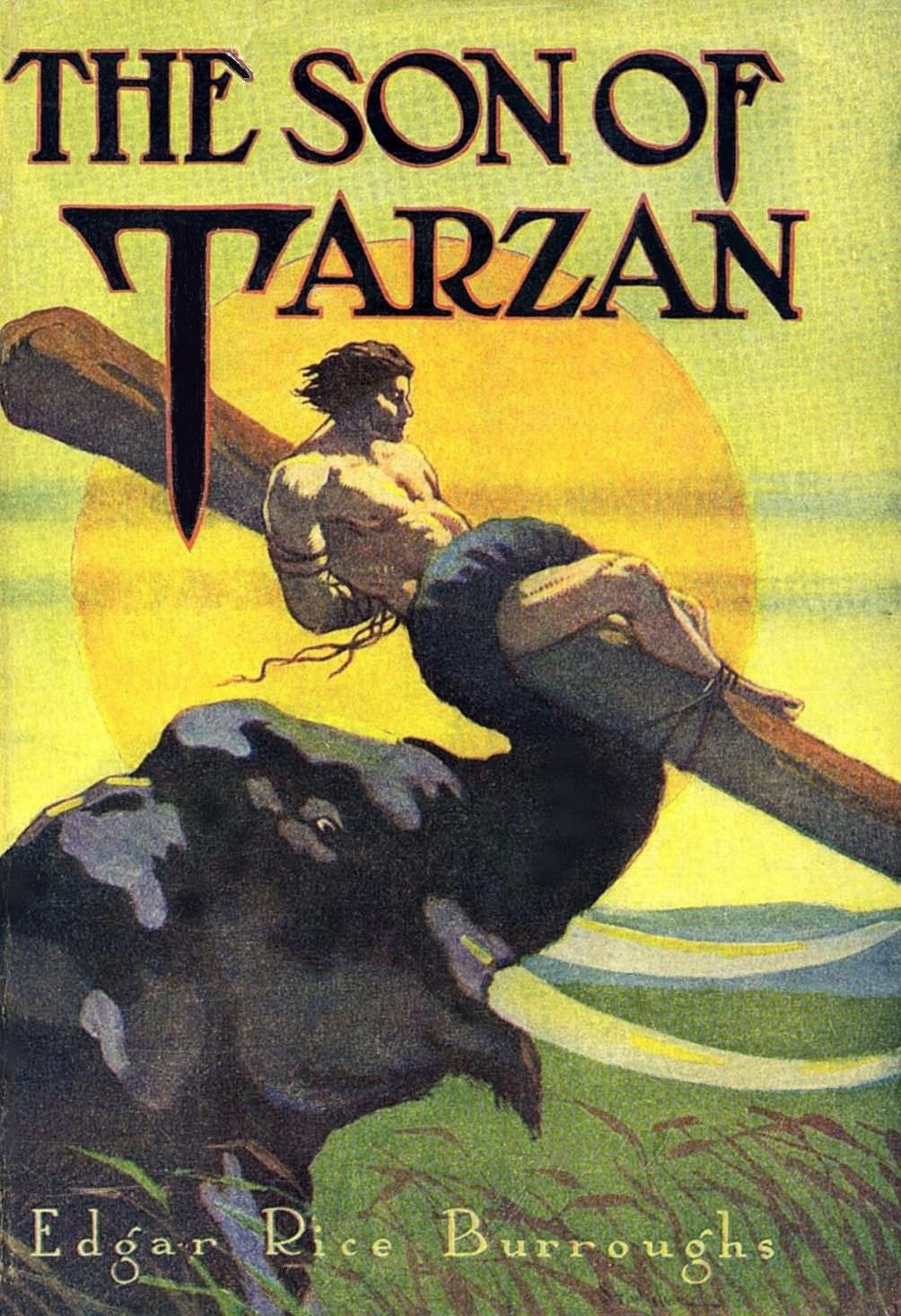
The Son of Tarzan
1917
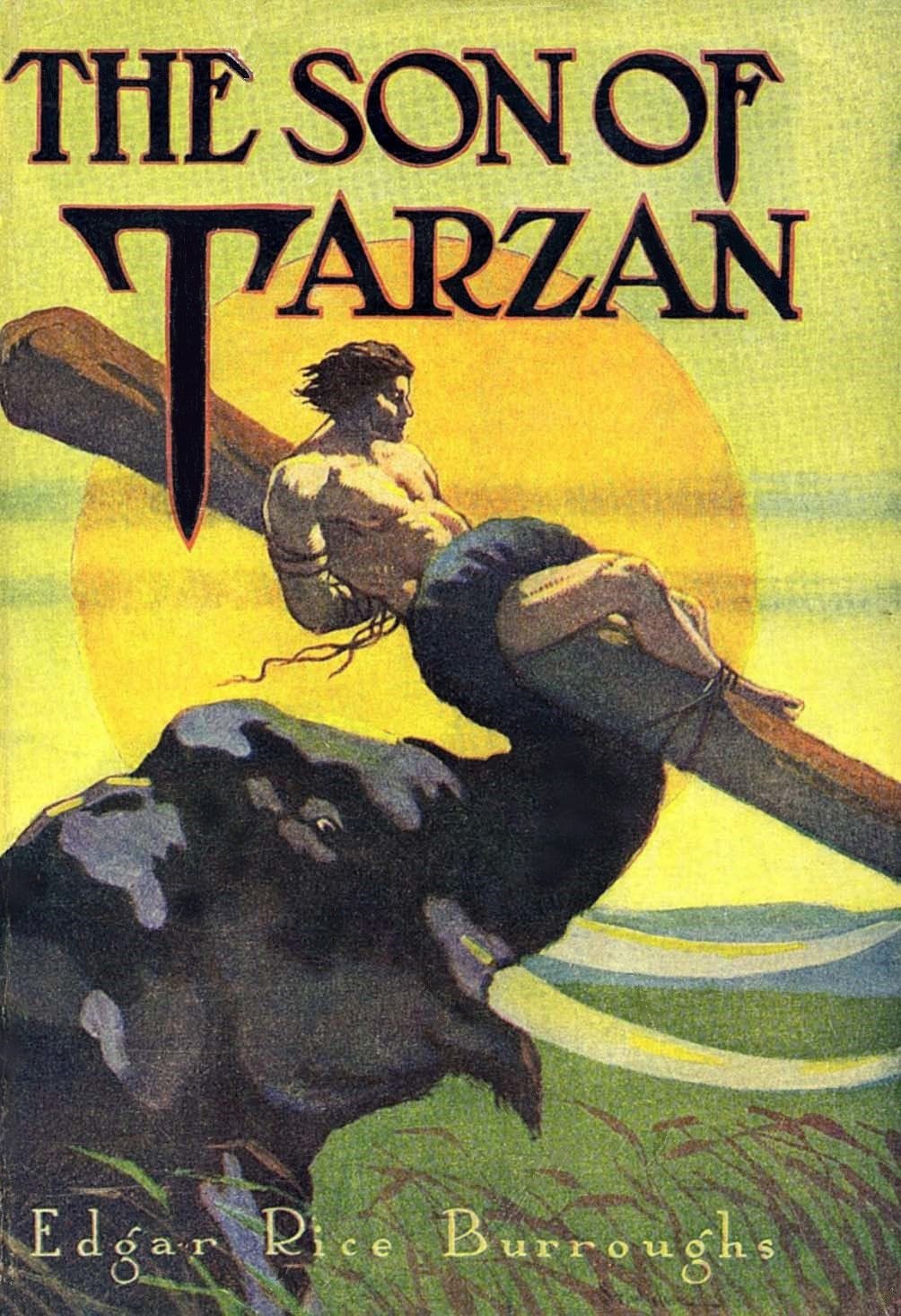
The jungle calls to Jack Tarzan like a memory his blood cannot forget. Raised in the gray streets of London by his aristocratic mother, the son of the Ape Man carries a wildness he cannot name, a language only the great apes once spoke. When his father's old enemy Alexis Paulvitch lures him into the African interior with murder in his heart, Jack discovers that the civilized world has taught him nothing about survival in the world where his father was king. But Jack is not the child Paulvitch expects. Beneath the veneer of English manners lies his father's instinct, sharpened by youth and fury. He makes war upon the beasts and men who would destroy him, earns the name Korak the Killer among the great apes, and finds a kindred spirit in Meriem, a young woman of the wilds as displaced as he. This is adventure fiction at its pulpy, joyful heart: narrow escapes, brutal fights, and the eternal question of whether blood will out. Yet beneath the action lies something that still resonates a century later: what we are born to, and what we choose to become.
Editions

X-Ray
“It is a characteristic of the weak and criminal to attribute to others the misfortunes that are the result of their own wickedness.””
— Edgar Rice Burroughs
“... but life would be very miserable indeed were I to spend it in terror of the thing that has not yet happened.””
— Edgar Rice Burroughs
“Those who know say that the most painful punishment that can be inflicted upon an adult male, short of injuring him, is a good, old fashioned shaking.””
— Edgar Rice Burroughs
“But the wireless," asked Momulla. "What has the wireless to do with our remaining here?" "Oh yes," replied Gust, scratching his head. He was wondering if the Maori were really so ignorant as to believe the preposterous lie he was about to unload upon him. "Oh yes! You see every warship is equipped with what they call a wireless apparatus. It lets them talk to other ships hundreds of miles away, and it lets them listen to all that is said on these other ships.””
— Edgar Rice Burroughs
“...and also with sufficient good judgment to appreciate that while he might enjoy the contemplation of his superiority to the masses, there was little likelihood of the masses being equally entranced by the same cause.””
— Edgar Rice Burroughs
Link to this book
Add a free, dofollow link to Lex on your blog, forum, syllabus, or reading list.

<a href="https://lex-books.com/book/the-son-of-tarzan-7ecac8aa-e6da-4458-9a76-6fbe2f74775a"><img src="https://lex-books.com/badges/read-on-lex.svg" alt="Read The Son of Tarzan by Edgar Rice Burroughs free on Lex" width="160" height="40"></a>[](https://lex-books.com/book/the-son-of-tarzan-7ecac8aa-e6da-4458-9a76-6fbe2f74775a)[url=https://lex-books.com/book/the-son-of-tarzan-7ecac8aa-e6da-4458-9a76-6fbe2f74775a][img]https://lex-books.com/badges/read-on-lex.svg[/img][/url]Read The Son of Tarzan by Edgar Rice Burroughs free on Lex: https://lex-books.com/book/the-son-of-tarzan-7ecac8aa-e6da-4458-9a76-6fbe2f74775aCite this book
Reading this edition for a paper or guide? Copy a citation.
Burroughs, Edgar Rice. The Son of Tarzan. Lex, lex-books.com/book/the-son-of-tarzan-7ecac8aa-e6da-4458-9a76-6fbe2f74775a.Burroughs, E. R. (1917). The Son of Tarzan. Lex. https://lex-books.com/book/the-son-of-tarzan-7ecac8aa-e6da-4458-9a76-6fbe2f74775aBurroughs, Edgar Rice. The Son of Tarzan. Lex. https://lex-books.com/book/the-son-of-tarzan-7ecac8aa-e6da-4458-9a76-6fbe2f74775a.