The Renaissance: Studies in Art and Poetry
1873
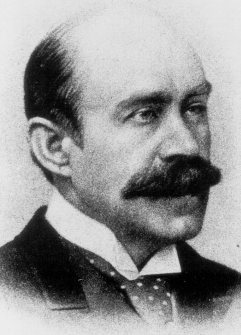
The book that scandalized Victorian England and defined a generation of aesthetic consciousness. Walter Pater's revolutionary collection began as impressionistic essays on Renaissance painters and poets, but it became something far more radical: a manifesto for experiencing art as a living, burning presence rather than cold scholarship. Through Botticelli, Michelangelo, Pico della Mirandola, and others, Pater traces the Renaissance as a moment when classical antiquity merged with emergent humanism, creating a cultural awakening. Yet it is his infamous Conclusion that transformed these studies into a provocation. His assertion that one should "burn always with this hard gemlike flame" launched a thousand debates about aestheticism and decadence. Pater objected strenuously to being called a hedonist, but his passionate call to "harden" oneself into "a many-sidedness" of receptive intensity remains electrifying. This is the book that shaped Wilde, influenced Lawrence, and continues to demand something of every reader who encounters it.
Editions
X-Ray
“To burn always with this hard gemlike flame, to maintain this ecstasy, is success in life.””
— Walter Pater
“The way to perfection is through a series of disgusts””
— Walter Pater
“To regard all things and principles of things as inconstant modes or fashions has more and more become the tendency of modern thought. Let us begin with that which is without - our physical life. Fix upon it in one of its more exquisite intervals, the moment, for instance, of delicious recoil from the flood of water in summer heat. What is the whole physical life in that moment but a combination of natural elements to which science gives their names? But these elements, phosphorus and lime and delicate fibres, are present not in the human body alone: we detect them in places most remote from it. Our physical life is a perpetual motion of them - the passage of the blood, the wasting and repairing of the lenses of the eye, the modification of the tissues of the brain by every ray of light and sound - processes which science reduces to simpler and more elementary forces. Like the elements of which we are composed, the action of these forces extends beyond us; it rusts iron and ripens corn. Far out on every side of us those elements are broadcast, driven by many forces; and birth and gesture and death and the springing of violets from the grave are but a few out of ten thousand resultant combinations. That clear, perpetual outline of face and limb is but an image of ours, under which we group them - a design in a web, the actual threads of which pass out beyond it. This at least of flame-like our life has, that it is but the concurrence, renewed from moment to moment, of forces parting sooner or later on their ways.””
— Walter Pater
“Analysis goes a step farther still, and assures us that those impressions of the individual mind to which, for each one of us, experience dwindles down, are in perpetual flight; that each of them is limited by time, and that as time is infinitely divisible, each of them is infinitely divisible also; all that is actual in it being a single moment, gone while we try to apprehend it, of which it may ever be more truly said that it has ceased to be than that it is. To such a tremulous wisp constantly reforming itself on the stream, to a single sharp impression, with a sense in it, a relic more or less fleeting, of such moments gone by, what is real in our life fines itself down.””
— Walter Pater
“It is with this movement, with the passage and dissolution of impressions, images, sensations, that analysis leaves off”
— Walter Pater
“He...preferred always the more to the less remote, what, seeming exceptional, was an instance of law more refined...””
— Walter Pater
“Legions of grotesques sweep under his hand; for has not nature too her grotesques”
— Walter Pater
“Philosophy serves culture, not by the fancied gift of absolute or transcendental knowledge, but by suggesting questions which help one to detect the passion, and strangeness, and dramatic contrasts of life.””
— Walter Pater
“What is important, then, is not that the critic should possess a correct abstract definition of beauty for the intellect, but a certain kind of temperament, the power of being deeply moved by the presence of beautiful objects.””
— Walter Pater
Link to this book
Add a free, dofollow link to Lex on your blog, forum, syllabus, or reading list.

<a href="https://lex-books.com/book/the-renaissance-studies-in-art-and-poetry-9509e03d-594a-40fa-bc94-5d33b12972b3"><img src="https://lex-books.com/badges/read-on-lex.svg" alt="Read The Renaissance: Studies in Art and Poetry by Walter Pater free on Lex" width="160" height="40"></a>[](https://lex-books.com/book/the-renaissance-studies-in-art-and-poetry-9509e03d-594a-40fa-bc94-5d33b12972b3)[url=https://lex-books.com/book/the-renaissance-studies-in-art-and-poetry-9509e03d-594a-40fa-bc94-5d33b12972b3][img]https://lex-books.com/badges/read-on-lex.svg[/img][/url]Read The Renaissance: Studies in Art and Poetry by Walter Pater free on Lex: https://lex-books.com/book/the-renaissance-studies-in-art-and-poetry-9509e03d-594a-40fa-bc94-5d33b12972b3Cite this book
Reading this edition for a paper or guide? Copy a citation.
Pater, Walter. The Renaissance: Studies in Art and Poetry. Lex, lex-books.com/book/the-renaissance-studies-in-art-and-poetry-9509e03d-594a-40fa-bc94-5d33b12972b3.Pater, W. (1873). The Renaissance: Studies in Art and Poetry. Lex. https://lex-books.com/book/the-renaissance-studies-in-art-and-poetry-9509e03d-594a-40fa-bc94-5d33b12972b3Pater, Walter. The Renaissance: Studies in Art and Poetry. Lex. https://lex-books.com/book/the-renaissance-studies-in-art-and-poetry-9509e03d-594a-40fa-bc94-5d33b12972b3.