The Oxford Reformers: John Colet, Erasmus, and Thomas More
1869
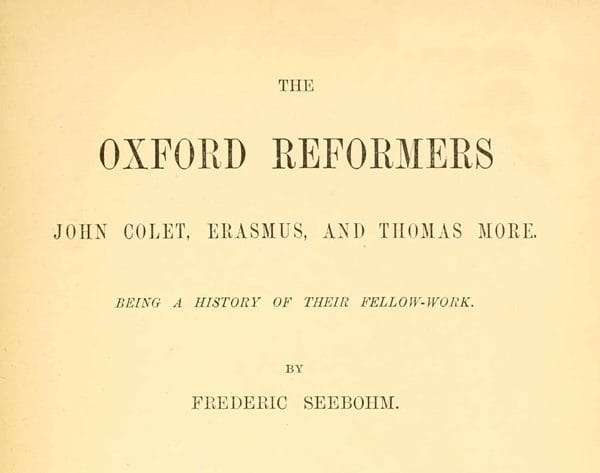
The Oxford Reformers: John Colet, Erasmus, and Thomas More
1869
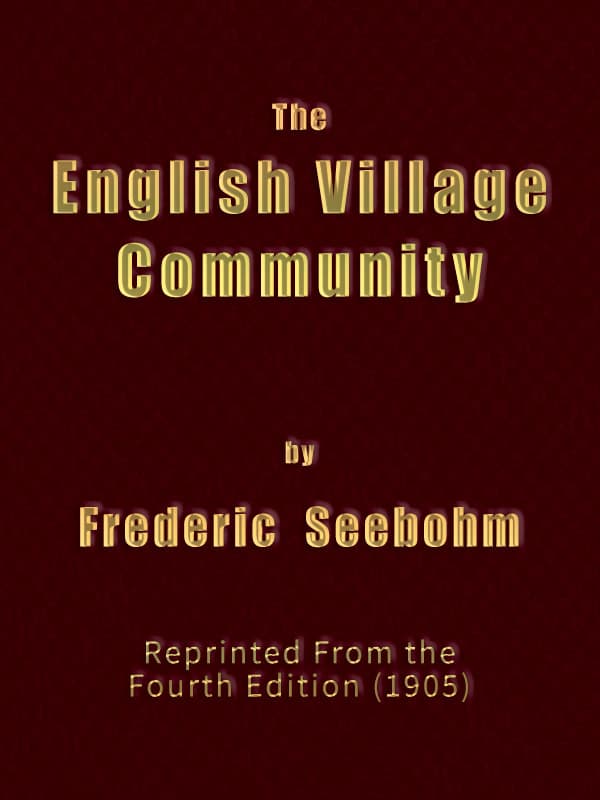
In 1496, a young Englishman returns from Italy to Oxford carrying manuscripts no one in England has seen and a vision that will terrify the establishment. John Colet arrives to lecture on St. Paul's Epistles, and for the first time in generations, the Bible itself becomes the subject of serious scholarly inquiry. He is not alone. Across Europe, Desiderius Erasmus is spreading his revolutionary ideas through printed books, while Thomas More in London is crafting a vision of a society governed by reason and Christian principle. Frederic Seebohm's landmark study traces how these three men, friends and correspondents, attempted to reform the church and universities through humanist learning. Theirs was a peaceful revolution of the mind, a belief that classical wisdom combined with evangelical piety could renew Christendom without bloodshed. The book captures a fleeting historical moment when reform seemed possible, before the Protestant Reformation rendered their irenic vision obsolete and More died on a block for his conscience.
Editions

Link to this book
Add a free, dofollow link to Lex on your blog, forum, syllabus, or reading list.

<a href="https://lex-books.com/book/the-oxford-reformers-john-colet-erasmus-and-thomas-more-cd464835-07f5-47e3-866c-1caef2e54ac9"><img src="https://lex-books.com/badges/read-on-lex.svg" alt="Read The Oxford Reformers: John Colet, Erasmus, and Thomas More by Frederic Seebohm free on Lex" width="160" height="40"></a>[](https://lex-books.com/book/the-oxford-reformers-john-colet-erasmus-and-thomas-more-cd464835-07f5-47e3-866c-1caef2e54ac9)[url=https://lex-books.com/book/the-oxford-reformers-john-colet-erasmus-and-thomas-more-cd464835-07f5-47e3-866c-1caef2e54ac9][img]https://lex-books.com/badges/read-on-lex.svg[/img][/url]Read The Oxford Reformers: John Colet, Erasmus, and Thomas More by Frederic Seebohm free on Lex: https://lex-books.com/book/the-oxford-reformers-john-colet-erasmus-and-thomas-more-cd464835-07f5-47e3-866c-1caef2e54ac9Cite this book
Reading this edition for a paper or guide? Copy a citation.
Seebohm, Frederic. The Oxford Reformers: John Colet, Erasmus, and Thomas More. Lex, lex-books.com/book/the-oxford-reformers-john-colet-erasmus-and-thomas-more-cd464835-07f5-47e3-866c-1caef2e54ac9.Seebohm, F. (1869). The Oxford Reformers: John Colet, Erasmus, and Thomas More. Lex. https://lex-books.com/book/the-oxford-reformers-john-colet-erasmus-and-thomas-more-cd464835-07f5-47e3-866c-1caef2e54ac9Seebohm, Frederic. The Oxford Reformers: John Colet, Erasmus, and Thomas More. Lex. https://lex-books.com/book/the-oxford-reformers-john-colet-erasmus-and-thomas-more-cd464835-07f5-47e3-866c-1caef2e54ac9.