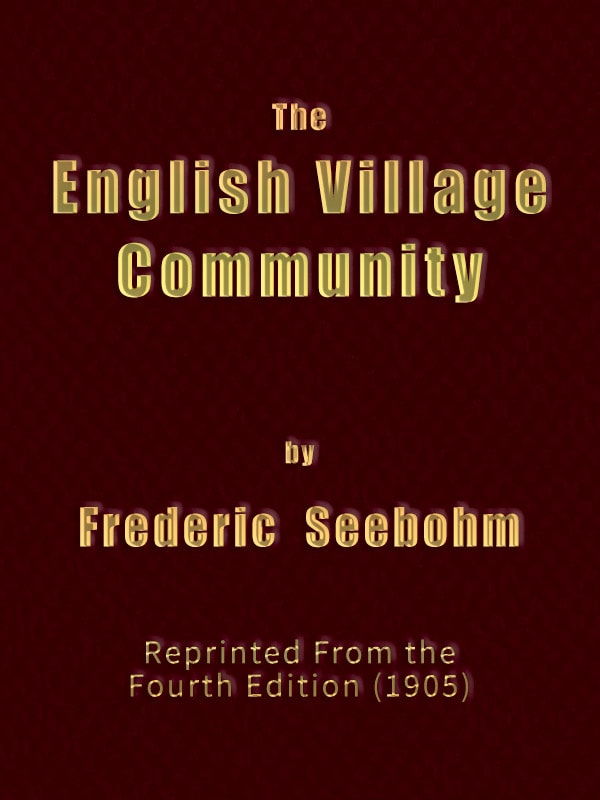
The English Village Communityexamined in Its Relations to the Manorial and Tribal Systems and to the Common or Open Field System of Husbandry; An Essay in Economic History (reprinted from the Fourth Edition)
1883
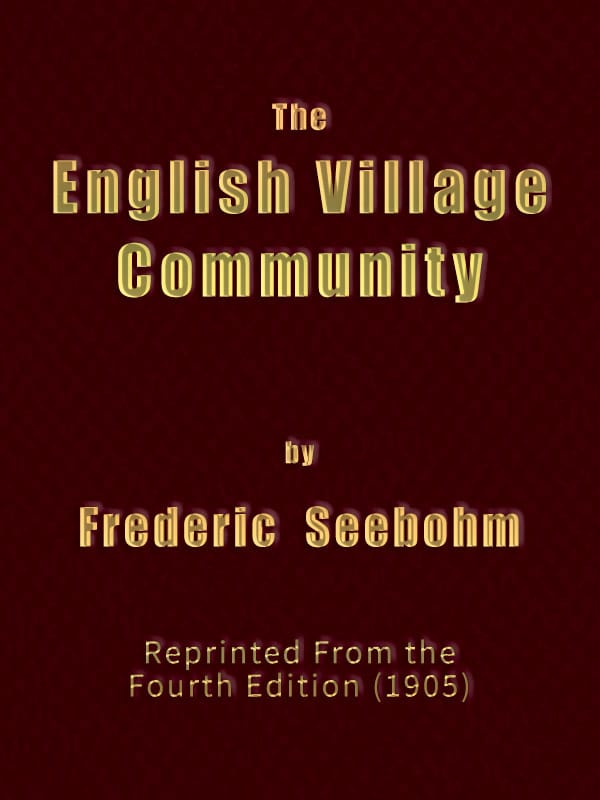
The English Village Communityexamined in Its Relations to the Manorial and Tribal Systems and to the Common or Open Field System of Husbandry; An Essay in Economic History (reprinted from the Fourth Edition)
1883
A historical account written in the late 19th century. The book explores the development of English village communities in relation to manorial and tribal systems, as well as the common open-field system of husbandry. It aims to shed light on the economic history of England, focusing on the historical question of whether these communities began as free entities or under serfdom. At the start of the work, Seebohm expresses his initial intention to approach the subject from an economic perspective rather than as an antiquarian study. He acknowledges the essential role that understanding the old social order plays in comprehending modern concepts of freedom and democracy. The opening chapters delve into the characteristics of the open-field system, illustrating its structures and features through specific examples, particularly focusing on the township of Hitchin. Seebohm details how this system contributed significantly to the economic landscape of England and sets the groundwork for the inquiry into the relationships between village communities, manorial land management, and the evolution of serfdom within English history.
Editions
X-Ray
The author and economic historian who conducts this scholarly investigation into English village communities. He approaches the subject from an economic rather than antiquarian perspective.
Distinguished legal scholar who recognized analogies between Eastern and Western village communities. He provided advice and support to Seebohm during the writing process.
German scholar whose theory of the German 'mark' provided a working hypothesis for studying village communities, though Seebohm questions some conclusions.
A historical villein tenant whose virgate holding is detailed in the Winslow Manor Rolls, providing crucial evidence for understanding medieval land tenure.
About The English Village Communityexamined in Its Relations to the Manorial and Tribal Systems and to the Common or Open Field System of Husbandry; An Essay in Economic History (reprinted from the Fourth Edition)
Chapter Summaries
- Preface
- Seebohm explains his economic rather than antiquarian approach, emphasizing the political importance of understanding whether English history began with freedom or serfdom. He outlines his method of working from known modern remnants backward to discover origins.
- 1
- Using Hitchin township as an example, Seebohm describes the distinctive features of the open-field system: scattered strips, furlongs, balks, and common rights. He demonstrates how this seemingly inefficient system must have had original purposes.
- 2
- Through manor rolls and surveys from Edward III back to 1125, Seebohm shows the system's continuity and reveals that it was the shell of serfdom, with village communities in villenage holding scattered strips called virgates.
Key Themes
- Economic Evolution vs. Constitutional History
- Seebohm argues that economic history may provide secure stepping stones over gaps in constitutional history, revealing continuities that political records cannot preserve.
- The Nature of Freedom and Serfdom
- The work examines whether medieval English villagers were originally free or bound, with implications for understanding the development of democracy and individual liberty.
- Continuity vs. Change
- The study reveals how ancient agricultural and social systems persisted through political upheavals, with Roman, Saxon, and Norman elements blending together.
Characters
- Frederic Seebohm(protagonist)
- The author and economic historian who conducts this scholarly investigation into English village communities. He approaches the subject from an economic rather than antiquarian perspective.
- Sir Henry S. Maine(major)
- Distinguished legal scholar who recognized analogies between Eastern and Western village communities. He provided advice and support to Seebohm during the writing process.
- G. L. von Maurer(major)
- German scholar whose theory of the German 'mark' provided a working hypothesis for studying village communities, though Seebohm questions some conclusions.
- John Moldeson(minor)
- A historical villein tenant whose virgate holding is detailed in the Winslow Manor Rolls, providing crucial evidence for understanding medieval land tenure.
- Professor Nasse(minor)
- German scholar who pointed out similarities between English and German land systems to English students.
Link to this book
Add a free, dofollow link to Lex on your blog, forum, syllabus, or reading list.

<a href="https://lex-books.com/book/the-english-village-communityexamined-in-its-relations-to-the-manorial-and-triba-e1775e51-11f6-4626-bbbc-932af733e7a2"><img src="https://lex-books.com/badges/read-on-lex.svg" alt="Read The English Village Communityexamined in Its Relations to the Manorial and Tribal Systems and to the Common or Open Field System of Husbandry; An Essay in Economic History (reprinted from the Fourth Edition) by Frederic Seebohm free on Lex" width="160" height="40"></a>[](https://lex-books.com/book/the-english-village-communityexamined-in-its-relations-to-the-manorial-and-triba-e1775e51-11f6-4626-bbbc-932af733e7a2)[url=https://lex-books.com/book/the-english-village-communityexamined-in-its-relations-to-the-manorial-and-triba-e1775e51-11f6-4626-bbbc-932af733e7a2][img]https://lex-books.com/badges/read-on-lex.svg[/img][/url]Read The English Village Communityexamined in Its Relations to the Manorial and Tribal Systems and to the Common or Open Field System of Husbandry; An Essay in Economic History (reprinted from the Fourth Edition) by Frederic Seebohm free on Lex: https://lex-books.com/book/the-english-village-communityexamined-in-its-relations-to-the-manorial-and-triba-e1775e51-11f6-4626-bbbc-932af733e7a2Cite this book
Reading this edition for a paper or guide? Copy a citation.
Seebohm, Frederic. The English Village Communityexamined in Its Relations to the Manorial and Tribal Systems and to the Common or Open Field System of Husbandry; An Essay in Economic History (reprinted from the Fourth Edition). Lex, lex-books.com/book/the-english-village-communityexamined-in-its-relations-to-the-manorial-and-triba-e1775e51-11f6-4626-bbbc-932af733e7a2.Seebohm, F. (1883). The English Village Communityexamined in Its Relations to the Manorial and Tribal Systems and to the Common or Open Field System of Husbandry; An Essay in Economic History (reprinted from the Fourth Edition). Lex. https://lex-books.com/book/the-english-village-communityexamined-in-its-relations-to-the-manorial-and-triba-e1775e51-11f6-4626-bbbc-932af733e7a2Seebohm, Frederic. The English Village Communityexamined in Its Relations to the Manorial and Tribal Systems and to the Common or Open Field System of Husbandry; An Essay in Economic History (reprinted from the Fourth Edition). Lex. https://lex-books.com/book/the-english-village-communityexamined-in-its-relations-to-the-manorial-and-triba-e1775e51-11f6-4626-bbbc-932af733e7a2.