The Old Maid (The 'Fifties)
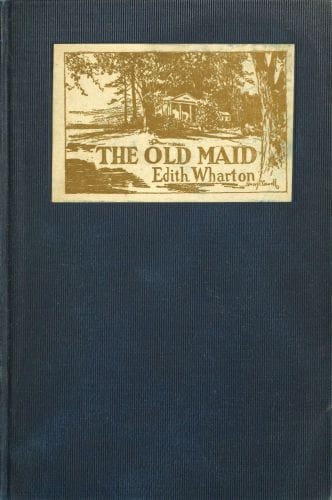
The social elite of 1850s New York appear to live in grace and plenty, but Edith Wharton exposes the silent violence beneath the surface. The Ralstons and their circle move through a world of meticulous manners and ample fortunes, yet their very polish becomes a prison. Women like Delia Ralston and her cousin Charlotte Lovell navigate a society that has already determined their fates before they have the chance to choose them. Wharton writes with surgical precision about the compromises women were forced to make. The "dumb dramas" that unfold underground in respectable households, the manipulations, the resignations, the small betrayals, are rendered with devastating clarity. This is a world where to be a sensitive soul was to be a muted keyboard, where fate plays without a sound. What makes The Old Maid endure is not merely its historical interest but its radical empathy for women trapped by circumstances beyond their control. The prose proves that constraint itself can be a kind of literature.
Editions
X-Ray
“Perhaps, if I hadn’t been, once before”
— Edith Wharton
“The drawing-room door opened, and two high-stocked and ample-coated young men came in”
— Edith Wharton
“Nineteenth-century America was gone; twentieth-century America was alien. “All that I thought American in a true sense is gone, and I see nothing but vain-glory, crassness and a total ignorance . . . ,” she wrote. She began to reconsider the old, lost world. What had seemed once petty and insular now seemed valuable and dignified; the rules, she saw, had been founded on moral principle. “I am steeping myself in the nineteenth century,” she wrote, “. . . such a blessed refuge from the turmoil and mediocrity of today”
— Edith Wharton
Link to this book
Add a free, dofollow link to Lex on your blog, forum, syllabus, or reading list.

<a href="https://lex-books.com/book/the-old-maid-the-fifties-27787a2c-c454-4f3f-a26d-2122296e7d13"><img src="https://lex-books.com/badges/read-on-lex.svg" alt="Read The Old Maid (The 'Fifties) by Edith Wharton free on Lex" width="160" height="40"></a>[](https://lex-books.com/book/the-old-maid-the-fifties-27787a2c-c454-4f3f-a26d-2122296e7d13)[url=https://lex-books.com/book/the-old-maid-the-fifties-27787a2c-c454-4f3f-a26d-2122296e7d13][img]https://lex-books.com/badges/read-on-lex.svg[/img][/url]Read The Old Maid (The 'Fifties) by Edith Wharton free on Lex: https://lex-books.com/book/the-old-maid-the-fifties-27787a2c-c454-4f3f-a26d-2122296e7d13Cite this book
Reading this edition for a paper or guide? Copy a citation.
Wharton, Edith. The Old Maid (The 'Fifties). Lex, lex-books.com/book/the-old-maid-the-fifties-27787a2c-c454-4f3f-a26d-2122296e7d13.Wharton, E. (n.d.). The Old Maid (The 'Fifties). Lex. https://lex-books.com/book/the-old-maid-the-fifties-27787a2c-c454-4f3f-a26d-2122296e7d13Wharton, Edith. The Old Maid (The 'Fifties). Lex. https://lex-books.com/book/the-old-maid-the-fifties-27787a2c-c454-4f3f-a26d-2122296e7d13.