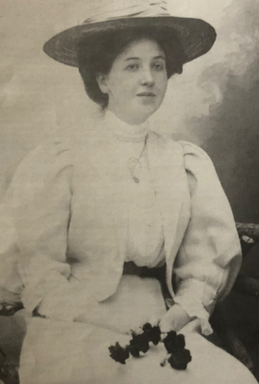
The Old English Herbals
1597
The Old English Herbals
1597
The surviving Anglo-Saxon herbals are among the rarest and most precious artifacts of medieval English culture. Only a handful escaped the destruction of monasteries, the chaos of invasion, and the slow attrition of centuries-yet these manuscripts contain an entire worldview, one in which plants held spiritual power, healing was inseparable from prayer, and the line between medicine and magic dissolved into something our modern minds can barely grasp. Eleanour Sinclair Rohde resurrects this lost tradition with scholarly precision and evident reverence, guiding readers through the Leech Book of Bald, the Lacnunga, and other surviving texts that document herbal remedies, incantations, and the beliefs surrounding disease, nature, and the human body in Anglo-Saxon England. She illuminates how these practices reflected a profound respect for the vegetable kingdom-a respect that has largely vanished from our industrialized age. For anyone drawn to the history of medicine, the texture of medieval life, or the fragile preservation of knowledge through time, this book offers a rare and captivating window into a world where every herb carried meaning beyond its chemical properties.
Editions
X-Ray
“In the gloom and solitude of the forest, “where the bitter wormwood stood pale grey” and where “the hoar stones lay thick,” the black, giant elves had their dwelling.””
— Eleanour Sinclair Rohde
“There is no mention of mistletoe as a sacred herb.””
— Eleanour Sinclair Rohde
“Red was the colour sacred to Thor and it was also the colour abhorred not only by witches in particular but by all the powers of darkness and evil.””
— Eleanour Sinclair Rohde
“if a radish be eaten raw after fasting all day, no woman’s chatter the next day can annoy?””
— Eleanour Sinclair Rohde
“our ancestors were an uncommonly hardy race, for the majority of the remedies would kill any of us modern weaklings, even if in robust health when they were administered.””
— Eleanour Sinclair Rohde
“Anglo-Saxons created a vernacular literature to which the continental nations at that time could show no parallel,””
— Eleanour Sinclair Rohde
“time when grown men believed in elves and goblins as naturally as they believed in trees,””
— Eleanour Sinclair Rohde
“Our Saxon ancestors may have been a rude and hardy race, but they did not live in an age of materialism as we do.””
— Eleanour Sinclair Rohde
About The Old English Herbals
Chapter Summaries
- Preface
- Rohde introduces her work as a 'labour of love' and acknowledges the extensive help she received from scholars and institutions. She notes the neglect of herbals in academic study and expresses hope for discovering more rare editions.
- 1
- Examines the earliest English herbals from the 10th century, including the Leech Book of Bald and Saxon translations of classical works. Explores the blend of Christian and pagan beliefs in early English medicine and the sophisticated understanding of plants among Anglo-Saxons.
- 2
- Covers the transition from manuscript to printed herbals, focusing on medieval works like those of Bartholomæus Anglicus and early printed works like Banckes's Herbal and the Grete Herball.
Key Themes
- Evolution of Scientific Knowledge
- The book traces the gradual shift from superstitious, magical approaches to herbs toward more empirical observation and scientific methodology over nearly a millennium of English herbal writing.
- Cultural Preservation
- Rohde emphasizes how herbals preserved ancient folk knowledge, customs, and beliefs that would otherwise have been lost, serving as repositories of cultural memory across generations.
- Connection Between Humanity and Nature
- Throughout the work, there's a consistent theme of humans seeking to understand their relationship with the natural world through plants, from ancient religious ceremonies to practical medicine.
Characters
- Eleanour Sinclair Rohde(protagonist)
- The author of this scholarly work on English herbals. A dedicated researcher who spent years studying manuscript herbals and early printed works, expressing gratitude to numerous scholars and institutions for their assistance.
- William Turner(major)
- Called the father of English botany, Turner was a divine, physician, and botanist who wrote the first original English herbal. A Protestant who was exiled during Mary's reign but returned under Elizabeth.
- John Gerard(major)
- Author of the most famous English herbal published in 1597. A gardener and herbalist who maintained extensive gardens in London and served Lord Burleigh as superintendent of his gardens.
- John Parkinson(major)
- The last of the great English herbalists, author of both the Paradisus and Theatrum Botanicum. Appointed Apothecary to James I and given the title Botanicus Regius Primarius by Charles I.
- Nicholas Culpeper(major)
- A controversial astrologer and herbalist popular in London's East End. Known for his astrological approach to herbal medicine and his attacks on the College of Physicians.
- Bartholomæus Anglicus(major)
- Medieval English writer who authored De Proprietatibus Rerum, one of the most important medieval works on natural history including herbs. Ranked among the greatest theologians of the 13th century.
Link to this book
Add a free, dofollow link to Lex on your blog, forum, syllabus, or reading list.

<a href="https://lex-books.com/book/the-old-english-herbals-5c0a0c08-a661-4eee-8ace-d70b2a0e240e"><img src="https://lex-books.com/badges/read-on-lex.svg" alt="Read The Old English Herbals by Eleanour Sinclair Rohde free on Lex" width="160" height="40"></a>[](https://lex-books.com/book/the-old-english-herbals-5c0a0c08-a661-4eee-8ace-d70b2a0e240e)[url=https://lex-books.com/book/the-old-english-herbals-5c0a0c08-a661-4eee-8ace-d70b2a0e240e][img]https://lex-books.com/badges/read-on-lex.svg[/img][/url]Read The Old English Herbals by Eleanour Sinclair Rohde free on Lex: https://lex-books.com/book/the-old-english-herbals-5c0a0c08-a661-4eee-8ace-d70b2a0e240eCite this book
Reading this edition for a paper or guide? Copy a citation.
Rohde, Eleanour Sinclair. The Old English Herbals. Lex, lex-books.com/book/the-old-english-herbals-5c0a0c08-a661-4eee-8ace-d70b2a0e240e.Rohde, E. S. (1597). The Old English Herbals. Lex. https://lex-books.com/book/the-old-english-herbals-5c0a0c08-a661-4eee-8ace-d70b2a0e240eRohde, Eleanour Sinclair. The Old English Herbals. Lex. https://lex-books.com/book/the-old-english-herbals-5c0a0c08-a661-4eee-8ace-d70b2a0e240e.