The Octopus: Or, The "Devil-Fish" of Fiction and of Fact
1875
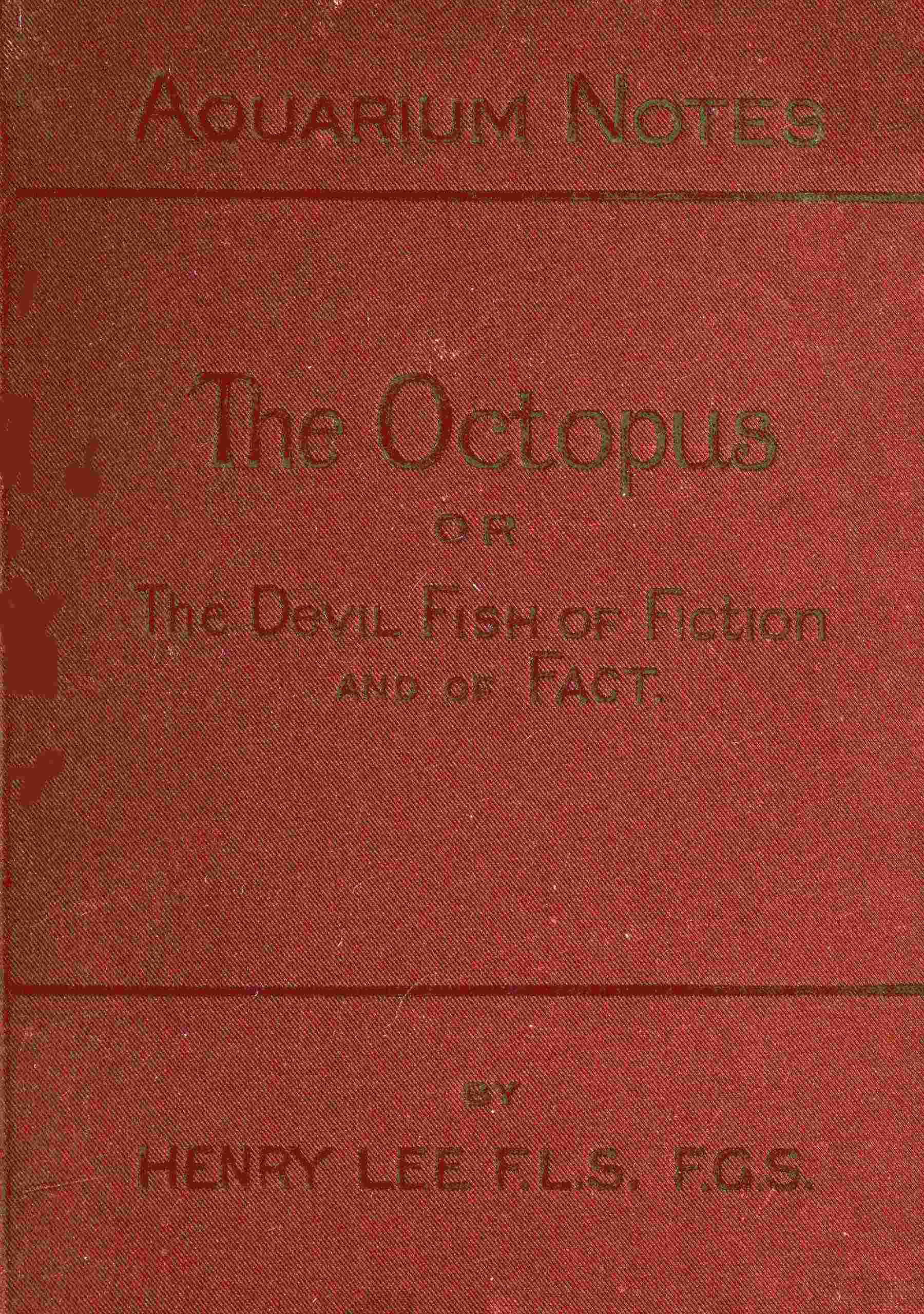
In 1875, a naturalist at the Brighton Aquarium undertook a peculiar mission: to separate the octopus of science from the octopus of nightmares. Henry Lee had watched crowds flock to see the mysterious 'devil-fish' at his aquarium, some transfixed, others repelled, all of them carrying the weight of maritime myth into his tanks. This book is his attempt to reconcile what he observed with what humanity believed. Lee writes with the earnest conviction of a man who has seen the real creature behind the monster. He recounts specific incidents, including a bizarre media sensation when one of his octopuses was tragically consumed by a dogfish, sparking newspaper coverage across England. But he also turns his gaze to literature, notably Victor Hugo's romantic portrayal in "Toilers of the Sea," wrestling with how fiction shapes public perception of real animals. The result is a curious Victorian artifact: part scientific memoir, part cultural criticism, and entirely a product of an era when the deep sea still felt like another planet. For readers today, the book offers something unexpected. It is not merely a historical curiosity but a window into how Victorians negotiated their relationship with the natural world, caught between emerging science and ancient wonder. Lee believed the octopus deserved better than mythology, and his earnest defense of the creature gives this odd little book a strange warmth.
Editions
Link to this book
Add a free, dofollow link to Lex on your blog, forum, syllabus, or reading list.

<a href="https://lex-books.com/book/the-octopus-or-the-devil-fish-of-fiction-and-of-fact-6bb66bba-3abf-4633-9adc-7ed940f5a511"><img src="https://lex-books.com/badges/read-on-lex.svg" alt="Read The Octopus: Or, The "Devil-Fish" of Fiction and of Fact by Henry Lee free on Lex" width="160" height="40"></a>[](https://lex-books.com/book/the-octopus-or-the-devil-fish-of-fiction-and-of-fact-6bb66bba-3abf-4633-9adc-7ed940f5a511)[url=https://lex-books.com/book/the-octopus-or-the-devil-fish-of-fiction-and-of-fact-6bb66bba-3abf-4633-9adc-7ed940f5a511][img]https://lex-books.com/badges/read-on-lex.svg[/img][/url]Read The Octopus: Or, The "Devil-Fish" of Fiction and of Fact by Henry Lee free on Lex: https://lex-books.com/book/the-octopus-or-the-devil-fish-of-fiction-and-of-fact-6bb66bba-3abf-4633-9adc-7ed940f5a511Cite this book
Reading this edition for a paper or guide? Copy a citation.
Lee, Henry. The Octopus: Or, The "Devil-Fish" of Fiction and of Fact. Lex, lex-books.com/book/the-octopus-or-the-devil-fish-of-fiction-and-of-fact-6bb66bba-3abf-4633-9adc-7ed940f5a511.Lee, H. (1875). The Octopus: Or, The "Devil-Fish" of Fiction and of Fact. Lex. https://lex-books.com/book/the-octopus-or-the-devil-fish-of-fiction-and-of-fact-6bb66bba-3abf-4633-9adc-7ed940f5a511Lee, Henry. The Octopus: Or, The "Devil-Fish" of Fiction and of Fact. Lex. https://lex-books.com/book/the-octopus-or-the-devil-fish-of-fiction-and-of-fact-6bb66bba-3abf-4633-9adc-7ed940f5a511.