The Natural History of Pliny, Volume 3 (of 6)
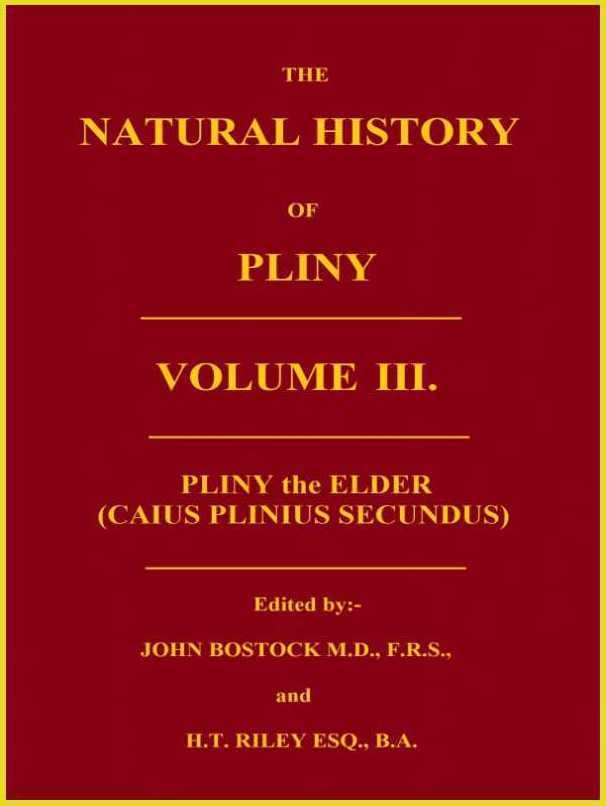
In AD 77, a Roman senator nearing death completed the most ambitious knowledge-compilation project in ancient history. Pliny the Elder's Natural History aimed to contain everything known about the natural world: its design, its forces, its creatures, its materials. Volume 3 turns outward, toward the heavens and the earth beneath us. Here Pliny catalogs the movements of celestial bodies, the nature of the cosmos as the ancients understood it, the properties of the elements, the workings of the atmosphere, and the geography of a world still being mapped. What emerges is not merely data but a worldview, one in which the universe is legible, purposeful, and designed for human contemplation. Pliny gathers knowledge from hundreds of sources, Greek and Roman, philosophical and practical, threading them into a single continuous argument about our place in nature. The result is strange and magnificent: a book that is sometimes right, often wrong, but never less than utterly certain that understanding the world is the highest human vocation. For readers curious about how the ancient mind made sense of existence, or anyone who wonders what it felt like to stand at the edge of known knowledge and try to map everything.
Editions
Link to this book
Add a free, dofollow link to Lex on your blog, forum, syllabus, or reading list.

<a href="https://lex-books.com/book/the-natural-history-of-pliny-volume-3-of-6-bf499fc4-e932-4a2a-a222-2ce3c4e07ecd"><img src="https://lex-books.com/badges/read-on-lex.svg" alt="Read The Natural History of Pliny, Volume 3 (of 6) by the Elder Pliny free on Lex" width="160" height="40"></a>[](https://lex-books.com/book/the-natural-history-of-pliny-volume-3-of-6-bf499fc4-e932-4a2a-a222-2ce3c4e07ecd)[url=https://lex-books.com/book/the-natural-history-of-pliny-volume-3-of-6-bf499fc4-e932-4a2a-a222-2ce3c4e07ecd][img]https://lex-books.com/badges/read-on-lex.svg[/img][/url]Read The Natural History of Pliny, Volume 3 (of 6) by the Elder Pliny free on Lex: https://lex-books.com/book/the-natural-history-of-pliny-volume-3-of-6-bf499fc4-e932-4a2a-a222-2ce3c4e07ecdCite this book
Reading this edition for a paper or guide? Copy a citation.
Pliny, the Elder. The Natural History of Pliny, Volume 3 (of 6). Lex, lex-books.com/book/the-natural-history-of-pliny-volume-3-of-6-bf499fc4-e932-4a2a-a222-2ce3c4e07ecd.Pliny, T. E. (n.d.). The Natural History of Pliny, Volume 3 (of 6). Lex. https://lex-books.com/book/the-natural-history-of-pliny-volume-3-of-6-bf499fc4-e932-4a2a-a222-2ce3c4e07ecdPliny, the Elder. The Natural History of Pliny, Volume 3 (of 6). Lex. https://lex-books.com/book/the-natural-history-of-pliny-volume-3-of-6-bf499fc4-e932-4a2a-a222-2ce3c4e07ecd.