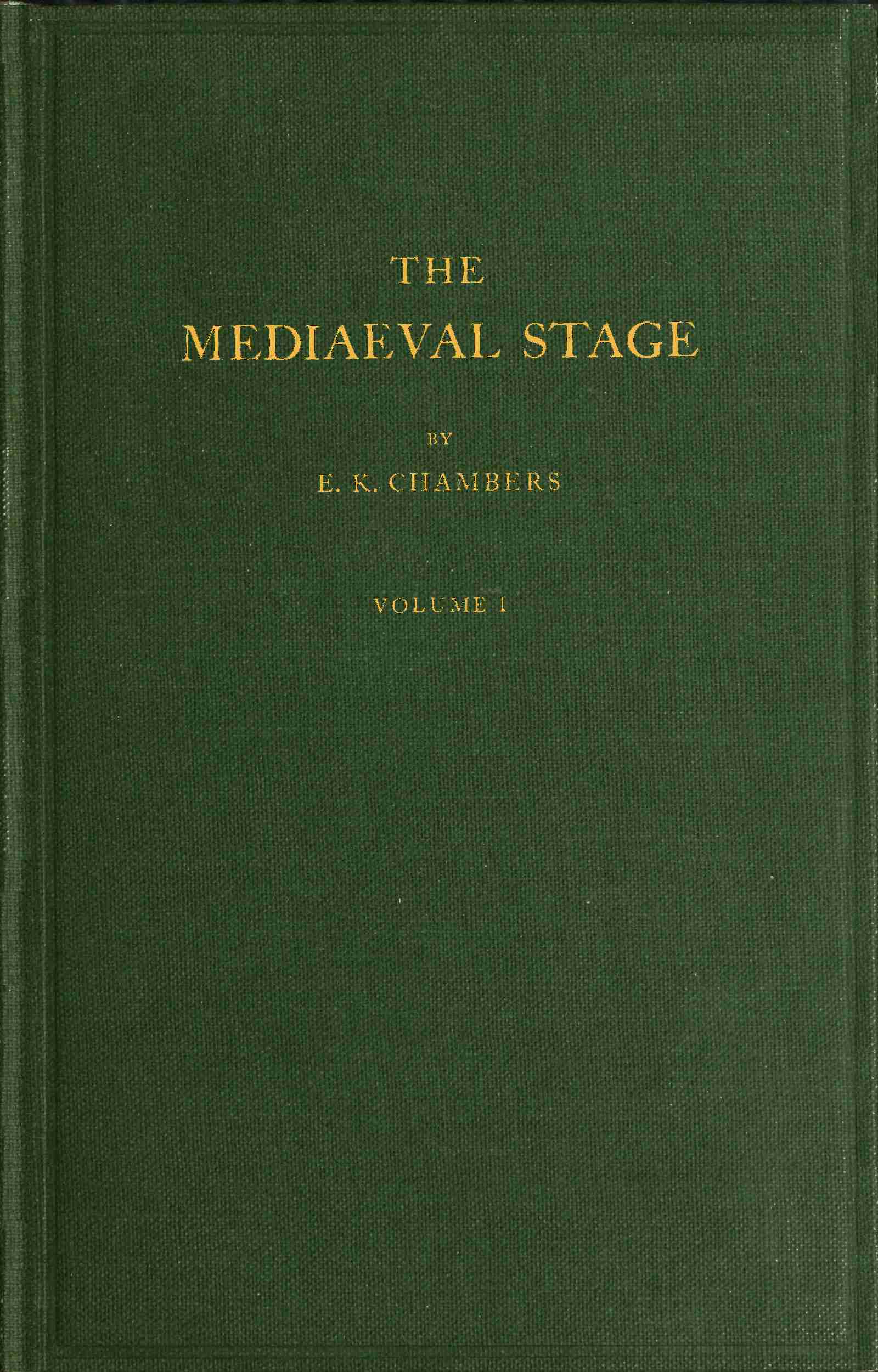
The Mediaeval Stage, Volume 1 (of 2)
1903
The Mediaeval Stage, Volume 1 (of 2)
1903
A historical account written in the early 20th century. This work delves into the origins and development of theatrical practices during the Middle Ages in England. The book aims to fill a gap in the understanding of how the framework for the later Shakespearean stage was set, exploring various theatrical traditions and their cultural contexts. The opening of the volume begins with a preface where the author reflects on the lack of comprehensive historical accounts regarding the mediaeval theatre before Shakespeare. Chambers shares his motivations for writing, expressing a desire to explore the origins of play-acting in England and the social, economic factors that shaped it. He outlines the structure of the work, which is divided into four books focusing on minstrel life, folk drama, ecclesiastical influences, and the eventual evolution of the professional stage in response to these various traditions. The author also acknowledges the challenges he faced in compiling the volumes and his awareness of the imperfections within them, emphasizing the importance of a thorough historical understanding of the mediaeval stage.
Editions

X-Ray
The author and scholar who undertakes this comprehensive study of the medieval stage. He serves as the analytical voice throughout, examining the transformation from Roman theater to medieval drama.
A powerful institutional force that both opposed and eventually absorbed theatrical traditions. The Church serves as both antagonist to pagan customs and creator of new dramatic forms.
Professional entertainers who bridge Roman mimes and medieval performers. They represent the continuity of theatrical tradition through the dark ages.
Ancient theatrical performers whose traditions survived the fall of the Roman Empire. They represent the classical theatrical heritage that influenced medieval entertainment.
About The Mediaeval Stage, Volume 1 (of 2)
Chapter Summaries
- Preface
- Chambers explains his motivation for studying medieval theater origins and acknowledges the work's expansion beyond his original scope. He outlines his four-book structure covering the transformation from Roman spectacles to Shakespearean drama.
- 1
- Chronicles the decline of Roman theater under Christian opposition and barbarian indifference. Chambers shows how mimes and pantomimes survived the collapse of formal theatrical institutions.
- 2
- Examines the merger of Roman mime traditions with Germanic bardic culture, creating the medieval minstrel class. The chapter traces how these different performance traditions combined.
Key Themes
- Cultural Continuity and Transformation
- Chambers demonstrates how theatrical traditions survive through radical social changes, showing the persistence of entertainment forms from Roman times through medieval Christianity despite official opposition.
- Sacred vs. Secular Entertainment
- The work explores the complex relationship between religious authority and popular entertainment, showing how the Church both condemned and eventually incorporated theatrical elements.
- Social Class and Performance
- The study reveals how entertainment reflected and reinforced social hierarchies, from the infamia of Roman actors to the varying status of medieval minstrels.
Characters
- E. K. Chambers(protagonist)
- The author and scholar who undertakes this comprehensive study of the medieval stage. He serves as the analytical voice throughout, examining the transformation from Roman theater to medieval drama.
- Medieval Church(major)
- A powerful institutional force that both opposed and eventually absorbed theatrical traditions. The Church serves as both antagonist to pagan customs and creator of new dramatic forms.
- Minstrels/Ioculatores(major)
- Professional entertainers who bridge Roman mimes and medieval performers. They represent the continuity of theatrical tradition through the dark ages.
- Roman Mimi(major)
- Ancient theatrical performers whose traditions survived the fall of the Roman Empire. They represent the classical theatrical heritage that influenced medieval entertainment.
- Germanic Scops(major)
- Teutonic poet-musicians who contributed the noble bardic tradition to medieval minstrelsy. They represent the dignified aspect of medieval entertainment.
- Folk/Peasantry(major)
- The common people who preserved ancient seasonal festivals and customs. They represent the continuity of pre-Christian traditions within medieval Christian society.
Link to this book
Add a free, dofollow link to Lex on your blog, forum, syllabus, or reading list.

<a href="https://lex-books.com/book/the-mediaeval-stage-volume-1-of-2-26178416-3340-41a7-8528-a0d0d4731eff"><img src="https://lex-books.com/badges/read-on-lex.svg" alt="Read The Mediaeval Stage, Volume 1 (of 2) by E. K. Chambers free on Lex" width="160" height="40"></a>[](https://lex-books.com/book/the-mediaeval-stage-volume-1-of-2-26178416-3340-41a7-8528-a0d0d4731eff)[url=https://lex-books.com/book/the-mediaeval-stage-volume-1-of-2-26178416-3340-41a7-8528-a0d0d4731eff][img]https://lex-books.com/badges/read-on-lex.svg[/img][/url]Read The Mediaeval Stage, Volume 1 (of 2) by E. K. Chambers free on Lex: https://lex-books.com/book/the-mediaeval-stage-volume-1-of-2-26178416-3340-41a7-8528-a0d0d4731effCite this book
Reading this edition for a paper or guide? Copy a citation.
Chambers, E. K.. The Mediaeval Stage, Volume 1 (of 2). Lex, lex-books.com/book/the-mediaeval-stage-volume-1-of-2-26178416-3340-41a7-8528-a0d0d4731eff.Chambers, E. K. (1903). The Mediaeval Stage, Volume 1 (of 2). Lex. https://lex-books.com/book/the-mediaeval-stage-volume-1-of-2-26178416-3340-41a7-8528-a0d0d4731effChambers, E. K.. The Mediaeval Stage, Volume 1 (of 2). Lex. https://lex-books.com/book/the-mediaeval-stage-volume-1-of-2-26178416-3340-41a7-8528-a0d0d4731eff.