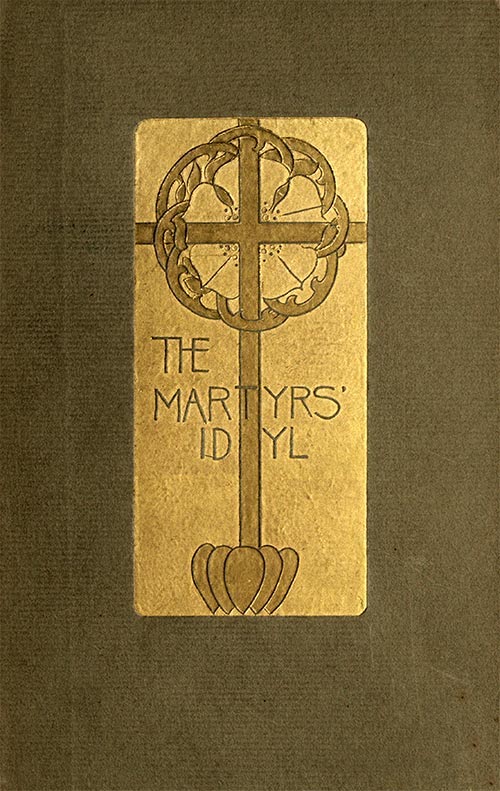
The Martyrs' Idyl, and Shorter Poems
1899
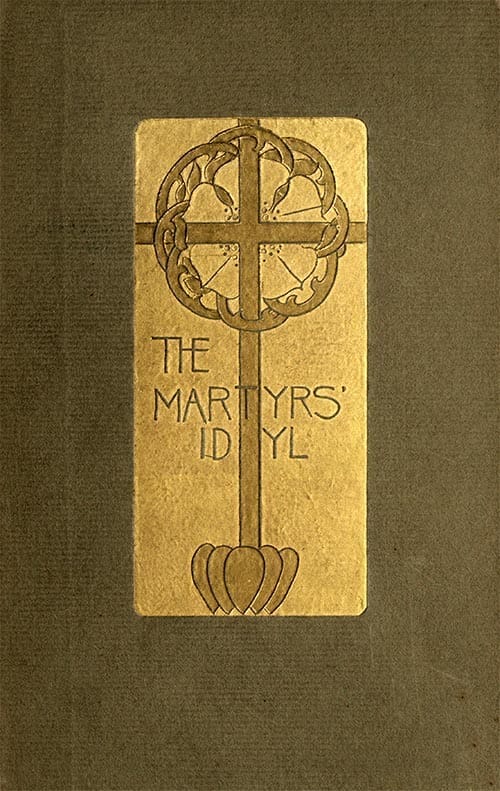
Louise Imogen Guiney's 1899 collection opens with "The Martyrs' Idyl," a sweeping dramatic poem set during Roman persecution of early Christians. The soldier Didymus encounters Theodora, a woman whose unwavering faith in the face of death shatters his comfortable doubt. Through their encounter, Guiney examines what it means to hold fast to conviction when everything conspires toward surrender. The shorter poems that follow move through English countryside lanes, tender elegies, and quiet meditations on loss and transcendence, each rendered in verse of considerable musicality. Guiney writes with the kind of conviction that comes from someone who had thought deeply about what it costs to believe something utterly. This is not nostalgia for a vanished faith, but an honest reckoning with its power to transform ordinary human fear into something unaccountably brave. The collection captures a moment in American letters when poetry still dared to deal in the absolute, when a poet could write about martyrdom without irony. For readers who crave verse that engages the deepest questions without flinching, Guiney offers a window into a vanished intellectual world that still has much to say.
Editions

Link to this book
Add a free, dofollow link to Lex on your blog, forum, syllabus, or reading list.

<a href="https://lex-books.com/book/the-martyrs-idyl-and-shorter-poems-4bb51493-33ed-4b9c-97e8-7c2cf9a51e3e"><img src="https://lex-books.com/badges/read-on-lex.svg" alt="Read The Martyrs' Idyl, and Shorter Poems by Louise Imogen Guiney free on Lex" width="160" height="40"></a>[](https://lex-books.com/book/the-martyrs-idyl-and-shorter-poems-4bb51493-33ed-4b9c-97e8-7c2cf9a51e3e)[url=https://lex-books.com/book/the-martyrs-idyl-and-shorter-poems-4bb51493-33ed-4b9c-97e8-7c2cf9a51e3e][img]https://lex-books.com/badges/read-on-lex.svg[/img][/url]Read The Martyrs' Idyl, and Shorter Poems by Louise Imogen Guiney free on Lex: https://lex-books.com/book/the-martyrs-idyl-and-shorter-poems-4bb51493-33ed-4b9c-97e8-7c2cf9a51e3eCite this book
Reading this edition for a paper or guide? Copy a citation.
Guiney, Louise Imogen. The Martyrs' Idyl, and Shorter Poems. Lex, lex-books.com/book/the-martyrs-idyl-and-shorter-poems-4bb51493-33ed-4b9c-97e8-7c2cf9a51e3e.Guiney, L. I. (1899). The Martyrs' Idyl, and Shorter Poems. Lex. https://lex-books.com/book/the-martyrs-idyl-and-shorter-poems-4bb51493-33ed-4b9c-97e8-7c2cf9a51e3eGuiney, Louise Imogen. The Martyrs' Idyl, and Shorter Poems. Lex. https://lex-books.com/book/the-martyrs-idyl-and-shorter-poems-4bb51493-33ed-4b9c-97e8-7c2cf9a51e3e.






![Birds and Nature, Vol. 12 No. 1 [June 1902]illustrated by Color Photography](/_next/image?url=https%3A%2F%2Fd3b2n8gj62qnwr.cloudfront.net%2FCOVERS%2Fgutenberg_covers75k%2Febook-47881.png&w=3840&q=75)