What would you like to read?Search books, authors, genres, shelves, users...
Search books, authors, genres, shelves, users...Search books, authors, genres, shelves, users...

What would you like to read?Search books, authors, genres, shelves, users...
Search books, authors, genres, shelves, users...Search books, authors, genres, shelves, users...
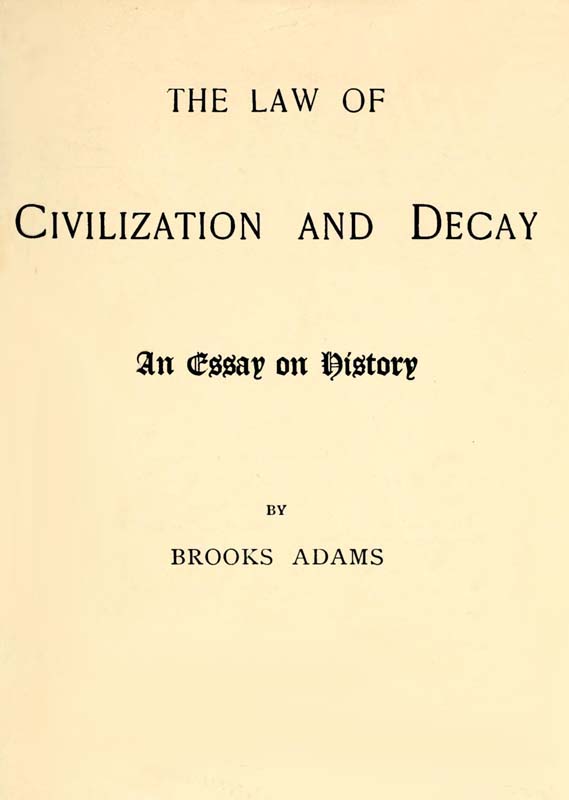
1895
A historical account written in the late 19th century. In this work, Adams examines the cycles of civilization, particularly the evolution and eventual decay of societies, arguing for a systematic understanding of history that ties human behavior to economic and social forces. The central thesis suggests that civilizations rise and fall based on their ability to manage the interplay between martial and economic energies, reflecting on the consequences that result when societies become overly centralized. The opening of the text establishes the author’s intent and philosophical framework, emphasizing a non-biased, observational approach to history. Adams posits that the essence of societal development can be discerned through the relationship between various social phenomena, such as economics, religion, and military structure. He introduces key concepts explored throughout the essay, including the roles of fear and greed in shaping social movements, and suggests that as societies centralize, they inevitably face disintegration due to the accumulation of power in the hands of wealthy elites. By tracing historical examples, especially the decline of the Roman Empire, he indicates how economic dynamics eroded the vitality of civilizations, ultimately leading to their decay and the rise of new social orders.