The Kaleidoscope: Its History, Theory and Construction. with Its Application to the Fine and Useful Arts
1819
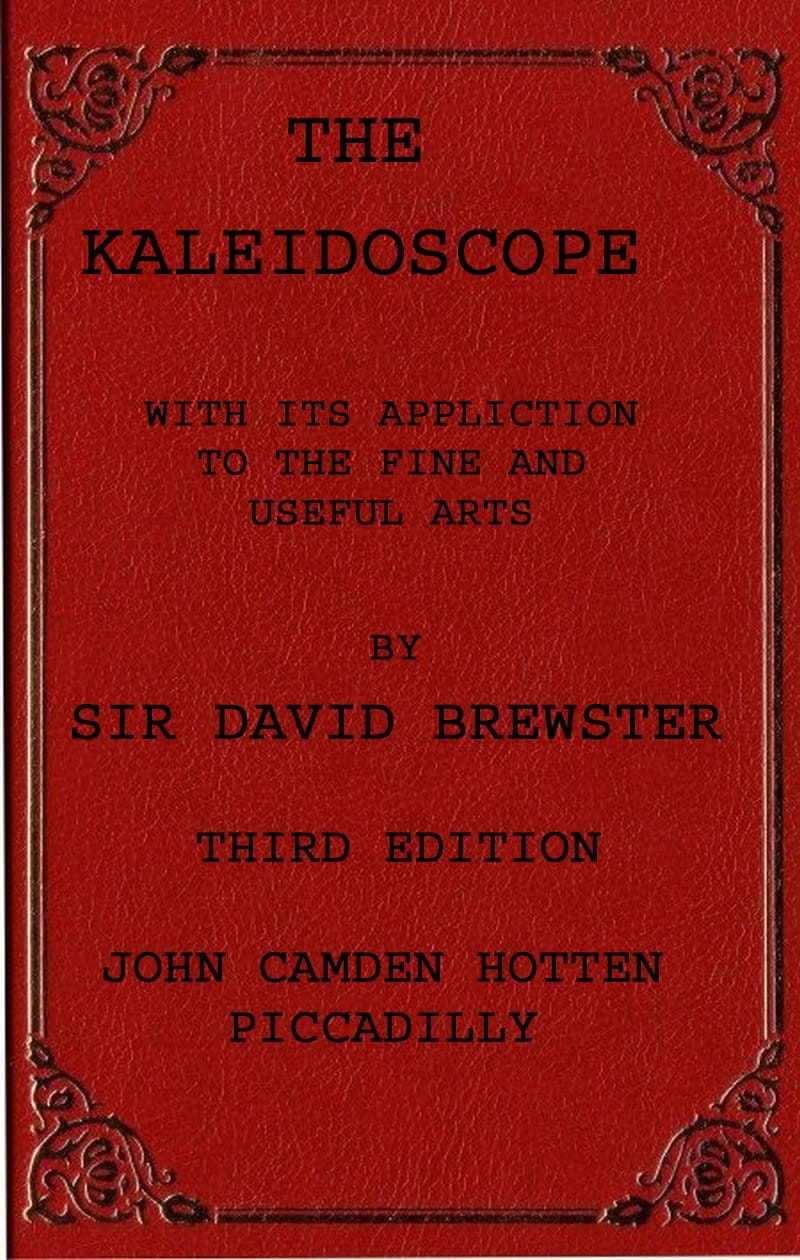
The Kaleidoscope: Its History, Theory and Construction. with Its Application to the Fine and Useful Arts
1819
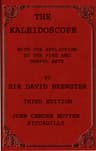
In 1814, a Scottish physicist stumbled upon something far more beautiful than anything his experiments in polarized light had ever produced. That accident became the kaleidoscope, and this 1819 treatise is the full account of its discovery, its science, and its artistic possibilities. David Brewster chronicles his journey from initial observation to refined invention with the precision of a man who understood optics at the deepest level. He explains the mirror mathematics that create those cascading symmetries, the theory behind why certain arrangements produce more glorious results than others, and exactly how to build the device that would soon captivate the Victorian world. Beyond mere construction, Brewster envisioned the kaleidoscope as a tool for artists and manufacturers, a way to generate patterns for textiles, architecture, and decorative arts. This is a window into an era when scientists and artists were not yet estranged, when understanding light could be an aesthetic act. For anyone curious about where our modern visual culture began, or who simply wants to understand the elegant physics behind those spiraling colors, Brewster's treatise remains strangely moving.
Editions
Link to this book
Add a free, dofollow link to Lex on your blog, forum, syllabus, or reading list.

<a href="https://lex-books.com/book/the-kaleidoscope-its-history-theory-and-construction-with-its-application-to-the-5b8d8dd3-7847-4559-8937-fbc6de7f6763"><img src="https://lex-books.com/badges/read-on-lex.svg" alt="Read The Kaleidoscope: Its History, Theory and Construction. with Its Application to the Fine and Useful Arts by David Brewster free on Lex" width="160" height="40"></a>[](https://lex-books.com/book/the-kaleidoscope-its-history-theory-and-construction-with-its-application-to-the-5b8d8dd3-7847-4559-8937-fbc6de7f6763)[url=https://lex-books.com/book/the-kaleidoscope-its-history-theory-and-construction-with-its-application-to-the-5b8d8dd3-7847-4559-8937-fbc6de7f6763][img]https://lex-books.com/badges/read-on-lex.svg[/img][/url]Read The Kaleidoscope: Its History, Theory and Construction. with Its Application to the Fine and Useful Arts by David Brewster free on Lex: https://lex-books.com/book/the-kaleidoscope-its-history-theory-and-construction-with-its-application-to-the-5b8d8dd3-7847-4559-8937-fbc6de7f6763Cite this book
Reading this edition for a paper or guide? Copy a citation.
Brewster, David. The Kaleidoscope: Its History, Theory and Construction. with Its Application to the Fine and Useful Arts. Lex, lex-books.com/book/the-kaleidoscope-its-history-theory-and-construction-with-its-application-to-the-5b8d8dd3-7847-4559-8937-fbc6de7f6763.Brewster, D. (1819). The Kaleidoscope: Its History, Theory and Construction. with Its Application to the Fine and Useful Arts. Lex. https://lex-books.com/book/the-kaleidoscope-its-history-theory-and-construction-with-its-application-to-the-5b8d8dd3-7847-4559-8937-fbc6de7f6763Brewster, David. The Kaleidoscope: Its History, Theory and Construction. with Its Application to the Fine and Useful Arts. Lex. https://lex-books.com/book/the-kaleidoscope-its-history-theory-and-construction-with-its-application-to-the-5b8d8dd3-7847-4559-8937-fbc6de7f6763.