The Inhabitants of the Philippines
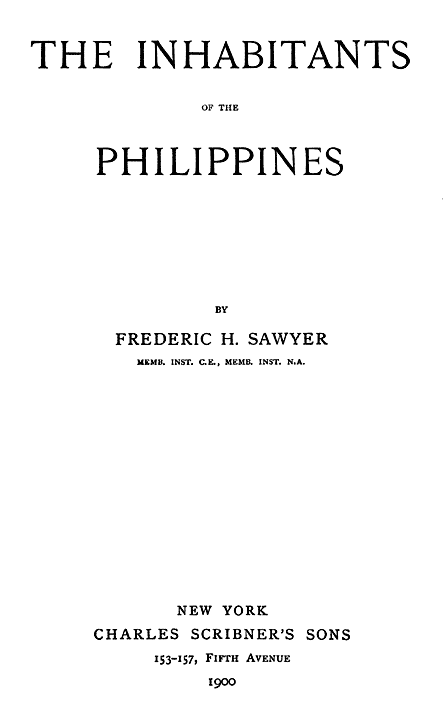
In 1899, as the United States seized the Philippines from Spain, a British colonial administrator published an impassioned defense of Filipino society. Frederic H. Sawyer had spent fourteen years living among the islands' inhabitants as a civil servant, and his book stands as a remarkable counter-narrative to the dismissive European accounts that dominated the era. Sawyer wrote to challenge the prevailing colonial wisdom that Filipinos were incapable of self-governance. He documented their complex social customs, their sophisticated governance structures, and the deep inequities of the Spanish legal system that privileged colonizers over the colonized. His anecdotes from courtrooms and government offices reveal a society far more nuanced than imperial apologists acknowledged. What makes this book endure is its perspective: Sawyer wrote as someone who respected the people he governed. He saw the Philippines not as a backward colony but as a civilization with its own integrity, unjustly subjugated. The book offers invaluable insight into late colonial Philippine society, the roots of nationalism, and the complex dynamics between colonizer and colonized.
Editions
Link to this book
Add a free, dofollow link to Lex on your blog, forum, syllabus, or reading list.

<a href="https://lex-books.com/book/the-inhabitants-of-the-philippines-7cb516bf-bc7e-4fb8-856d-cf800c2638fc"><img src="https://lex-books.com/badges/read-on-lex.svg" alt="Read The Inhabitants of the Philippines by Frederic H. Sawyer free on Lex" width="160" height="40"></a>[](https://lex-books.com/book/the-inhabitants-of-the-philippines-7cb516bf-bc7e-4fb8-856d-cf800c2638fc)[url=https://lex-books.com/book/the-inhabitants-of-the-philippines-7cb516bf-bc7e-4fb8-856d-cf800c2638fc][img]https://lex-books.com/badges/read-on-lex.svg[/img][/url]Read The Inhabitants of the Philippines by Frederic H. Sawyer free on Lex: https://lex-books.com/book/the-inhabitants-of-the-philippines-7cb516bf-bc7e-4fb8-856d-cf800c2638fcCite this book
Reading this edition for a paper or guide? Copy a citation.
Sawyer, Frederic H.. The Inhabitants of the Philippines. Lex, lex-books.com/book/the-inhabitants-of-the-philippines-7cb516bf-bc7e-4fb8-856d-cf800c2638fc.Sawyer, F. H. (n.d.). The Inhabitants of the Philippines. Lex. https://lex-books.com/book/the-inhabitants-of-the-philippines-7cb516bf-bc7e-4fb8-856d-cf800c2638fcSawyer, Frederic H.. The Inhabitants of the Philippines. Lex. https://lex-books.com/book/the-inhabitants-of-the-philippines-7cb516bf-bc7e-4fb8-856d-cf800c2638fc.