The Idea of God in Early Religions
1910
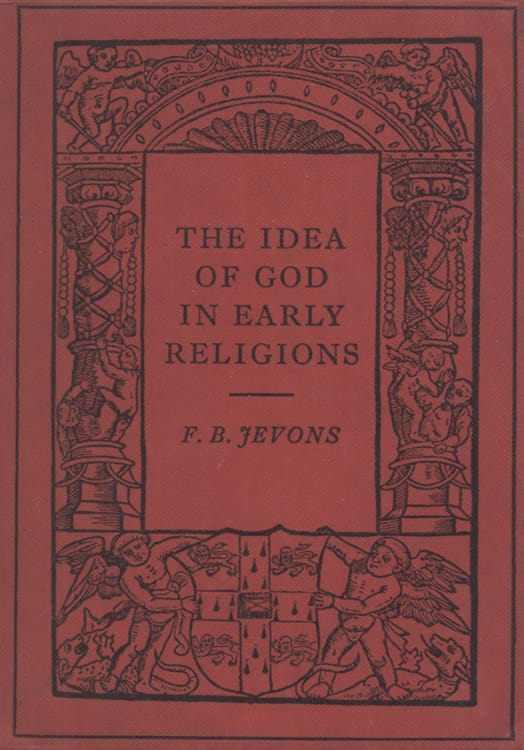
The Idea of God in Early Religions
1910
Long before monotheism, humanity worshipped stones, ancestors, and invisible forces. This 1910 landmark traces the birth of religious consciousness itself, arguing that the idea of a god emerged alongside human self-awareness. Jevons examines how societies transitioned from simple fetishism, from treating objects as inherently sacred, to conceiving of gods as beings who could be reasoned with, propitiated, and who cared for the community's welfare. He contends that this evolutionary leap in religious thinking mirrors the development of individual consciousness: as humans began to understand themselves as distinct persons with interior lives, they reimagined their gods in the same image. The book remains significant for its bold assertion that religious ideas are not revealed wholesale but develop organically through social and psychological processes. Written during the early days of comparative religion as a discipline, it offers a window into how turn-of-the-century scholars grappled with questions that still haunt us: What makes a god a god? When did humanity first conceive of divine beings who might actually listen? For readers interested in the history of religious thought, the philosophy of religion, or the emergence of theological consciousness across cultures.
Editions

Link to this book
Add a free, dofollow link to Lex on your blog, forum, syllabus, or reading list.

<a href="https://lex-books.com/book/the-idea-of-god-in-early-religions-b61bea9b-6875-4cad-befb-042714cc3c30"><img src="https://lex-books.com/badges/read-on-lex.svg" alt="Read The Idea of God in Early Religions by F. B. Jevons free on Lex" width="160" height="40"></a>[](https://lex-books.com/book/the-idea-of-god-in-early-religions-b61bea9b-6875-4cad-befb-042714cc3c30)[url=https://lex-books.com/book/the-idea-of-god-in-early-religions-b61bea9b-6875-4cad-befb-042714cc3c30][img]https://lex-books.com/badges/read-on-lex.svg[/img][/url]Read The Idea of God in Early Religions by F. B. Jevons free on Lex: https://lex-books.com/book/the-idea-of-god-in-early-religions-b61bea9b-6875-4cad-befb-042714cc3c30Cite this book
Reading this edition for a paper or guide? Copy a citation.
Jevons, F. B.. The Idea of God in Early Religions. Lex, lex-books.com/book/the-idea-of-god-in-early-religions-b61bea9b-6875-4cad-befb-042714cc3c30.Jevons, F. B. (1910). The Idea of God in Early Religions. Lex. https://lex-books.com/book/the-idea-of-god-in-early-religions-b61bea9b-6875-4cad-befb-042714cc3c30Jevons, F. B.. The Idea of God in Early Religions. Lex. https://lex-books.com/book/the-idea-of-god-in-early-religions-b61bea9b-6875-4cad-befb-042714cc3c30.