The Holy See and the Wandering of the Nations, from St. Leo I to St. Gregory I
1565
The Holy See and the Wandering of the Nations, from St. Leo I to St. Gregory I
1565
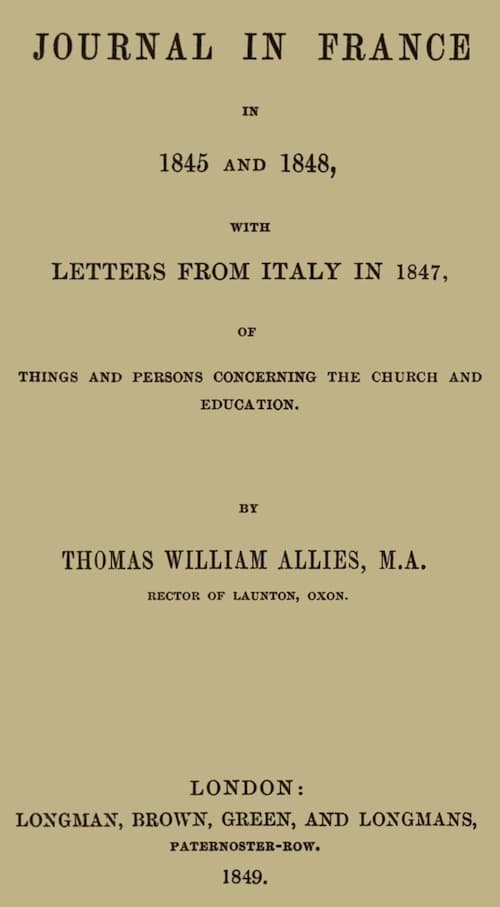
The Holy See and the Wandering of the Nations, from St. Leo I to St. Gregory I, written by T. W. Allies and first published in 1565, examines the evolution of the Catholic Church's authority during a pivotal period from the 5th to 6th centuries. The book highlights the challenges faced by the Papacy amid invasions by northern tribes and emphasizes the importance of papal letters as primary historical sources. Allies details significant events, including St. Leo I's negotiations with Attila the Hun, illustrating how the Papacy emerged as a center of spiritual and political stability during the decline of the Western Roman Empire.
Editions
X-Ray
The Great Pope who saved Rome from Attila and Genseric, confirmed the Council of Chalcedon, and established papal primacy. His pontificate marked the end of one era and beginning of another.
Ambitious patriarch of Constantinople who challenged papal authority by creating the Acacian Schism. He sought to make Constantinople equal to Rome and controlled eastern emperors.
Great Byzantine emperor who reconquered Italy and Africa, created the legal code, but also interfered in Church affairs. He acknowledged papal primacy while asserting imperial authority.
Gregory the Great, who governed the Church during Rome's darkest period under Lombard threats. He established the medieval papacy and converted England.
About The Holy See and the Wandering of the Nations, from St. Leo I to St. Gregory I
Chapter Summaries
- 1
- Introduces the period after St. Leo I, examining how the fall of the Western Roman Empire and barbarian invasions tested papal authority. The chapter establishes the paradox that as Rome's temporal power declined, the Pope's spiritual authority became more evident.
- 2
- Chronicles the Acacian Schism, where Acacius of Constantinople challenged papal authority and was excommunicated by Pope Felix III. The chapter shows how the schism tested and ultimately vindicated papal primacy despite the Pope's political weakness.
- 3
- Describes the end of the Acacian Schism under Pope Hormisdas and the conversion of Clovis, which broke the ring of Arian heresy. The chapter culminates in the Eastern Church's complete submission to papal authority.
Key Themes
- Papal Primacy and Divine Authority
- The central theme examining how the Pope's spiritual authority, derived from Christ's commission to St. Peter, transcends temporal power and political circumstances. The book demonstrates how this authority was tested and ultimately vindicated through various crises.
- Church and State Relations
- The complex relationship between spiritual and temporal authority, particularly Pope Gelasius's doctrine of the Two Powers. The theme explores how the Church maintained independence while acknowledging legitimate secular authority.
- The Triumph of Orthodoxy over Heresy
- The long struggle against Arianism in the West and Monophysitism in the East, showing how the Catholic Church ultimately converted the barbarian kingdoms and preserved orthodox doctrine against imperial interference.
Characters
- Pope St. Leo I(major)
- The Great Pope who saved Rome from Attila and Genseric, confirmed the Council of Chalcedon, and established papal primacy. His pontificate marked the end of one era and beginning of another.
- Acacius of Constantinople(antagonist)
- Ambitious patriarch of Constantinople who challenged papal authority by creating the Acacian Schism. He sought to make Constantinople equal to Rome and controlled eastern emperors.
- Emperor Justinian(major)
- Great Byzantine emperor who reconquered Italy and Africa, created the legal code, but also interfered in Church affairs. He acknowledged papal primacy while asserting imperial authority.
- Pope St. Gregory I(protagonist)
- Gregory the Great, who governed the Church during Rome's darkest period under Lombard threats. He established the medieval papacy and converted England.
- Theodorick the Ostrogoth(major)
- Arian king of Italy who ruled with relative justice but remained a heretic. His reign represented the best possible Arian rule, yet ultimately failed.
- Clovis(major)
- Frankish king whose conversion to Catholicism broke the ring of Arian heresy surrounding the Pope and began the Catholic reconquest of the West.
Link to this book
Add a free, dofollow link to Lex on your blog, forum, syllabus, or reading list.

<a href="https://lex-books.com/book/the-holy-see-and-the-wandering-of-the-nations-from-st-leo-i-to-st-gregory-i-bc5f9dd4-f9ff-4dd6-acda-52135a5d97c7"><img src="https://lex-books.com/badges/read-on-lex.svg" alt="Read The Holy See and the Wandering of the Nations, from St. Leo I to St. Gregory I by T. W. Allies free on Lex" width="160" height="40"></a>[](https://lex-books.com/book/the-holy-see-and-the-wandering-of-the-nations-from-st-leo-i-to-st-gregory-i-bc5f9dd4-f9ff-4dd6-acda-52135a5d97c7)[url=https://lex-books.com/book/the-holy-see-and-the-wandering-of-the-nations-from-st-leo-i-to-st-gregory-i-bc5f9dd4-f9ff-4dd6-acda-52135a5d97c7][img]https://lex-books.com/badges/read-on-lex.svg[/img][/url]Read The Holy See and the Wandering of the Nations, from St. Leo I to St. Gregory I by T. W. Allies free on Lex: https://lex-books.com/book/the-holy-see-and-the-wandering-of-the-nations-from-st-leo-i-to-st-gregory-i-bc5f9dd4-f9ff-4dd6-acda-52135a5d97c7Cite this book
Reading this edition for a paper or guide? Copy a citation.
Allies, T. W.. The Holy See and the Wandering of the Nations, from St. Leo I to St. Gregory I. Lex, lex-books.com/book/the-holy-see-and-the-wandering-of-the-nations-from-st-leo-i-to-st-gregory-i-bc5f9dd4-f9ff-4dd6-acda-52135a5d97c7.Allies, T. W. (1565). The Holy See and the Wandering of the Nations, from St. Leo I to St. Gregory I. Lex. https://lex-books.com/book/the-holy-see-and-the-wandering-of-the-nations-from-st-leo-i-to-st-gregory-i-bc5f9dd4-f9ff-4dd6-acda-52135a5d97c7Allies, T. W.. The Holy See and the Wandering of the Nations, from St. Leo I to St. Gregory I. Lex. https://lex-books.com/book/the-holy-see-and-the-wandering-of-the-nations-from-st-leo-i-to-st-gregory-i-bc5f9dd4-f9ff-4dd6-acda-52135a5d97c7.