The Golden Bough: A Study in Magic and Religion (third Edition, Vol. 05 of 12)
1914
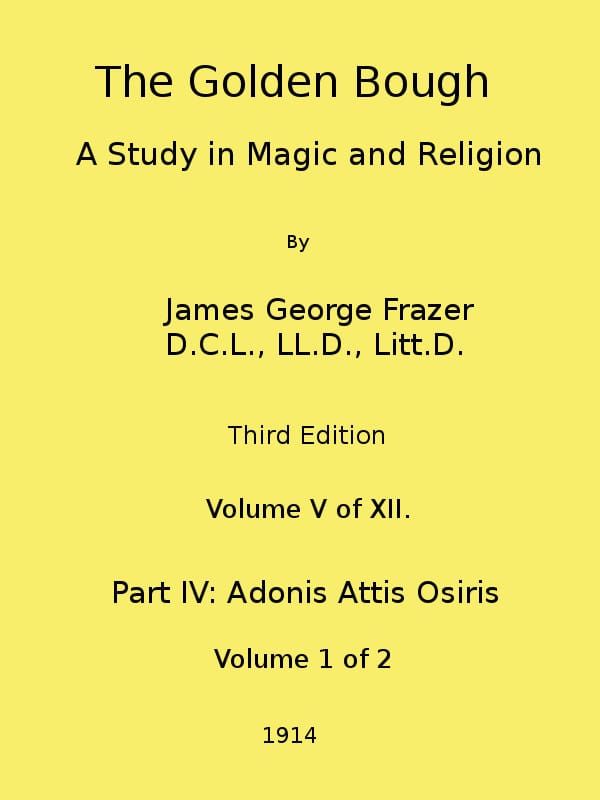
The Golden Bough: A Study in Magic and Religion (third Edition, Vol. 05 of 12)
1914
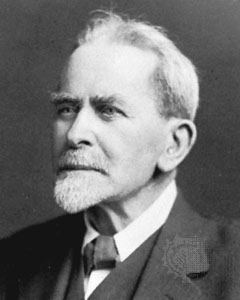
When James George Frazer began assembling this unprecedented inquiry into human belief, he set out to answer a question that still haunts us: how did our ancestors make sense of a world governed by forces beyond their control? The Golden Bough became the first grand comparative study of global mythology, tracing the strange parallels between gods who die and rise again - Adonis bleeding in the Syrian hills, Attis bleeding on the slopes of Mount Ida, Osiris dismembered and resurrected in the fertile mud of the Nile. Frazer argued that humanity moved through distinct phases: first magic,,试图 to compel nature through sympathetic rituals; then religion, learning to appease and petition; finally science, learning to understand and predict. The result is a sprawling, sometimes infuriating, always fascinating portrait of what our ancestors actually believed - their blood sacrifices and fertility rites, their taboos and seasonal festivals, their desperate attempts to ensure the sun would return and the crops would grow. Though modern anthropology has largely discredited its evolutionary assumptions andFrazer's reliance on secondhand accounts, this remains a foundational text - the one that first made clear that myths across civilizations tell remarkably similar stories about death, resurrection, and the cyclical forces of nature. It is essential reading for anyone curious about where the modern study of religion came from, and how we arrived at our current understanding of belief.
Editions
X-Ray
“Small minds cannot grasp great ideas; to their narrow comprehension, their purblind vision, nothing seems really great and important but themselves.””
— James George Frazer
“By religion, then, I understand a propitiation or conciliation of powers superior to man which are believed to direct and control the course of nature and of human life. Thus defined, religion consists of two elements, a theoretical and a practical, namely, a belief in powers higher than man and an attempt to propitiate or please them. Of the two, belief clearly comes first, since we must believe in the existence of a divine being before we can attempt to please him. But unless the belief leads to a corresponding practice, it is not a religion but merely a theology; in the language of St. James, “faith, if it hath not works, is dead, being alone.” In other words, no man is religious who does not govern his conduct in some measure by the fear or love of God. On the other hand, mere practice, divested of all religious belief, is also not religion. Two men may behave in exactly the same way, and yet one of them may be religious and the other not. If the one acts from the love or fear of God, he is religious; if the other acts from the love or fear of man, he is moral or immoral according as his behaviour comports or conflicts with the general good.””
— James George Frazer
“For strength of character in the race as in the individual consists mainly in the power of sacrificing the present for the future, of disregarding the immediate temptations of ephemeral pleasure for more distant and lasting sources of satisfaction. The more the power is exercised the higher and stronger becomes the character; till the height of heroism is reached in men who renounce the pleasures of life and even life itself for the sake of winning for others, perhaps in distant ages, the blessings of freedom and truth.””
— James George Frazer
“the fear of the human dead, which, on the whole, I believe to have been probably the most powerful force in the making of primitive religion.””
— James George Frazer
“For myth changes while custom remains constant; men continue to do what their did before them, though the reasons on which their fathers acted have been long forgotten. The history of religion is a long attempt to reconcile old custom with new reason, to find a sound theory for an absurd practice.””
— James George Frazer
“So in Scotland witches used to raise the wind by dipping a rag in water and beating it thrice on a stone, saying: “I knok this rag upone this stane To raise the wind in the divellis name, It sall not lye till I please againe.””
— James George Frazer
“For extending its sway, partly by force of arms, partly by the voluntary submission of weaker tribes, the community soon acquires wealth and slaves, both of which, by relieving some classes from the perpetual struggle for a bare subsistence, afford them an opportunity of devoting themselves to that disinterested pursuit of knowledge which is the noblest and most powerful instrument to ameliorate the lot of man.””
— James George Frazer
“Thus religion, beginning as a slight and partial acknowledgment of powers superior to man, tends with the growth of knowledge to deepen into a confession of man’s entire and absolute dependence on the divine; his old free bearing is exchanged for an attitude of lowliest prostration before the mysterious powers of the unseen, and his highest virtue is to submit his will to theirs: In la sua volontade è nostra pace.””
— James George Frazer
“God may pardon sin, but Nature cannot.””
— James George Frazer
Link to this book
Add a free, dofollow link to Lex on your blog, forum, syllabus, or reading list.

<a href="https://lex-books.com/book/the-golden-bough-a-study-in-magic-and-religion-third-edition-vol-05-of-12-152a66d6-dc12-4969-9d7b-4a6f49d82729"><img src="https://lex-books.com/badges/read-on-lex.svg" alt="Read The Golden Bough: A Study in Magic and Religion (third Edition, Vol. 05 of 12) by James George Frazer free on Lex" width="160" height="40"></a>[](https://lex-books.com/book/the-golden-bough-a-study-in-magic-and-religion-third-edition-vol-05-of-12-152a66d6-dc12-4969-9d7b-4a6f49d82729)[url=https://lex-books.com/book/the-golden-bough-a-study-in-magic-and-religion-third-edition-vol-05-of-12-152a66d6-dc12-4969-9d7b-4a6f49d82729][img]https://lex-books.com/badges/read-on-lex.svg[/img][/url]Read The Golden Bough: A Study in Magic and Religion (third Edition, Vol. 05 of 12) by James George Frazer free on Lex: https://lex-books.com/book/the-golden-bough-a-study-in-magic-and-religion-third-edition-vol-05-of-12-152a66d6-dc12-4969-9d7b-4a6f49d82729Cite this book
Reading this edition for a paper or guide? Copy a citation.
Frazer, James George. The Golden Bough: A Study in Magic and Religion (third Edition, Vol. 05 of 12). Lex, lex-books.com/book/the-golden-bough-a-study-in-magic-and-religion-third-edition-vol-05-of-12-152a66d6-dc12-4969-9d7b-4a6f49d82729.Frazer, J. G. (1914). The Golden Bough: A Study in Magic and Religion (third Edition, Vol. 05 of 12). Lex. https://lex-books.com/book/the-golden-bough-a-study-in-magic-and-religion-third-edition-vol-05-of-12-152a66d6-dc12-4969-9d7b-4a6f49d82729Frazer, James George. The Golden Bough: A Study in Magic and Religion (third Edition, Vol. 05 of 12). Lex. https://lex-books.com/book/the-golden-bough-a-study-in-magic-and-religion-third-edition-vol-05-of-12-152a66d6-dc12-4969-9d7b-4a6f49d82729.