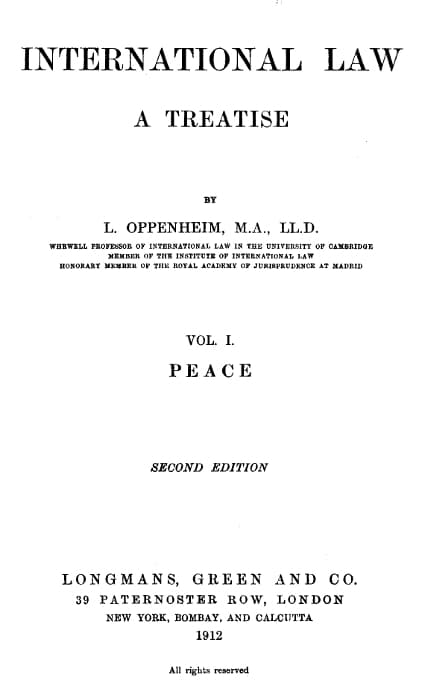
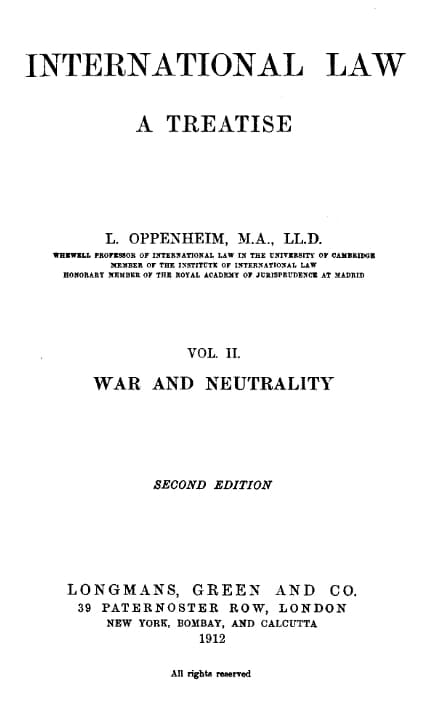
The Future of International Law
1911
The Future of International Law
1911
Written in the aftermath of the Great War, this 1911 treatise captures a turning point in how thinkers understood the possibility of global order. Lassa Oppenheim, one of the founding figures of modern international law, examines how a system of sovereign states, historically anarchic, might evolve into something resembling a legal community. He traces the arc from ancient conceptions of interstate relations to the nascent hopes of his era: international courts, treaty regimes, the dream of organized peace. What makes this book enduring is not its answers but its questions. Oppenheim grapples with the tension that still defines international law today: how can sovereign nations cede any authority to a higher legal order without surrendering the very thing that makes them states? For students of legal history, international relations, and the intellectual origins of the League of Nations and its successors, this remains a foundational document, a window into the ambitions and anxieties that shaped the first efforts toward organized world peace.
Editions
Link to this book
Add a free, dofollow link to Lex on your blog, forum, syllabus, or reading list.

<a href="https://lex-books.com/book/the-future-of-international-law-48a613ae-cb1e-4205-941b-06536bfafe04"><img src="https://lex-books.com/badges/read-on-lex.svg" alt="Read The Future of International Law by L. Oppenheim free on Lex" width="160" height="40"></a>[](https://lex-books.com/book/the-future-of-international-law-48a613ae-cb1e-4205-941b-06536bfafe04)[url=https://lex-books.com/book/the-future-of-international-law-48a613ae-cb1e-4205-941b-06536bfafe04][img]https://lex-books.com/badges/read-on-lex.svg[/img][/url]Read The Future of International Law by L. Oppenheim free on Lex: https://lex-books.com/book/the-future-of-international-law-48a613ae-cb1e-4205-941b-06536bfafe04Cite this book
Reading this edition for a paper or guide? Copy a citation.
Oppenheim, L.. The Future of International Law. Lex, lex-books.com/book/the-future-of-international-law-48a613ae-cb1e-4205-941b-06536bfafe04.Oppenheim, L. (1911). The Future of International Law. Lex. https://lex-books.com/book/the-future-of-international-law-48a613ae-cb1e-4205-941b-06536bfafe04Oppenheim, L.. The Future of International Law. Lex. https://lex-books.com/book/the-future-of-international-law-48a613ae-cb1e-4205-941b-06536bfafe04.