The Family at Misrule
1895
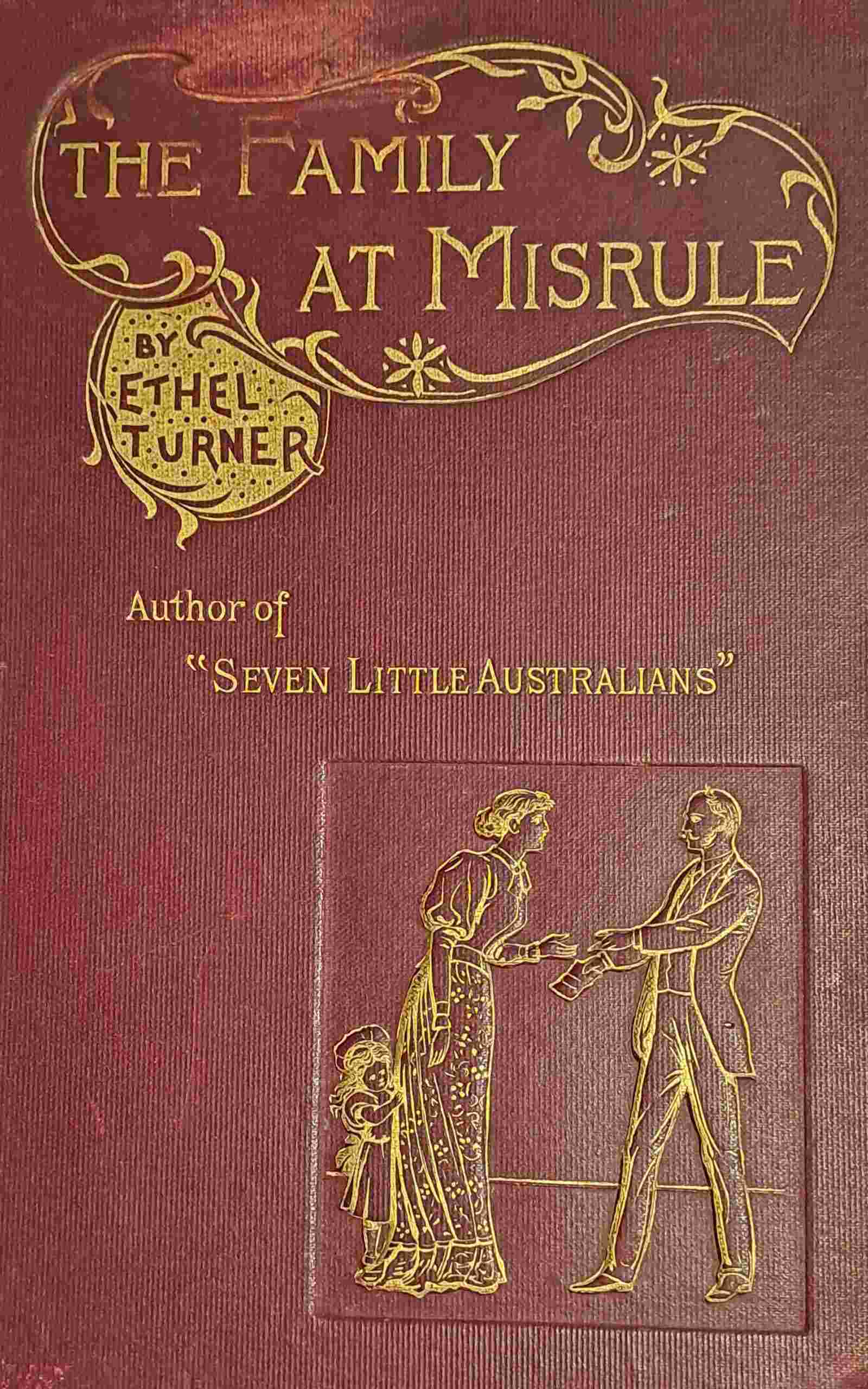
In the Australian bush at the close of the nineteenth century, Captain Woolcot runs his household like a regiment: rules posted on the wall,bedtime at precise hours, and not a moment for mischief. But seven children are seven mutinies waiting to happen. Led by Judy, the irrepressible youngest with red hair and a talent for chaos, the Woolcot siblings wage gentle warfare against their father's inflexible discipline. When Judy's latest transgression earns her a sentence to boarding school, the household descends into quiet devastation. Esther, the young stepmother who loves the children despite her impossible position, pleads for mercy. The Captain remains unmoved. What follows is a tender, often funny portrait of a family navigating love, resentment, and the impossible task of growing up under the shadow of grief and stricture. Turner captures something timeless about the battle between childhood's wildness and adulthood's demands, set against the sun-drenched particularity of the Australian bush.
Editions
X-Ray
“None of the seven is really good, for the excellent reason that Australian children never are.””
— Ethel Turner
“and then ah God””
— Ethel Turner
“Australian girls nearly always begin to think of 'lovers and nonsense', as middlefolks call it, long before their English aged sisters do...And herein lies the chief defect of the very young Australian girl. She is like a peach; a beautiful, smooth, rich peach, that has come to ripeness, almost in a day, and that hastens to rub off the soft, delicate bloom that is its chief charm, just to show its bright, warm colouring more clearly.””
— Ethel Turner
“Quite a warm friendship had sprung up during the month between the little fair-faced girl, who looked with such serene blue eyes to a future she felt must be beautiful, and the world-worn man, who looked back to a past all blackened and unlovely by his own acts.””
— Ethel Turner
“Meg had grown older; she would never be quite so young again as she had been before that red sunset sank into her soul.There was a deeper light in her eyes; such tears as she had wept clear the sight till life becomes a thing more distinct and far-reaching.””
— Ethel Turner
Link to this book
Add a free, dofollow link to Lex on your blog, forum, syllabus, or reading list.

<a href="https://lex-books.com/book/the-family-at-misrule-039dcbf7-03ff-471d-adbd-1dbb5f98a37a"><img src="https://lex-books.com/badges/read-on-lex.svg" alt="Read The Family at Misrule by Ethel Turner free on Lex" width="160" height="40"></a>[](https://lex-books.com/book/the-family-at-misrule-039dcbf7-03ff-471d-adbd-1dbb5f98a37a)[url=https://lex-books.com/book/the-family-at-misrule-039dcbf7-03ff-471d-adbd-1dbb5f98a37a][img]https://lex-books.com/badges/read-on-lex.svg[/img][/url]Read The Family at Misrule by Ethel Turner free on Lex: https://lex-books.com/book/the-family-at-misrule-039dcbf7-03ff-471d-adbd-1dbb5f98a37aCite this book
Reading this edition for a paper or guide? Copy a citation.
Turner, Ethel. The Family at Misrule. Lex, lex-books.com/book/the-family-at-misrule-039dcbf7-03ff-471d-adbd-1dbb5f98a37a.Turner, E. (1895). The Family at Misrule. Lex. https://lex-books.com/book/the-family-at-misrule-039dcbf7-03ff-471d-adbd-1dbb5f98a37aTurner, Ethel. The Family at Misrule. Lex. https://lex-books.com/book/the-family-at-misrule-039dcbf7-03ff-471d-adbd-1dbb5f98a37a.