The Wonder-Child: An Australian Story
1941
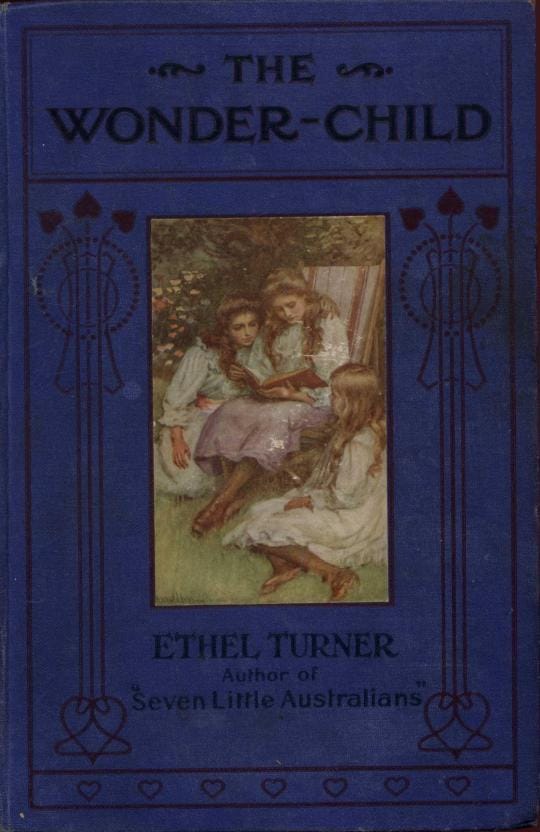
In the sunburnt paddocks of rural Australia, the Cameron children walk home from school trailing defiance and dreams. Bartie, Floss, Roly, and the gifted young musician Challis inhabit a world where pride wears threadbare clothes and imagination bridges the gap between their struggling farm and the glittering world their sister occupies in London. The opening exchange, where Bartie battles Peter Small over honour and holes in his stockings, establishes the pitch-perfect voice of childhood: grand claims, loyal fists, and a fierce conviction that wanting something badly enough makes it true. Turner captures the particular texture of Australian rural life in the 1890s, where wealth means horses grazing in endless paddocks and status is measured by spirit rather than shillings. The novel traces the Camerons' navigation of aspiration and reality, with Challis's music talent offering both hope and complication. What endures is Turner's understanding that childhood is a country unto itself, with its own hierarchies, wars, and gentilities. For readers who cherish 'Seven Little Australians', this is another glimpse into Turner's Australia: harsh, loving, and uncommonly vivid.
Editions
Link to this book
Add a free, dofollow link to Lex on your blog, forum, syllabus, or reading list.

<a href="https://lex-books.com/book/the-wonder-child-an-australian-story-2f830772-e956-4ad8-8009-ca5a8f2746a2"><img src="https://lex-books.com/badges/read-on-lex.svg" alt="Read The Wonder-Child: An Australian Story by Ethel Turner free on Lex" width="160" height="40"></a>[](https://lex-books.com/book/the-wonder-child-an-australian-story-2f830772-e956-4ad8-8009-ca5a8f2746a2)[url=https://lex-books.com/book/the-wonder-child-an-australian-story-2f830772-e956-4ad8-8009-ca5a8f2746a2][img]https://lex-books.com/badges/read-on-lex.svg[/img][/url]Read The Wonder-Child: An Australian Story by Ethel Turner free on Lex: https://lex-books.com/book/the-wonder-child-an-australian-story-2f830772-e956-4ad8-8009-ca5a8f2746a2Cite this book
Reading this edition for a paper or guide? Copy a citation.
Turner, Ethel. The Wonder-Child: An Australian Story. Lex, lex-books.com/book/the-wonder-child-an-australian-story-2f830772-e956-4ad8-8009-ca5a8f2746a2.Turner, E. (1941). The Wonder-Child: An Australian Story. Lex. https://lex-books.com/book/the-wonder-child-an-australian-story-2f830772-e956-4ad8-8009-ca5a8f2746a2Turner, Ethel. The Wonder-Child: An Australian Story. Lex. https://lex-books.com/book/the-wonder-child-an-australian-story-2f830772-e956-4ad8-8009-ca5a8f2746a2.