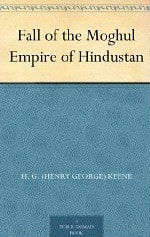
The Fall of the Moghul Empire of Hindustan
In 1759, the murder of Emperor Alamgir II tore open the heart of the Moghul Empire, unleashing half a century of chaos that would reshape the Indian subcontinent forever. H. G. Keene chronicles this catastrophic unraveling: the Afghan invasions led by Ahmad Shah Durrani that sacked Delhi, the relentless expansion of the Maratha confederacy, the fratricidal wars among Moghul princes, and the desperate court intrigues of rulers who held imperial titles but little real power. This was the "great Anarchy" of the eighteenth century, when an empire that had defined South Asian civilization for over two hundred years collapsed into fragmenting kingdoms and warring chieftaincies. Yet within this destruction lay the groundwork for something new: British ascendancy. Keene's late-Victorian account, written with the perspective of empire in full flower, offers a fascinating window into how the world's mightiest Asian power fell, and what that fall meant for the millions who lived through it. For readers seeking to understand the deep historical roots of modern South Asia, this remains a essential, if unflinching, portrait of an empire's death and the new order born from its ashes.